
Roopkund: The Mystery of Skeleton Lake
How Did Hundreds of Skeletons Come to Rest at this Isolated, Mountain Lake?
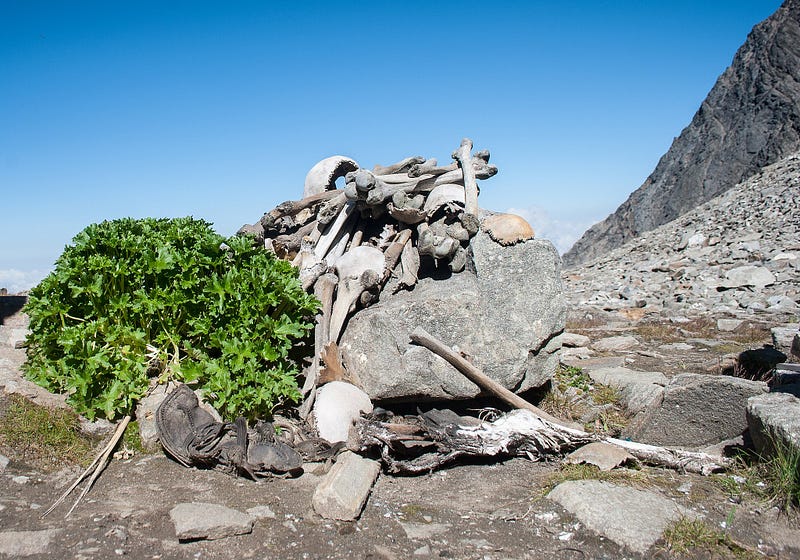
A Grisly Discovery
Roopkund, colloquially known as Skeleton Lake, sits at over 16,000 feet above sea level in the Indian Himalayas, surrounded by rocky inclines and shrouded in mystery. During WWII, Hari Kishan Madhwal, a forest ranger, stumbled upon a frightening scene: hundreds of skeletons preserved by the harsh, high-altitude climate, some with their flesh still attached.
At first, researchers thought the bodies belonged to invading Japanese soldiers caught in unfortunate circumstances but soon discovered the remains were much older by centuries. In the 1950s, scientists discovered many of the deceased suffered from massive head trauma.
Analysts determined the injuries were likely caused by round objects falling from above. This evidence is fascinating as a local legend tells of a king and his party who angered the Goddess Nanda Devi by partaking in earthly delights during their pilgrimage on the mountain. It’s said she unleashed a flurry of hail on them, and now their bodies lie in the lake as a warning to others.
Continued Research Mistifies
Study of the bones has proven difficult as tourists are known to take them as grisly souvenirs, removing them from their original context and making archeologist’s jobs more difficult. Despite this, the remarkable preservation of the bodies allowed researchers to test their DNA. Along with the results from carbon dating, these discoveries only serve to deepen the mystery.
They’ve found that the bones were not all left simultaneously, and some are hundreds of years older than others. Incredibly, the skeletons are not only separated by time but by distance traveled. DNA evidence shows that, while some bodies were predictably from the area, others were from as far away as the Mediterranean.
Continued Search For An Explanation
How did hundreds of people from different countries and time periods come to die in the same place? Could the lake be a burial ground where the local people took their dead? Or, are trekkers and pilgrims finding death in the unforgiving mountain climate where the air is thin and freezing, much the way climbers lose their lives on Everest?
Those fascinated and puzzled by the phenomena will surely continue their search for answers. But, unfortunately, every day, there is less evidence, as enthusiastic visitors remove bones and artifacts from the site. Will we ever uncover the reason so many met their ends at Skeleton Lake?
Thanks for reading! If you enjoyed this piece, you may also like Unnamed: Jack the Ripper or Born Evil?
Get yourself a Medium membership here to support me and read more from other writers!