avatarOscar

Free AI web copilot to create summaries, insights and extended knowledge, download it at here

2069

Abstract

ove this! Life is too short to fiddle with literal distance or location. Death to simulationism!</p><p id="15d4"><i>Mecha </i>is pretty gamist in its design philosophy, but it has a lot of narrative mechanics to give dramatic context to the violence. Individual “episodes” have a particular structure. Every player gets their own spotlight scene. These scenes give the players a chance to advance their personal plots, recover from a previous injury, repair their mecha, or try to gain a tactical advantage in the next battle. When one scene ends, the player to the left starts theirs. When the players have had their scenes, the GM starts a scene that sets up the battle that MUST happen in every episode of a mecha anime. Then it’s time to fight! On paper this all sounds contrived and terrible. But when you re-watch Martian Successor Nadesico and Big O, you’ll notice that a lot of episodes play out the same way.</p><figure id="3bdb"><img src="https://cdn-images-1.readmedium.com/v2/resize:fit:800/1*anr-rj0vONpXk7on-VCzqg.png"><figcaption>The Bullseye Battlemap from Mecha.</figcaption></figure><p id="332b"><a href="https://www.drivethrurpg.com/product/143061/Mecha-Kaiju"><b><i>Mecha: Kaiju</i></b></a> reads like a love letter to Pacific Rim, the 2014 Godzilla movie, and classic Kaiju movies in general. Kaiju are built almost exactly like mecha, except they have fewer weapons and they are their own pilots. The book also introduces more advanced rules for hiding behind and crashing through buildings, including a Mayhem system that incentivizes Kaiju to be as destructive as possible. There are even rules for pilots “Linking”, which is basically Drifting without the lawsuits.</p><p id="a87f"><i>Mecha </i>walks the GM through the process of building their own “setting reference schematic” (SRS). The core book comes with three pre-built SRSs, and <i>Kaiju </i>has its own default setting. Steal liberally from all of them. Specifically the Standard Systems and Archetypes from Weapons of War: Steel Gunners, and the stats for a few of the Kaiju from Dre

Options

ams of Ruin.</p><figure id="bee6"><img src="https://cdn-images-1.readmedium.com/v2/resize:fit:800/1*OfvwRRETRWrr967-XSzhMQ.jpeg"><figcaption>Promotional asset featuring Leatherback for Pacific Rim.</figcaption></figure><p id="b411"><i>Mecha’s</i> rules call for players choosing from a list of common mecha models. They can customize them, but some might be mostly the same. That said, building mecha and kaiju is pretty simple anyway. It’s not a crunchy or complicated system. After a while you’re going to see that most Jaegars are pretty similar stat-wise.</p><p id="a25d">But you should go through the process of making each Jaegar and each Kaiju from scratch every time. That’s how Our Lord and Savior Guillermo del Toro did it. Each Jaegar had its own swagger. And every Kaiju was made with, his words, “love”. Embrace the Love. Make every Jaegar and Kaiju its own model.</p><p id="c253">Depending on how you interpret the movies and the rules, Gypsy Danger’s stats could look something like this…</p><figure id="df0c"><img src="https://cdn-images-1.readmedium.com/v2/resize:fit:800/1*vgYYzYGRvCK-_GI3c18ZiA.jpeg"><figcaption>Promotional poster for Pacific Rim.</figcaption></figure><h1 id="740b">Gypsy Danger</h1><ul><li>Weapons 3</li><li>Armor 3</li><li>Technology 2</li><li>Speed 3</li></ul><h2 id="ac1c">Weapons:</h2><ul><li>Plasma Cannon (1, Energy)</li><li>Chain Sword (0, Melee)</li><li>Rocket Punch (0, Impact)</li></ul><h2 id="9fa8">Configurations:</h2><ul><li>Brawler</li><li>Defender (Impact)</li></ul><p id="31e3"><i>Mecha </i>isn’t the only RPG that can model Pacific Rim. Both <i>The Mecha Hack</i> and <i>Tiny Frontiers: Mecha and Monsters</i> do Jaegars and Kaiju fairly well. Both have lightweight rules, and way better artwork than <i>Mecha</i>. They might even be better at emulating the movies. But Chris Perrin’s <i>Mecha </i>groks the realities of a tragic-but-awesome anime series full of <b>mechs, monsters, and melodrama</b>.</p><p id="da68">Now go hit a giant monster with an oil tanker using the power of friendship.</p></article></body>

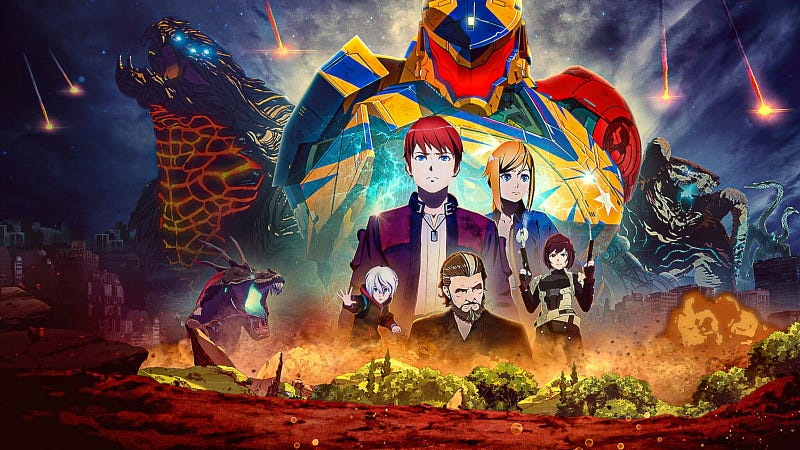
Promotional asset for Pacific Rim: The Black

Roleplaying Games

‘Pacific Rim’ + Chris Perrin’s ‘Mecha’

Fight the Hurricane, Cancel the Apocalypse

“The world is coming to an end. So where would you rather die? Here? Or in a Jaeger?”

— Stacker Pentecost, ‘Pacific Rim’

Pacific Rim is about giant robots punching monsters in the face. The main theme song, with it’s badass rock guitar opening, starts up in my head every time I see Jaegar fan art or hear rumors about a Tranzor Z reboot. It is dumb badwrongfun sci-fi at its best. I fucking love Pacific Rim.

It’s kinda bullshit that there isn’t an official Pacific Rim RPG. With Pacific Rim: The Black around the corner, there are bound to be rabid fanatics desperately in need to play in that universe. In lieu of an official game, Mecha and its Kaiju expansion probably model over-the-top Jaegar-on-Kaiju action best.
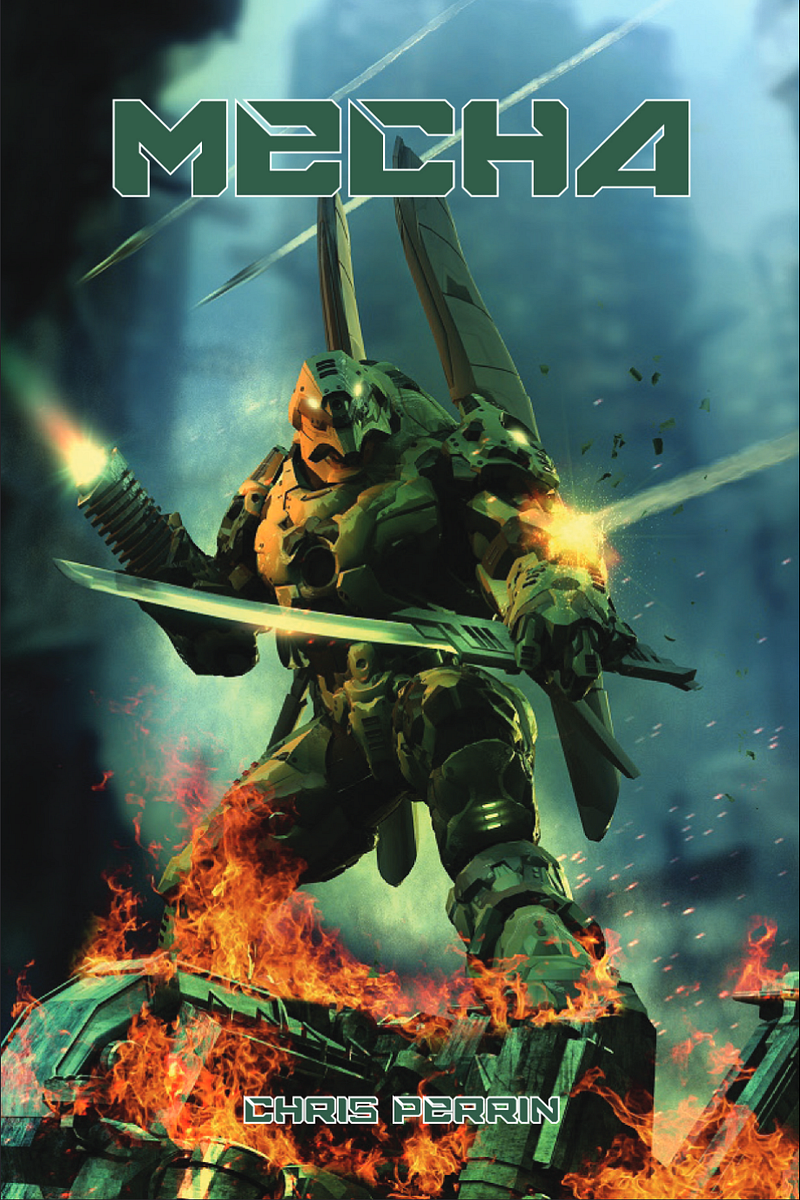
Front cover of Mecha.

Chris Perrin’s Mecha is a fairly lightweight RPG. Characters have 4 stats, 6 skills, 4 personality tags called Traits, and a personal Goal. Mechas aren’t much more complicated. 4 stats, some weapons, 2 Configurations, and a Protocol, which is basically the mecha’s purpose. After the pilot and mecha are statted out, those stats are linked to determine the mecha’s in-battle Attack, Defense, Movement, and Engineering values.

All the action happens on a Bullseye Battlemap, and battles are played out a lot like an abstract board game. Movement and range is abstracted into sectors. I absolutely love this! Life is too short to fiddle with literal distance or location. Death to simulationism!

Mecha is pretty gamist in its design philosophy, but it has a lot of narrative mechanics to give dramatic context to the violence. Individual “episodes” have a particular structure. Every player gets their own spotlight scene. These scenes give the players a chance to advance their personal plots, recover from a previous injury, repair their mecha, or try to gain a tactical advantage in the next battle. When one scene ends, the player to the left starts theirs. When the players have had their scenes, the GM starts a scene that sets up the battle that MUST happen in every episode of a mecha anime. Then it’s time to fight! On paper this all sounds contrived and terrible. But when you re-watch Martian Successor Nadesico and Big O, you’ll notice that a lot of episodes play out the same way.
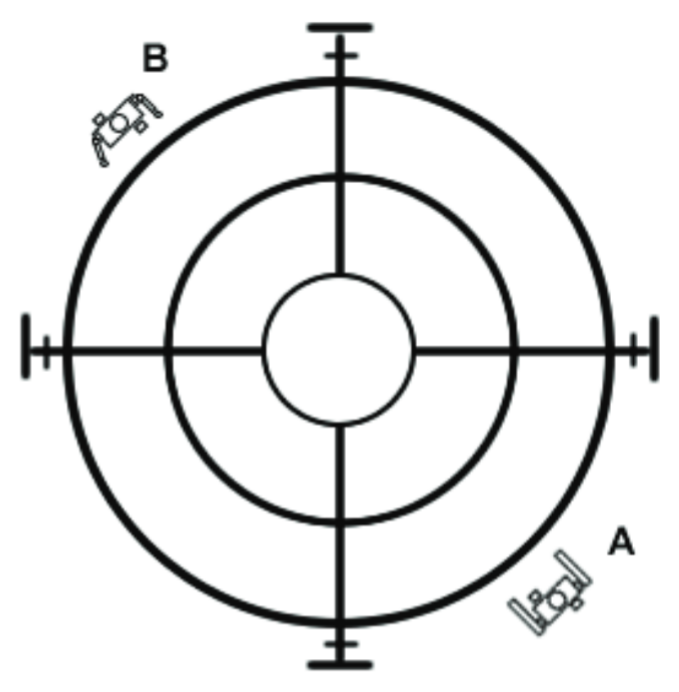
The Bullseye Battlemap from Mecha.

Mecha: Kaiju reads like a love letter to Pacific Rim, the 2014 Godzilla movie, and classic Kaiju movies in general. Kaiju are built almost exactly like mecha, except they have fewer weapons and they are their own pilots. The book also introduces more advanced rules for hiding behind and crashing through buildings, including a Mayhem system that incentivizes Kaiju to be as destructive as possible. There are even rules for pilots “Linking”, which is basically Drifting without the lawsuits.

Mecha walks the GM through the process of building their own “setting reference schematic” (SRS). The core book comes with three pre-built SRSs, and Kaiju has its own default setting. Steal liberally from all of them. Specifically the Standard Systems and Archetypes from Weapons of War: Steel Gunners, and the stats for a few of the Kaiju from Dreams of Ruin.
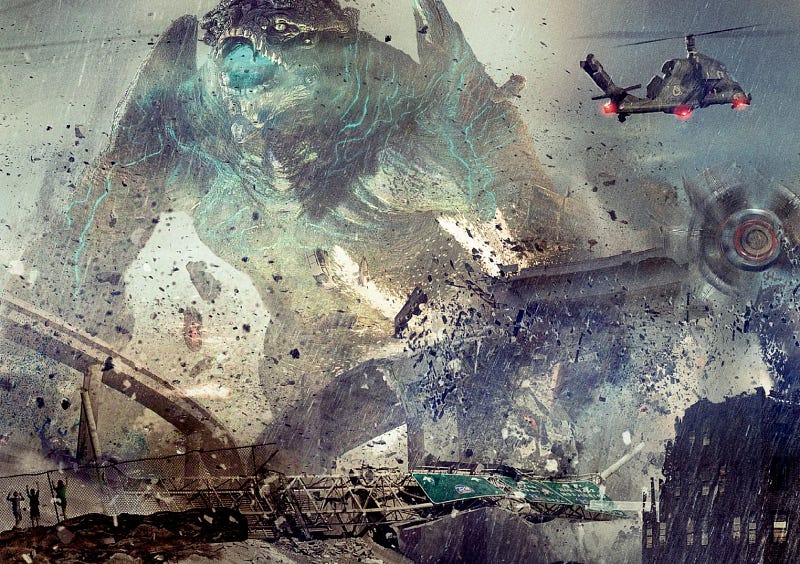
Promotional asset featuring Leatherback for Pacific Rim.

Mecha’s rules call for players choosing from a list of common mecha models. They can customize them, but some might be mostly the same. That said, building mecha and kaiju is pretty simple anyway. It’s not a crunchy or complicated system. After a while you’re going to see that most Jaegars are pretty similar stat-wise.

But you should go through the process of making each Jaegar and each Kaiju from scratch every time. That’s how Our Lord and Savior Guillermo del Toro did it. Each Jaegar had its own swagger. And every Kaiju was made with, his words, “love”. Embrace the Love. Make every Jaegar and Kaiju its own model.

Depending on how you interpret the movies and the rules, Gypsy Danger’s stats could look something like this…
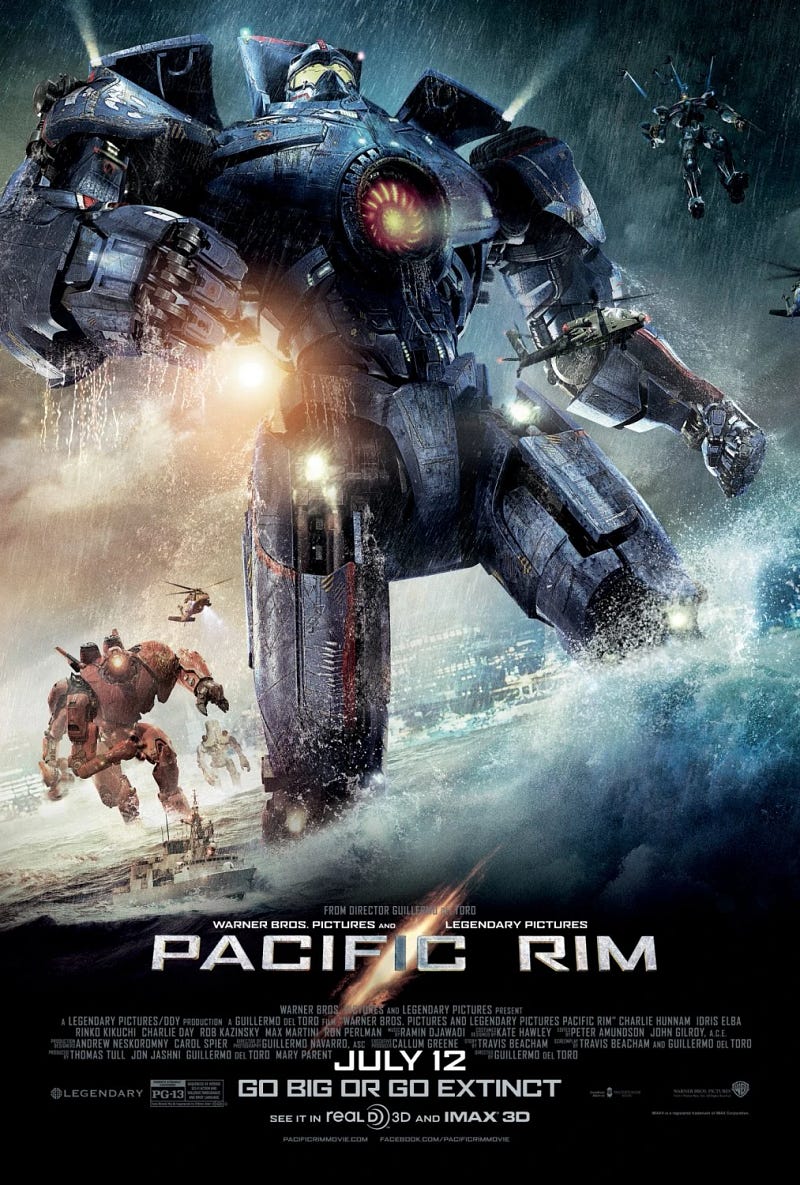
Promotional poster for Pacific Rim.

Gypsy Danger

  • Weapons 3
  • Armor 3
  • Technology 2
  • Speed 3

Weapons:

  • Plasma Cannon (1, Energy)
  • Chain Sword (0, Melee)
  • Rocket Punch (0, Impact)

Configurations:

  • Brawler
  • Defender (Impact)

Mecha isn’t the only RPG that can model Pacific Rim. Both The Mecha Hack and Tiny Frontiers: Mecha and Monsters do Jaegars and Kaiju fairly well. Both have lightweight rules, and way better artwork than Mecha. They might even be better at emulating the movies. But Chris Perrin’s Mecha groks the realities of a tragic-but-awesome anime series full of mechs, monsters, and melodrama.

Now go hit a giant monster with an oil tanker using the power of friendship.

Anime
Roleplaying Game
Modding
Television
Movies
Recommended from ReadMedium