
Buzz Aldrin Paid an Enormous Price for a Round Trip Ticket to the Moon
He never anticipated a time when he would ask the question, “Now what?” Are you making the same mistake?
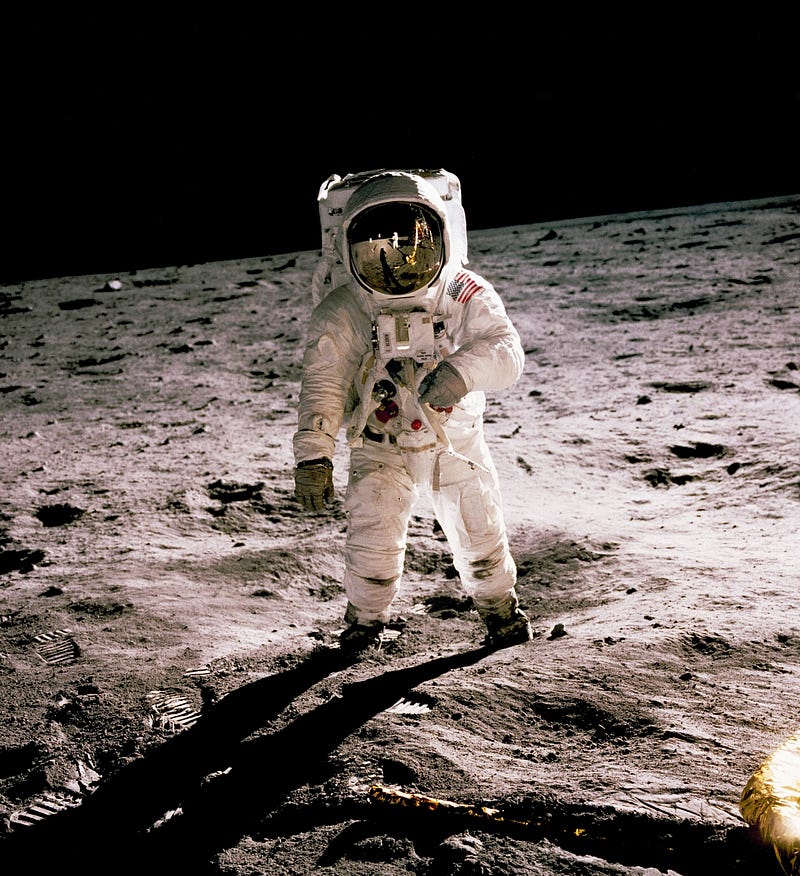
He was the second human to walk on the moon. His father, Edwin Aldrin, was an engineer and aviation pioneer, and friends with Charles Lindbergh and Orville Wright.
Buzz Aldrin was born to be an astronaut.
His goal of traveling to the moon was a monumental — if not a seemingly impossible — objective.
He saw himself as a lunar astronaut before there was technology to take him there. And yet, he not only believed it was possible, he structured all other aspects of his life around achieving this single endeavor.
But there was a flaw in Aldrin’s plan.
He never imagined what his life would be like after completing his goal. He never thought about the years that would remain after he’d returned to earth. How would he spend his time? What new purpose would be waiting for him?
In short, he never anticipated a time when he would ask the question, “Now what?”
In Aldrin’s case, his obsession cost him dearly: His wife left him, he became an alcoholic, and he withdrew into a deep, depressive state. These were the hidden, but very real costs of a round-trip ticket to the moon.
Could the outcome have been different?
Could Aldrin have adjusted his priorities by recognizing the importance of the more earth-bound parts of his life?
After reading his autobiography and the transcripts of his speeches, I have to admit that, in Aldrin’s case, probably not.
He was a man obsessed.
However, I don’t think he purposely put his personal relationships, health, and self-worth on the chopping block, intentionally sacrificing them in exchange for that all-consuming 21 hours and 36 minutes he and Neil Armstrong spent on the lunar surface.
But after he returned to earth?
That’s when the price became obvious — even to Aldrin.
He summed up his feelings of despair and desperation after achieving his life-long ambition of reaching the moon in his book, Magnificent Desolation.
“I wanted to resume my duties, but there were no duties to resume. There was no goal, no sense of calling, no project worth pouring myself into.” — Buzz Aldrin
His frustration is understandable — once you’ve been to the moon, everything else seems inconsequential by comparison. And while Aldrin did his best to hide the extent of the damage to his personal life, his wife, Joan Aldrin was more forthcoming . . .
“There’s something about the public making a hero of a man, what it did to him and me and the kids. . . I wish Buzz were a carpenter, a truck driver, a scientist, anything but what he is.” Joan Aldrin, from interviews with Life Magazine (1969) and The LA Times (1973).
While your goals may not be as ambitious as Aldrin’s, you’ve no doubt experienced the stress of having to choose between devoting your time and resources toward your professional objectives and the needs of your spouse, family, and friends.
At the time, arranging your life around the pursuit of a singular goal may seem to be an appropriate — even necessary — prioritization.
You may even assume that the people in your lives will wait for you — that your health will survive the years of neglect, and your perspective can be realigned to focus on a more balanced and satisfying future.
But life doesn’t work that way.
The foundational elements of our lives — the things that make us happy and give us a sense of emotional security — must receive our attention and care and, when necessary, our protection.
Neglect them, and they wither.
Ignore them, and they die.
Living your life in a state of “singular focus” can be tragically deceiving.
Because it often results in the other aspects of your life being ignored — by default.
Deluded by a false sense of logic — we tell ourselves it’s the right thing to do — we plunge headlong into a state of unbalance, rationalizing it as an unfortunate but necessary component of accomplishing a challenging objective.
But every goal comes with a price tag.
Depending on the nature and scope of the objective, some pay more, others less. But the cost is real, and it’s often counted in the currency of the emotional security we currently experience in our lives.
Are you on the edge of paying too much?
Here’s an easy test . . .
Ask yourself, “If I lost my spouse, my family, or my health as a result of accomplishing an all-important goal, would that be an acceptable price to pay?”
The answer — yes or no — isn’t nearly as important as the way this question makes you “feel.”
If you immediately dismissed the idea because you know the likelihood of it actually happening is small — because you currently value, support, and nurture those personal areas of your life, and receive positive feedback that confirms it — there’s a good chance your life has some degree of balance.
But if you felt a sudden wave of fear, or a sickening surge of guilt as you consider the possibility of losing the people, places, and things that are most important to you, it’s time to reassess how you’re spending your time and attention.
Start by listening to the signals your mind is sending you.
Burnout, frustration, and depression are all signs of a life out of balance. So is a spouse who has become distant and withdrawn.
And what about your health? Increased drinking, smoking, and recreational drug use are common compensations for a life on the verge of becoming a virtual train wreck.
Seldom do we realize the cumulative harm of neglect and inattention until we’ve completed an all-important objective.
By then, it’s often too late.
That’s when we realize we’ve traded away the most valuable parts of our life in exchange for a few newspaper clippings, a trophy or two, and the quickly forgotten accolades of our professional peers.
The antidote?
There is no potion or incantation to magically restore a healthy balance to a life dominated by a singular obsession.
The real key is on-going prevention — to periodically assess how you’re spending your time and, if necessary, readjust your priorities to provide more support for the foundational elements in your life.
Sounds easy, right?
But in realistic terms, you’re attempting to look into the future and anticipate the possible damage to your marriage, your family, and your health if you continue with your current priorities.
For example, if your first stop after a ten-hour day at the office is the local bar, make sure the time you spend there is more important than spending that time with your family.
Maintain an open channel of communication with those closest to you.
If you anticipate a short-term need to dedicate an inordinate or disproportionate amount of time to your work, explain the situation to your family, tell them why it’s important, and what they can expect from you during this limited time span. Let their feedback guide you on how flexible you need to be, based on their needs and expectations.
For example, your nine-year-old may not understand your reason for missing a Sunday afternoon league game, while your seventeen-year-old won’t really care.
Keep in mind that your family’s acceptance of a temporary priority imbalance must be just that: Temporary.
Intentionally transitioning into a state of unbalance for “as long as it takes,” presents the risk of establishing a “new normal,” and with it, unintentional, complacent acceptance.
Aldrin’s family was well aware of the importance of his work.
They were also aware of the overwhelming commitment he’d made to be one of the first men to walk on the moon. They accepted the “shadow” nature of his reduced and irregular presence as a “normal” part of their life.
But it didn’t stop the damage from occurring.
If the foundational elements of your life are important to you, support them with a level of priority equal to your highest objective. For example, if you usually spend Sunday afternoon in some outdoor activity with your spouse, make it a priority by including it in your plan. If necessary, make it an unbreakable appointment.
I’ll leave you with this . . .
While it may never be your intention to purposely ignore your spouse, family, or friends, the damage from what they perceive as apathy and indifference is just as real.
Take the time to recognize the parts of your life that are working — the relationships, health practices, and spiritual mindset that provide you with emotional security and happiness. Make sure they are included in your life plan as your highest priority intentions, especially when setting new goals and objectives.
Unlike Buzz Aldrin, you may never reach the moon. But by nurturing and protecting the foundational elements of your life, you’ll enjoy a life measured in terms of happiness, satisfaction, and fulfillment — often when you need it the most.
“Time has a wonderful way of showing us what’s important.” — Margaret Peters
© 2021 Roger A. Reid. All Rights Reserved.
Roger A. Reid is the author of Better Mondays: The New Rules for Creating Financial Success and Personal Freedom (While Working for the Man)
Roger A. Reid, Ph.D. is the host of Success Point 360 Podcast and author of Better Mondays and Speak Up. A certified NLP trainer with degrees in engineering and business, Roger offers tips and strategies for achieving higher levels of career success and personal fulfillment in the real world.