avatarJulia A. Keirns

Free AI web copilot to create summaries, insights and extended knowledge, download it at here

1553

Abstract

t that was operated by the United States Army and was officially closed in 1992. Some of the chemical weapons manufactured here included mustard gas, napalm, white phosphorus, lewisite, chlorine gas, and sarin. In the early 1980’s the level of contamination in the area was high enough that it was placed on the National Priorities List of the most contaminated areas in the United States. Wildlife, including the endangered Bald Eagle, had moved into the area, which helped convince Congress to pass the Rocky Mountain Arsenal National Wildlife Refuge Act and gave control of the land to the Federal Fish and Wildlife Service to oversee the cleanup (<a href="https://en.wikipedia.org/wiki/Rocky_Mountain_Arsenal">Wikipedia</a>).</p><figure id="df30"><img src="https://cdn-images-1.readmedium.com/v2/resize:fit:800/1*gKvWcsHDOJCS43NhFYW10Q.jpeg"><figcaption>Buffalo herd at RMANWR. Photo by author.</figcaption></figure><p id="d29c">About halfway through the wildlife drive, the buffalo herd came into view. There were even a few newborn calves that were fun to watch.</p><figure id="f518"><img src="https://cdn-images-1.readmedium.com/v2/resize:fit:800/1*ZLvbQhaaXCk0wiZ6cj9XAA.jpeg"><figcaption>Buffalo calf nursing. Photo by author.</figcaption></figure><p id="4eba">We drove by the prairie dog town, but because of the rain they were all hunkered down in their burrows. It’s hard to believe that this area was once so contaminated by chemical weapons that nothing survived here.</p><figure id="cdef"><img src="https://cdn-images-1.readmedium.com/v2/r

Options

esize:fit:800/1*svVtnzV7nPgsTrknA4qFHw.jpeg"><figcaption>Prairie Dog burrow. Photo by author.</figcaption></figure><p id="6338">We even saw several tumbleweeds bunched up in a corner by the fence. Tumbleweeds are plants that rely on the wind to reproduce. They are often seen blowing across the road during dust storms.</p><figure id="37b6"><img src="https://cdn-images-1.readmedium.com/v2/resize:fit:800/1*2H0mIlpF7upUKDqNw2b22A.jpeg"><figcaption>Tumbleweeds. Photo by author.</figcaption></figure><p id="bf86">This is the most tumbleweeds I have ever seen in one place.</p><p id="832e">It was a great drive through the Rocky Mountain Arsenal 15,000 plus acre National Wildlife Refuge. It is open seven days a week from sunrise to sunset, closed on Thanksgiving, Christmas, and New Years Day, and the cost is free.</p><div id="12e7" class="link-block"> <a href="https://medium.com/subscribe/@jakeirns?source=publishing_settings---user_settings----------------------------------"> <div> <div> <h2>Get an email whenever Julia A. Keirns publishes.</h2> <div><h3>Get an email whenever Julia A. Keirns publishes. By signing up, you will create a Medium account if you don't already…</h3></div> <div><p>medium.com</p></div> </div> <div> <div style="background-image: url(https://miro.readmedium.com/v2/resize:fit:320/0*GDkOoLAIlbPpxJAw)"></div> </div> </div> </a> </div></article></body>

Rocky Mountain Arsenal National Wildlife Refuge

Denver, Colorado
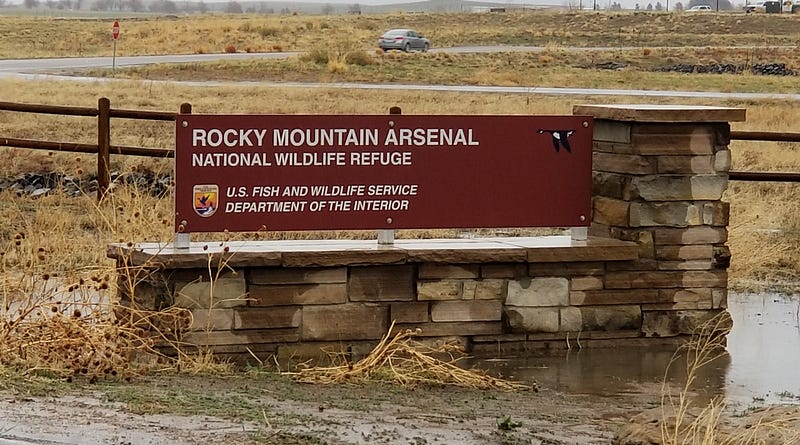
Photo by author.

On our way to Rocky Mountain National Park, we stopped by the Rocky Mountain Arsenal National Wildlife Refuge for a nice drive through the wilderness of open lakes, wetlands, and prairie grasslands.
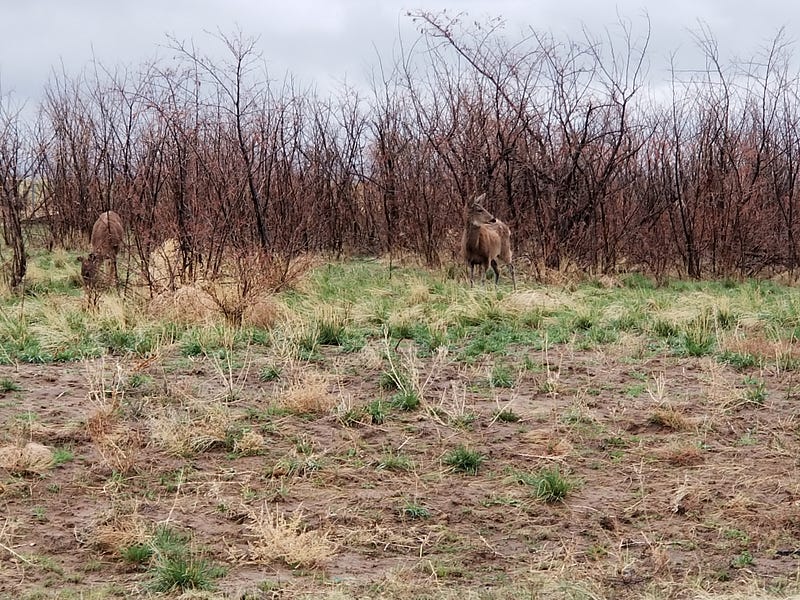
Deer. Photo by author.

It was a misty and rainy day, but the deer were out and about in plenty.
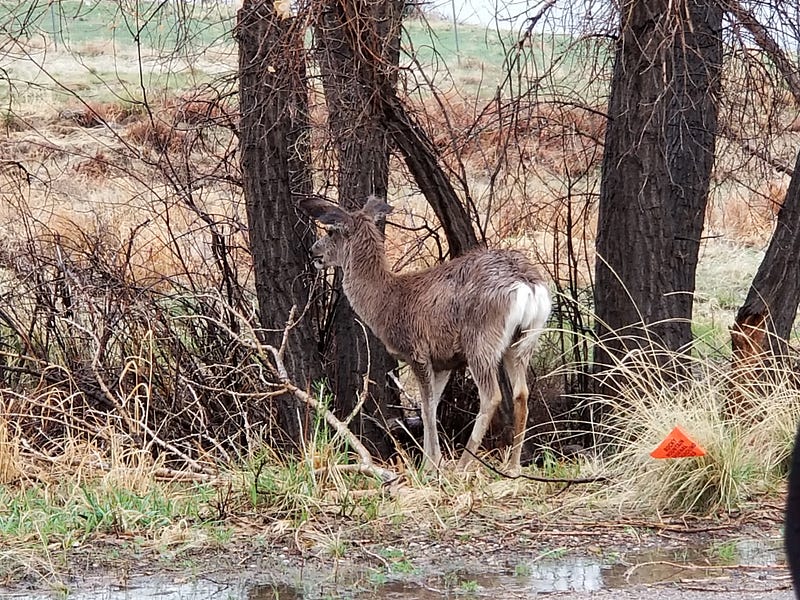
Deer. Photo by author.

Their fur was much thicker than we are used to seeing in Ohio. We were there in May, and it was still cold. The drive was beautiful through the peaceful landscapes. Rain never dampens how awesome nature is.
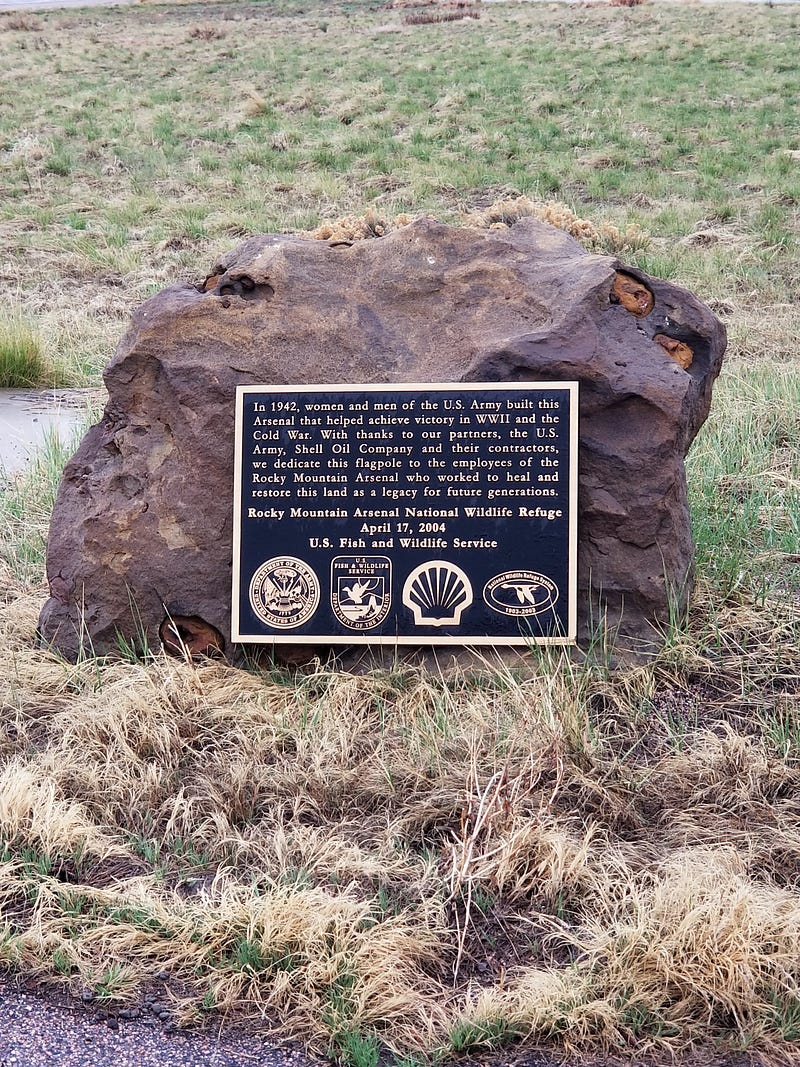
Rocky Mountain Arsenal. Photo by author.

In 1942, women and men of the U. S. Army built this Arsenal that helped achieve victory in WWII and the Cold War.

The Rocky Mountain Arsenal was a chemical weapons plant that was operated by the United States Army and was officially closed in 1992. Some of the chemical weapons manufactured here included mustard gas, napalm, white phosphorus, lewisite, chlorine gas, and sarin. In the early 1980’s the level of contamination in the area was high enough that it was placed on the National Priorities List of the most contaminated areas in the United States. Wildlife, including the endangered Bald Eagle, had moved into the area, which helped convince Congress to pass the Rocky Mountain Arsenal National Wildlife Refuge Act and gave control of the land to the Federal Fish and Wildlife Service to oversee the cleanup (Wikipedia).
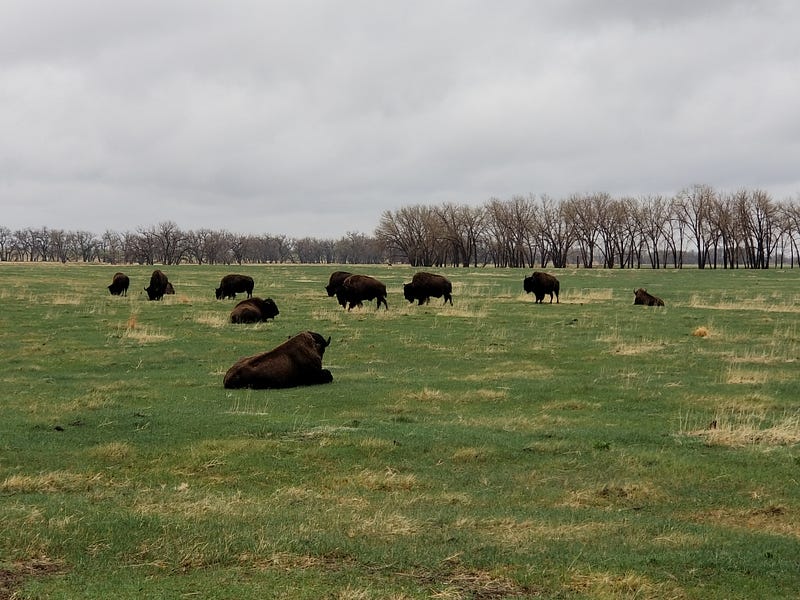
Buffalo herd at RMANWR. Photo by author.

About halfway through the wildlife drive, the buffalo herd came into view. There were even a few newborn calves that were fun to watch.
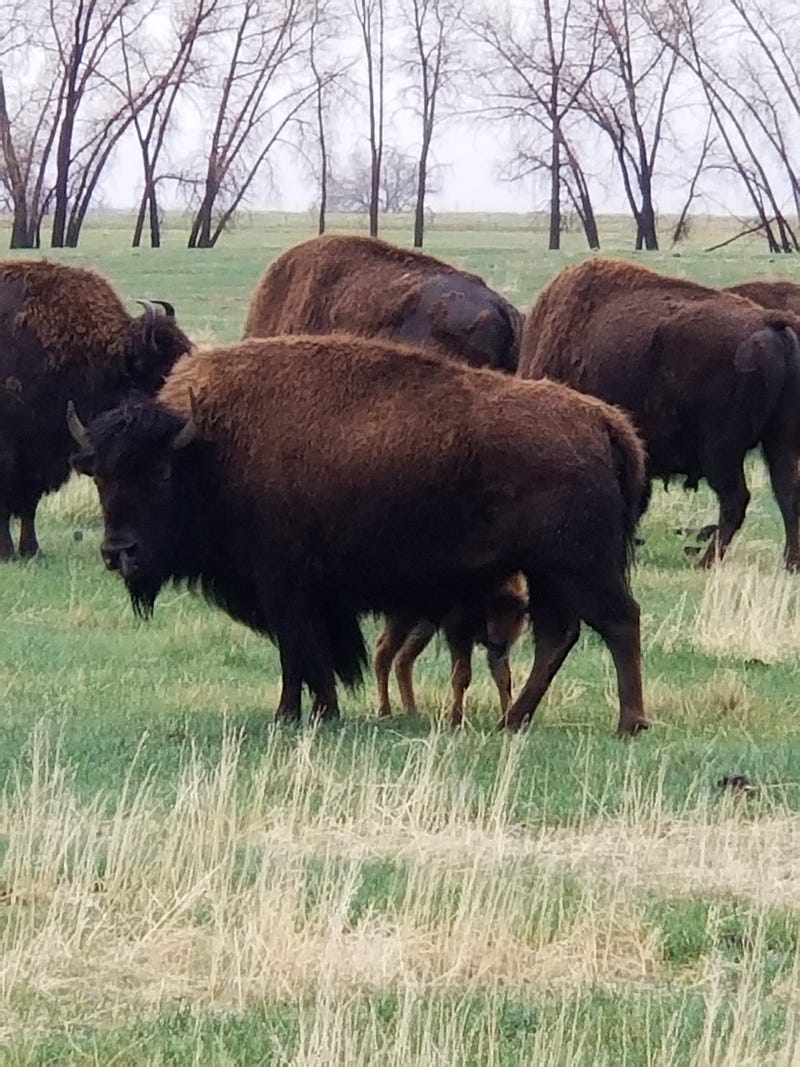
Buffalo calf nursing. Photo by author.

We drove by the prairie dog town, but because of the rain they were all hunkered down in their burrows. It’s hard to believe that this area was once so contaminated by chemical weapons that nothing survived here.
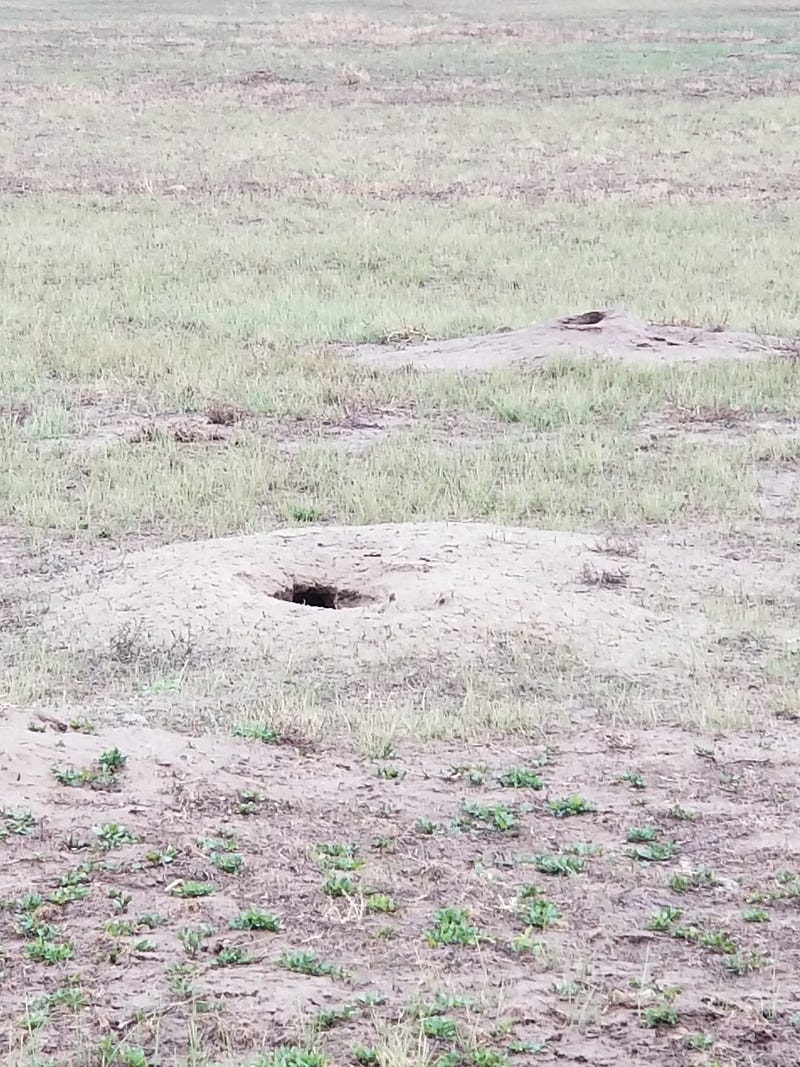
Prairie Dog burrow. Photo by author.

We even saw several tumbleweeds bunched up in a corner by the fence. Tumbleweeds are plants that rely on the wind to reproduce. They are often seen blowing across the road during dust storms.
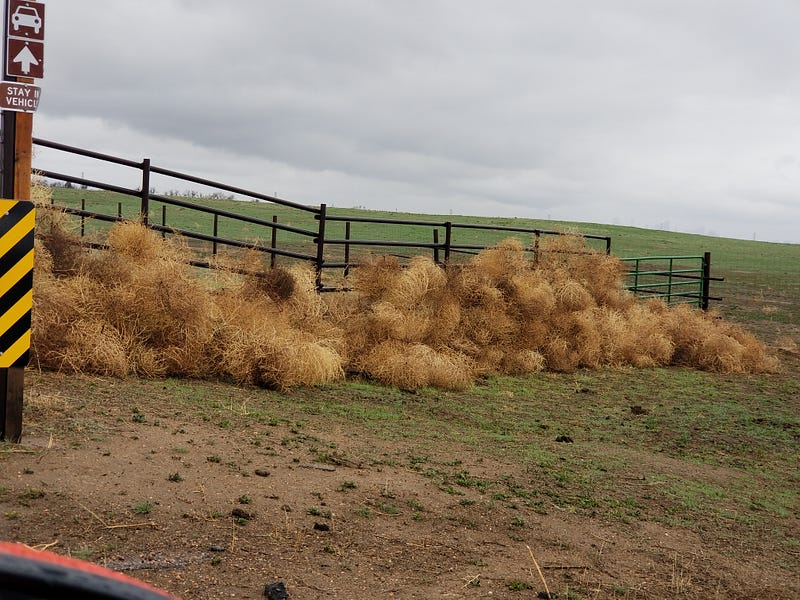
Tumbleweeds. Photo by author.

This is the most tumbleweeds I have ever seen in one place.

It was a great drive through the Rocky Mountain Arsenal 15,000 plus acre National Wildlife Refuge. It is open seven days a week from sunrise to sunset, closed on Thanksgiving, Christmas, and New Years Day, and the cost is free.

In Living Color
Photography
Nature
Colorado
Travel
Recommended from ReadMedium