
Robert Oppenheimer and Cigarettes
The ‘father of the atomic bomb’ and his obsession with smoking
“J. Robert Oppenheimer is widely considered as the father of the atomic bomb, and was a leading figure in the Manhattan Project with several other contributions to the development of theoretical physics.”
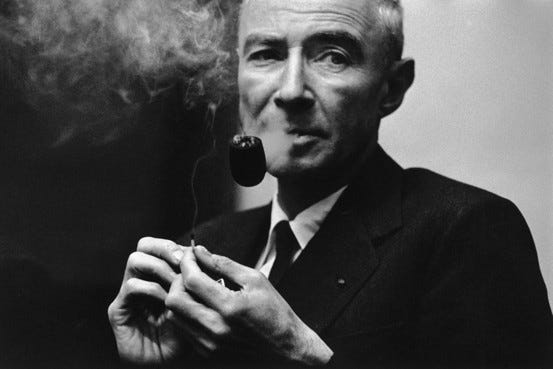
A brief introduction to his life’s work, like the one mentioned above might be a striking resemblance to his brilliance for some, while it might incite hatred for others. A naturalized American citizen of German Jewish heritage, his life was not as easy as pie. He was in constant conflict with himself and the people he worked for in terms of the moral ground he had to stand on while developing the weapons of destruction. In these trying times, the only ally that never left his company was cigarettes.
Smoking was like breathing to Oppenheimer. The stress of work could bring even the most determined to their knees. During his excessive work routine, he barely ate anything. One could only see the cigarette butts lying around if you were to meet him at his work. He smoked as many as 100 cigarettes a day. During the period of intense thoughts and concentration, he’d like nothing more than just a cigarette between his fingers. His friends often described him as self-destructive, in regard to his personal health. In addition to cigarettes, he often indulged Gin and Coffee, more than he should. Despite his rotting teeth and an unhealthy body weight of just 115 pounds for a man of a six-foot frame, his works never seemed to get affected by his personal life choices though. In fact, it seemed like they helped him in some way or the other.
One could only speculate why Oppenheimer turned to smoke even though the indications seem to be clear as the sky and it begs the ultimate question, ‘Why does anyone do anything?’ He had a special bond with this one brand of cigarette called ‘Chesterfield’. In a picture taken on the 14th of February, 1946 at Oakridge guesthouse, he could be seen in a cool and composed pose with a Chesterfield cigarette wedged between his fingers.
Anxiety and depression were nothing new to Oppenheimer as he had to deal with them relentlessly on a daily basis. The ideological differences with his colleagues and superiors at work also didn’t help him to put his mind at ease. One of the instances where his anxiety reached its peak was when he met President Truman. His self-loathing traits were more on display when he shook hands with the president and exclaimed
“Mr. President, I feel I have blood on my hands.”
The world can be a cruel and cold place and words could hurt more than actions. President’s response to his agony belittled him when he put out a handkerchief and said to Oppenheimer
“Here, Do you like to wipe your hands?”
In pursuit of displaying his manliness, the President insisted Oppenheimer not be a “Cry-baby scientist”, do the job he’s actually assigned for and the nuclear war is conducted without tears.
Perhaps no other physicist holds so much power as Oppenheimer in deciding the fate of this world. The power corrupts many, but it descended Oppenheimer to the deepest gorges of darkness and Oppenheimer chose cigarettes to soar out of them. Perhaps no other man is capable of this burden. Oppenheimer’s agony tore him to shreds as he realized, in pursuit of scientific legacy (which seems almost innocent), how much one has to sacrifice (where innocence loses its virtue and you become the straw-man for the world to judge your morality).
As a remedy for his anxiety, he chose cigarettes every time which eventually turned him into a chain smoker for life and afflicted him with a never-ending smoker’s cough. His death is associated with throat cancer as a result of his chain smoking. Oppenheimer chose cigarettes for his mind but his body rejected every life choice he made until he met the sweet relief of death on February 18, 1967.
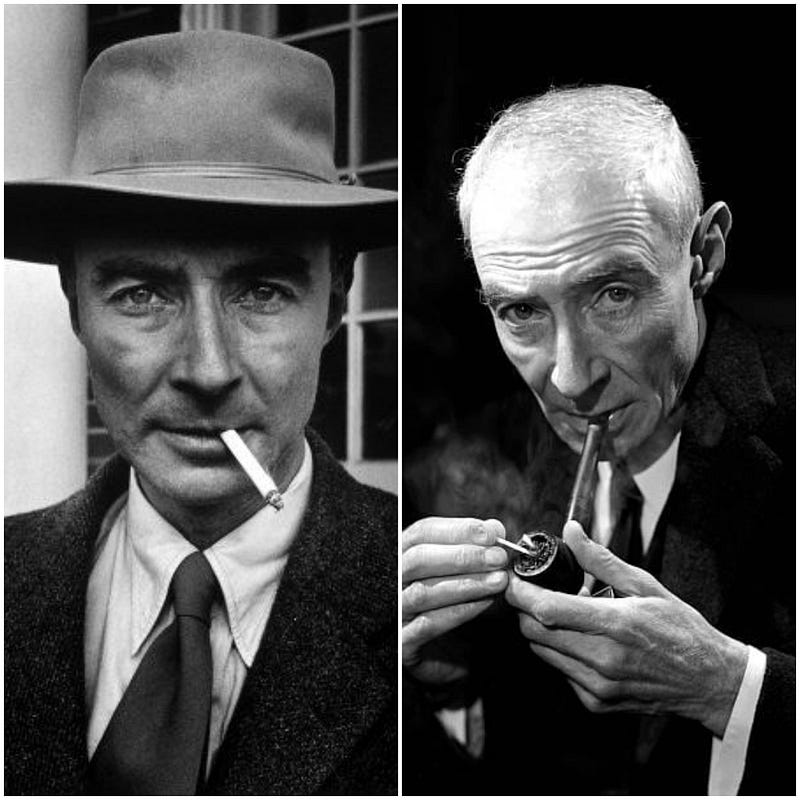
Contributed by Rishab Karki and curated by the author.
Thank you so much for reading. If you liked this story don’t forget to press that clap icon. If you like my works and want to support me then you can become a medium member by using this link or buy me a coffee ☕️. Keep following for more such stories.


