
Roadsick blues with old school country balladeer Gene Watson
Inducted into the Grand Ole Opry in 2020, the “Fourteen Carat Mind” country emperor plainspokenly probes stage fright, tough crowds, lucky charms, sycophants, guitars, COVID-19, and 35th studio album “Outside the Box.”
The Gene Watson Interview, Part One
You’re a natural entertainer, but does stage fright ever rear its head?
It’s not a problem for me. Way down deep inside I’ve always been a people’s person. The audience makes up so much of my show. I go onstage and be myself. I never plan out a show or what song will be next. I always play it straight off the cuff and take note of whatever vein the crowd’s in. We try our best to do what the people wanna hear, and it usually works pretty good.
Was that always the case?
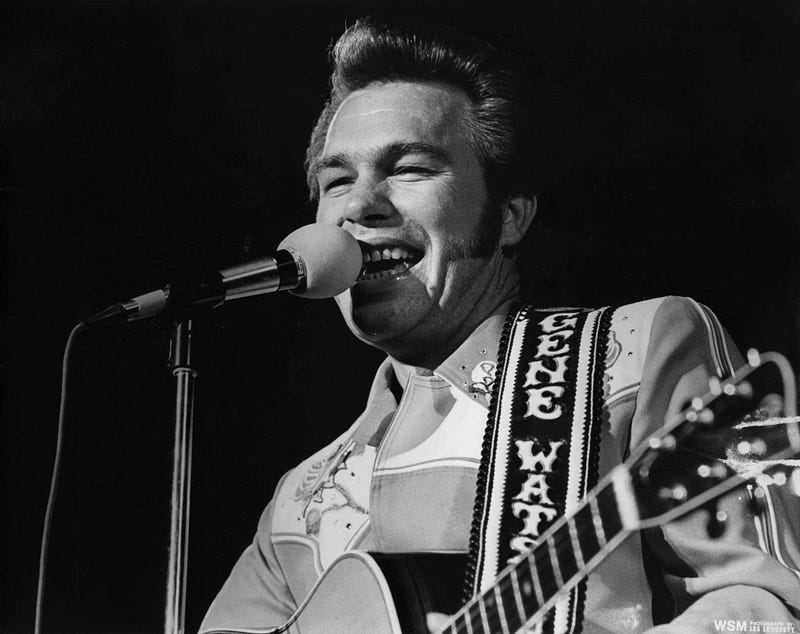
You do have to go through a learning curve. No doubt about that. When I first started out, I used to play guitar onstage. I would hide behind it so I had something to do with my hands. About all I had to do was concentrate on singing the song and strumming. As I moved along, I eventually put the guitar down.
I worked with the greats like Conway Twitty, Loretta Lynn, Merle Haggard, and so many others. I studied their techniques and how they handled things. I would use that to my advantage. It finally evolved into what you see right now.
I wanna be every one of my fans. Not only do I want them as fans, I want them for friends. I try to display that when I’m onstage. It comes as a surprise to me sometimes how the people so quickly pick up on where you’re coming from and then you just slide right in there with them. Every crowd’s different. You want a great result out of each and every one of ‘em.
Do you have a routine for preparing yourself mentally before a show?
Not that much. I don’t go through any kind of rituals. I might get a feeling about how tough a room is gonna be, how tough a crowd I’m gonna be working to, what little lines I can do to wake them up, or what songs will get them on their feet first. I always try to have an edge. But that don’t mean it works because when you’ve been out there five minutes, you’ll know. If it doesn’t work, you change to something else.
Are there occasions where you found it next to impossible to win over a crowd?
A lot of times when I thought I was trying to win ’em over, I already had ’em. They were just paying real close attention and not hollerin’ or dancin’. There’s not many things harder to work than a crowd that hangs onto every word because they’re there to pick you apart. You’ll think you did a terrible show, then afterwards at the autograph line they’ll tell you how it was the greatest show they’ve seen and that you’ve never sounded better. Sometimes it’s hard to tell.
Some artists rely on a support system that never offers criticism. You know, “Awesome job, boss.” Who tells you the truth?
I hate that kind of a support system. I don’t have to ask. I know whether I’ve done a good job or not because I’m my own worst critic. When somebody comes up and tells me how great I did on a night when I know that I wasn’t, if anything that makes me mad or not pay attention to them. I can pretty much judge myself.
What kinda guitar did you play before the hits started coming?
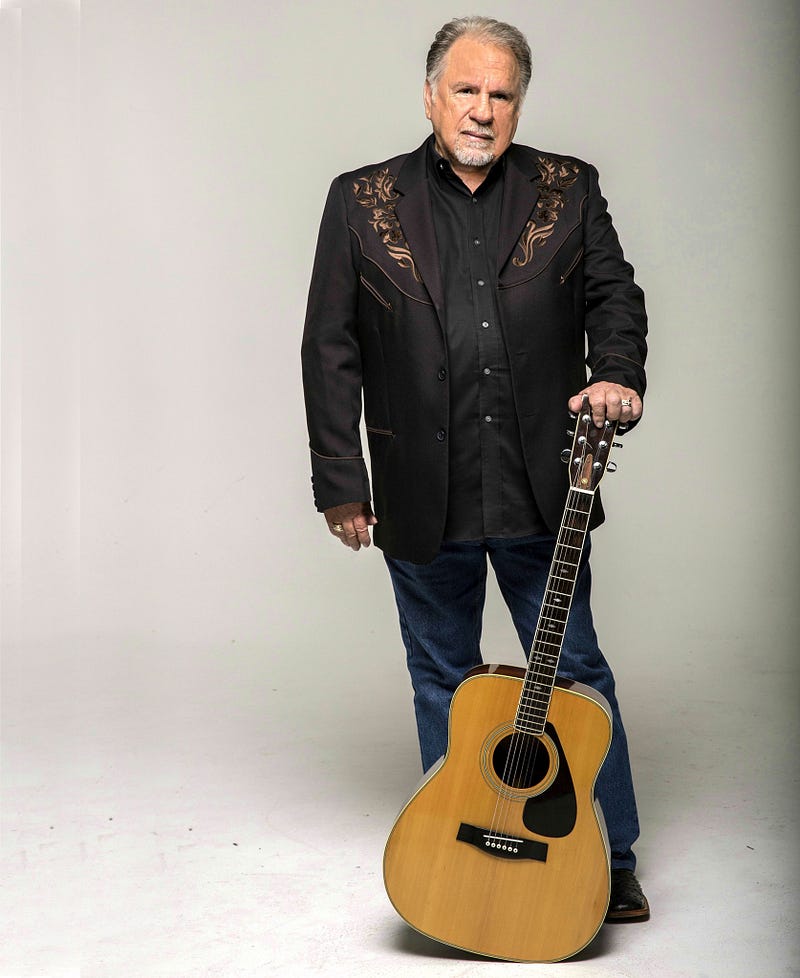
I pretty much always played a Gibson acoustic onstage. After I got to going pretty hard, I switched from a Gibson to a Yamaha because I didn’t wanna get it messed up on the road. I continued with that Yamaha for quite awhile. In fact, I’ve still got it. I played an Ovation for a long time, and I’ve still got that one, too. I collect guitars — I have about 25. I’ve got a great love for guitars.
Has COVID-19 encouraged you to write or record any vocal tracks remotely?
I’m not really into that. I’m old school. It’s hard to put yourself in a positive mode with what’s going on [Watson’s only daughter Terri Lynn Watson Wear regrettably lost her battle with COVID on February 2, 2021, at age 58]. I’m about to lose my mind because I’ve never been off the road this long, although I was sidelined during my successful battle with colon cancer [in 2000]. I’ve been living on the road for nearly 60 years. You gotta do what you gotta do. I certainly don’t want to get sick.
As quick as the pandemic settles down, I’d love it if we could pick up where we left off. We were rolling heavy when the virus hit. We were hot. We were playing all the jobs that we could play, and our audiences were fantastic and driving all kinds of crazy distances to see the shows. All that came to an abrupt halt and shut us down [in March 2020]. Man, it’s a hard pill to swallow. I’m not sure when we jump back out there that it will be as hot as when we had to quit. All we can do is try to gather it back up and maintain our popularity status [visit GeneWatsonMusic.com/Tour to stay in the loop].
In the meantime I’m trying to put a new CD together, too. I’ve got plenty of things to get my mind on. It’s just the fact of gettin’ your mind straightened out [laughs]. I’ve been working on the album for quite some time [prior to March 2019]. I’m not gonna go into the studio until I’ve got everything exactly like I want it. I foresee the album being a little bit different. In fact, I’m titling it Outside the Box. I’m gonna do some things that I’ve wanted to do for a long, long time. Don’t get me wrong — I’m not gonna leave the country field. I’m gonna keep dancing to the records that got me here.
There’ll be original songs. There also might be a cover or two that folks have never heard because I’m finding stuff from way back in genres besides country. I can’t necessarily put my finger right on what it’s gonna be, but I’ve got a lot of ideas. Me and my producer [Dirk Johnson began playing synthesizer, keyboards, and piano for 1993’s Uncharted Mind and stepped in the production chair for 2009’s A Taste of the Truth, 2014’s My Heroes Have Always Been Country, 2016’s Real. Country. Music., and 2017’s My Gospel Roots] are gonna come up with a real unique album that the fans will enjoy [Outside the Box bowed on September 16, 2022].
Do you track live with the band or do you favor coming in later and overdubbing your vocals?
They say it’s old school, but I lay down my guide vocals while the band’s in there doing the tracks, too. I’m inspired by what the musicians play, and oftentimes my singing inspires them. Sometimes that’s how you get your best songs. For instance, “Farewell Party” [No. 5 C&W, Reflections, 1979, composed by Lawton Williams] was cut in one take.
I’ll attempt another vocal later if I’m not satisfied with my original performance. I have also done some harmony overdubs myself. I try to get as much of it done as I can while we’re all in the studio because there’s gonna be a lot of those scratch vocals that you’ll save and want on the final version.
© Jeremy Roberts, 2021. All rights reserved. The Gene Watson interview was edited for clarity and brevity and sequenced cohesively. To touch base, email [email protected] and mention which story led you my way. I appreciate it sincerely.