Roald Dahl Censored by Sensitivity Readers
Newspeak strikes again. Where does it end?
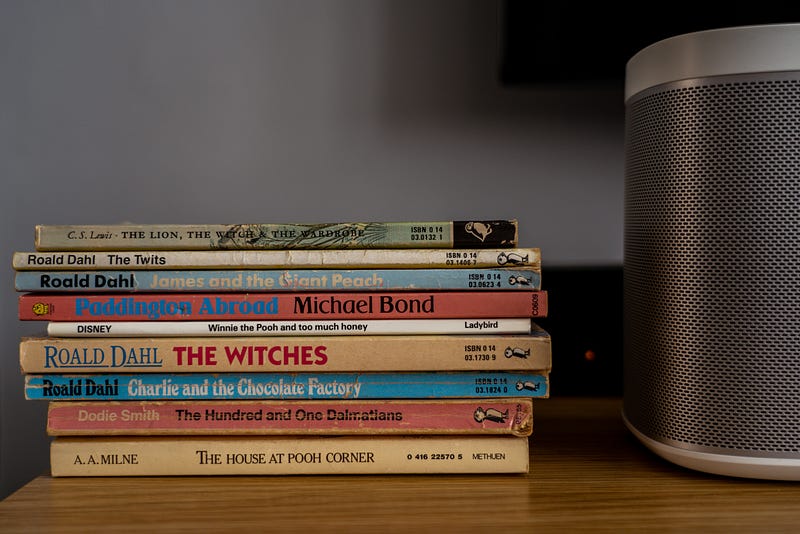
According to this article in The Daily Telegraph, the publisher of Roald Dahl’s classic novels, Puffin, has made hundreds of changes to new editions after having passages highlighted as potentially offensive by so-called “sensitivity readers”. As far as I can tell, there was no great groundswell of offence at the passages in question, and no outcry for this kind of nannying censorship, so why are Puffin behaving like a bunch of professionally offended nitwits looking for things to be upset about?
Changes include Augustus Gloop in Charlie and the Chocolate Factory no longer being referred to as “fat”, and the Oompa Loompas are now gender neutral. In James and the Giant Peach, rhyming verses about James’s horrible aunts have been revised. The original version reads: “Aunt Sponge was terrifically fat / And tremendously flabby at that,” and, “Aunt Spiker was thin as a wire / And dry as a bone, only drier.” The new version says: “Aunt Sponge was a nasty old brute / And deserved to be squashed by the fruit,” and, “Aunt Spiker was much of the same / And deserves half of the blame.”
Various villainous revolting adults (a Dahl staple) are no longer being referred to as “ugly”. Furthermore, superfluous patronising extra lines are added in places. For instance, in my favourite Dahl novel The Witches, in a passage relaying how witches are bald beneath their wigs, this line now appears afterwards: “There are plenty of other reasons why women might wear wigs and there is certainly nothing wrong with that.” Gee, thanks for the surging tide of irrelevancy, sensitivity readers. Let’s continue treating our children like complete imbeciles.
Puffin made these changes in collaboration with something called Inclusive Minds, described as “a collective for people who are passionate about inclusion and accessibility in children’s literature”. According to co-founder Alexandra Strick, they “aim to ensure authentic representation, by working closely with the book world and with those who have lived experience of any facet of diversity”. Adding fuel to this fire is Puffin themselves, who contributed this Orwellian gem on the copyright page of the new editions: “This book was written many years ago, and so we regularly review the language to ensure that it can continue to be enjoyed by all today.”
Speaking of Orwell, I’m reminded of this passage from his dystopian masterpiece, Nineteen Eighty-Four, describing the Ministry of Truth’s Department of Records, where the protagonist, Winston, works tirelessly to constantly update all versions of films, newspapers, books, and other media in the name of political expediency.
“Books, also, were recalled and re-written again and again, and were invariably re-issued without any admission that any alteration had been made.” — George Orwell, Nineteen Eighty-Four.
Bearing in mind the above passage in conjunction with what Puffin and Inclusive Minds say, my question is this: At what point does this become the thin end of the wedge? Where does it end? Do we simply rewrite classic novels every so often, with every fresh wave of groupthink outrage, scouring for thought crime until they are no longer recognisable as a product of their time or author? Or do we let them be? I’m for the latter.
I understand and accept that times and attitudes change, but such changes should be applied to modern writing from this point on, not retroactively applied to the past via the depressing whims of sensitivity readers. And before someone makes the inevitable will-someone-please-think-of-the-children argument, claiming these changes are necessary to protect young sensitive minds from offence or harm from all those nasty words, I would suggest such airbrushing robs them of the ability to learn from history.
A much better approach is to discuss such areas where novels are a product of a bygone era with children, rather than to pretend it never happened. Not that I think Dahl’s writing exposes anything particularly egregious. Certainly not compared with, say, Enid Blyton, whose casual racism, sexism, and snobbery gets up many noses these days. Blyton has been subjected to similar censorship, though I unrepentantly read my uncensored copies to my children in exactly the manner I describe above, as I’m not in the business of mollycoddling.
But I digress. All this foolishness gets my back up to the point that I end up in full-blown contrarian mode, giving me the urge to submit my novels to an insensitivity reader to make them more offensive. All I can say is, hang on to your old copies of Roald Dahl. I certainly plan to hold on to mine.
If you’re a not a Medium member and want unlimited access to my work (and that of numerous other talented writers) click here to upgrade to full Medium membership. This is an affiliate link. I receive financial incentives for new referrals, so sign-ups are hugely appreciated. Thank you.
The Dillon Empire beyond Medium
Can I tempt you with exclusive previews of my short stories and novels? Or do you just want to see awkward videos of me attempting to provide writing updates whilst my son adds snarky captions? If so, click here to check out my Patreon page.
For a full list of my published novels, click click here.
For more on my novels and other projects, click here for my blog.