
Road 50, a Day in Chicago
3 AM, 4 AM, 5 AM, time is moving slowly. We still suffer from jet lag. The hotel we booked close to the airport was a Best Western.
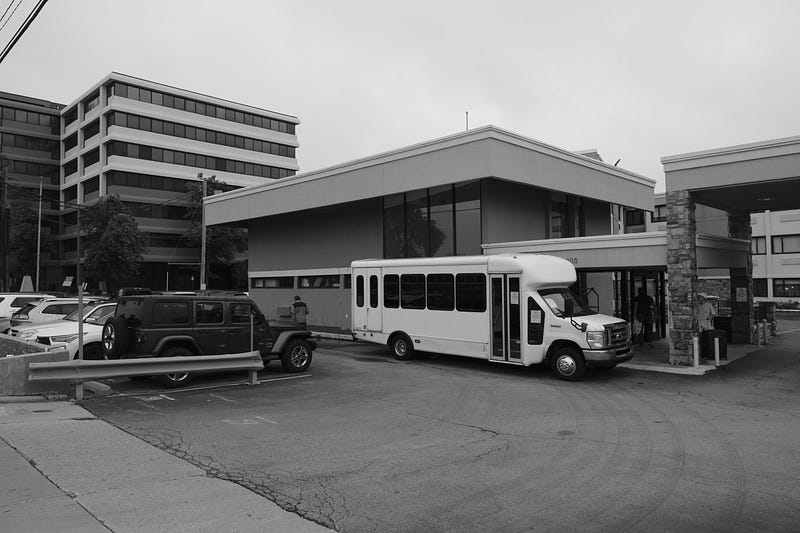
We thought it would be acceptable as we paid about $140 for a night. We were a bit disappointed. The carpet had seen better days, was actually quite disgusting and the rooms smelt of humidity and neglect. It was a room on the ground floor, which perhaps explains the humidity. We had the impression of sleeping in a swamp, luckily without the alligators.
On the pictures the hotel looks good. In reality, quite awful. I guess it has seen better days. At least the employees were very nice to us and the shuttle to and from the airport was functioning perfectly.
At 5 AM, my wife started a yoga class, at 6 AM, we checked the plan for our day for the third time. At 7 AM, w packed our bags and left the room to have breakfast. At 7:30 AM the shuttle brought us to the blue line and that is how we reached Chicago.
We were very impressed when we exited the tube station by the size of the skyscrapers. They are less tall in Europe unless you live in London or perhaps Paris. We had some trouble finding our hotel. We used to be quite good at reading maps but somehow lost the habit, now that we let ourselves be driven by Google maps. As we still did not have a SIM card for the US, we felt abandoned. Strange feeling. I had promised myself that I would not sacrifice my brain on the Google hotel and keep training it. It seems Google won. It seems I got lazy.
Finally, we found it. We will spend the night at the IH Hostel. It looks like a nice place, but we will have to wait until 4 PM until we can get our room, so we leave our backpacks and walk towards the Chicago Art Institute. In Europe, we have many museums of modern art. I am not a specialist, but I found the collection of this museum very impressive. Some of the paintings of the 16th century look like paintings from the 20th century.
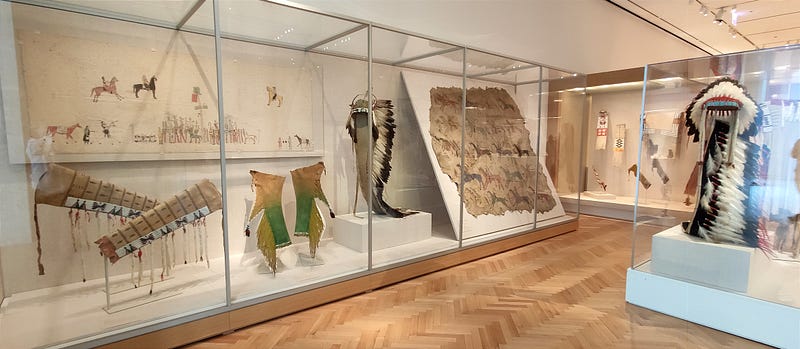
I was surprised, and not for the first time, to see the very limited collection, actually only one small room, dedicated to American indigenous art. There seems to be a lot more space for Chinese, Egyptian or African statues than for American Indian art. You may have an explanation. Somehow it seems to me, coming from Europe, that when my ancestors invaded America, they found only empty space, which of course is completely wrong. What happened to the history and art of the American inhabitants before colonisation? Why does nobody seem to be interested to tell their stories?
Later in the afternoon, we had the chance to visit a street market and see the inhabitants dance and enjoy. It was a very positive experience after two years of COVID to see people enjoying being together again.

We are of course also very positively surprised by the courtesy and customer orientation of most of the people we meet on the street. I have heard more “hellos” and “thank you” in a single day than in a year in Austria. This is for sure something we should import to Europe — this capacity you have to start a discussion with anybody on any subject, just for fun.
That is all for today, folks. I am too tired to write more. Would be delighted to read your comments concerning America Indian art. Write to you tomorrow.


