
Risk vs. Reward of Recreational Private Spaceflight (Part 2)
Bodily deterioration, explosions, space junk, among dangers to civilians.
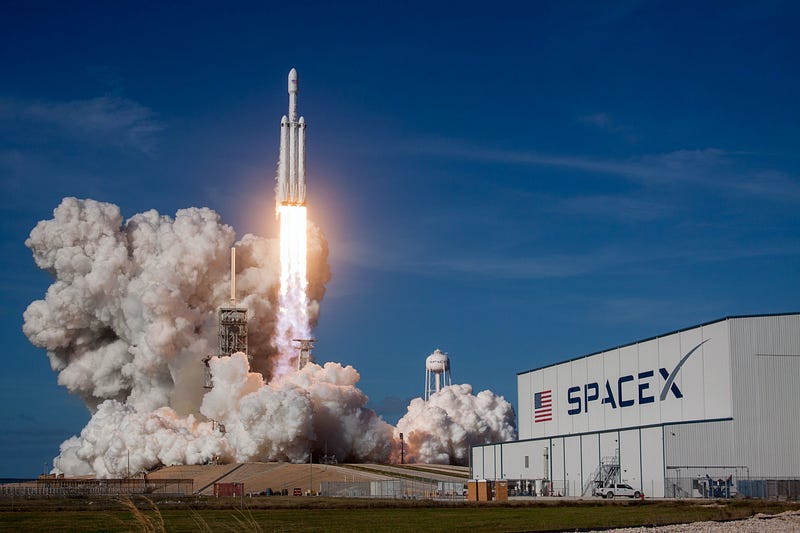
In the wake of the historic Inspiration4 mission by SpaceX — in which an all civilian crew orbited Earth for the first time — it appears that commercial space tourism and entertainment companies have a promising and lucrative future.
That is, until they don’t. Let’s revisit some relevant history…
It doesn’t require a rocket scientist to explain why NASA grounded its own spaceflight program in the mid-1980s and prohibited all private sector commercial spaceflight, including rocket test launches, until the start of the 21st century:
- The reason is because traveling to space is extremely complicated from a technical perspective and extremely dangerous from a human perspective.
- These facts have not changed much over the decades, despite incremental improvements due to new and evolving technology.
Moreover, there are other reasons why enabling private spaceflight for civilian recreational purposes is a bad idea, as I explained in my prior article: 5 Reasons Why Commercial Space Tourism is a Long-Term Mission Fail.
Let’s take a deeper dive to better comprehend the many inherent risks of civilian space flight, compared to the fleeting rewards of space ecstasy.
Practical Benefits?
Here’s a significant question for all proponents of commercial space tourism and entertainment:
- What are the practical benefits of private recreational space travel for society at large?
The answer is there really are none compared to what the USA via NASA already knows about spaceflight in low Earth orbit — not to mention what other countries have learned through their own space programs, like the European Space Agency.
NASA and academia have already conducted comprehensive cutting-edge studies on how space travel causes the human body to dangerously deteriorate.
Groundbreaking studies were issued after astronaut Captain Scott Kelly spent nearly an entire year living on the International Space Station (ISS). Plus, similar space research about the effects of space on the human body over short-term and long-term periods are ongoing.
When his unprecedented “year in space” ended and Scott Kelly landed back on Earth, landmark research was carried out comparing Scott to his identical twin brother, Mark Kelly (a former astronaut and current U.S. senator), who stayed on home soil.
NASA has already assessed the biological, physiological, psychological and cognitive health affects of the twin brothers, one who remained on Earth while the other spent a year in space.
The findings were not positive from a human health perspective as Time.com and other national media reported, based on several comprehensive scientific and medical studies. According to Time:
- “There’s the loss of muscle mass, for one thing. Then there’s the decalcification of bones and the stress on the heart and the damage to the eyes and the changes in the immune system and the disruption of the genome and an actual shortening of your overall life expectancy.”
“Space travel is exceedingly hard on the human body, and we have a lot to learn before we’re ready to start living on the moon or Mars.” — Time.com
- “It was the arterial monitoring that yielded the most striking results, with Scott’s carotid distending and thickening shortly after his arrival in orbit and remaining that way until four days after his return.”
- “His immune system took a hit too. The good news was, Kelly’s immune profile returned more or less to baseline after he came home.”
- “The impact of space on the genome was even more dramatic — and it happened fast. Not all of the changes disappeared — or at least not quickly — after Scott’s return.”
“Tests designed to measure his ability to recognize emotions in other people declined.” — Time.com
- “Vision, not surprisingly, suffers in space, though again, signs of these so-called neuro-ocular changes largely abated when Kelly got home.”
- “In the generations since the first crewed missions flew, we’ve gotten better and better at building the machines of space travel. But the biological machine that is the human body is not so amenable to redesign.”
“Our species’ future beyond Earth rides on learning to protect that living system during its journeys — and after.” — Time.com
NEOs and Space Junk
In addition to the serious negative health consequences for human space travelers, there are other safety issues to address.
One immediate concern is better detecting near-Earth objects such as asteroids, comets and meteorites, which can cause catastrophe for spaceships and their crew.
- “A near-Earth object (NEO) is any small Solar System body whose orbit brings it into proximity with Earth,” according to Wikipedia.”
- “If a NEO’s orbit crosses the Earth’s, and the object is larger than 140 meters (460 ft) across, it is considered a potentially hazardous object (PHO).”
- “Most known PHOs and NEOs are asteroids, but a small fraction are comets.”
“NEOs have low surface gravity, and many have Earth-like orbits that make them easy targets for spacecraft.” — Wikipedia
- The Smithsonian National Air and Space Museum informs us: “Near-Earth asteroids are asteroids that travel to within 1.3AU (195 million kilometers/121 million miles) of the Sun.”
- “An AU is an astronomical unit and it is equal to the mean distance from the Sun to the Earth.”
- “Asteroid and comet impacts are not uncommon in the solar system. The Earth is continually hit by small objects (meteorites) and occasional larger impacts occur.”
Near-Earth objects pose a serious threat to civilian space travel in low Earth orbit and beyond.
According to NASA’s Jet Propulsion Laboratory at the California Institute of Technology, more than 1,000 near-Earth asteroids have been discovered over the past half century.
Then there’s the troublesome issue of cleaning up increasingly harmful and proliferating space debris in Earth’s orbit (also called “space junk”).
Fortunately, some super rich entrepreneurs are putting spaceflight safety over profits, in addition to protecting crucial satellites that we rely on back on Earth, like GPS. One of these people is Apple co-founder Steve Wozniak.
Paul M. Sutter, an astrophysicist at SUNY Stony Brook points out:
- “There are over 20,000 known and tracked pieces of space debris orbiting Earth, each one traveling at about 15,000 mph (24,000 km/h).”
They [space junk] pose a risk to future space missions, and nobody is bothering to clean it up.” — Astrophysicist Paul Sutter.
This rogue space junk can knock out critical satellites and otherwise interfere with space missions by civilian and professional astronauts.
Paying the Price
Then there’s the issue of equal opportunity regarding who can afford tickets for commercial space tourism and entertainment ventures. Not surprisingly, there’s a gaping divide among socioeconomic classes.
Tickets for these space joyrides can range anywhere from $250,000 (on the low end) up to tens or hundreds of millions of dollars (on the high end).
What does this mean for middle class Americans and those living with financial hardships? Other than being selected at random as passengers by private space companies, the answer is: tough luck, no ticket to ride.
Consider the following figures from a Washington Post report this past June:
- “Axiom Space, a Houston-based company that arranges training and all aspects of the flights, is charging as much as $55 million for a week-long trip to the International Space Station. It has booked four such flights on SpaceX’s Crew Dragon over the next couple of years.”
- “Virgin Galactic was charging as much as $250,000 per seat on its SpaceShipTwo spaceplane and has a waiting list of about 600 passengers. When it reopens sales this year, the ticket price is likely to rise to about $500,000.”
“The suborbital space tourism market could be worth $8 billion by 2030, with 1 million potential customers wealthy enough to afford the ticket price and willing to go.” — The Washington Post
- “The Russian space agency flew seven wealthy people to space for some $20 million each during the 2000s.”
- “Russia’s paid flights in the early 2000s were an effort to raise money for its struggling space program, at a time when NASA forbade the practice, saying spaceflight was too dangerous to be opened to ordinary people.” (bold added for emphasis).
Business Insider reports that bidding for tickets on Jeff Bezos’ New Shepard spaceship, per his company Blue Origin, were upward of $3 million a seat during a recent auction.
And Richard Branson’s Virgin Galactic noted the obvious in a 2019 annual report that:
“Due to the inherent risks associated with commercial spaceflight, any accident or catastrophe could lead to loss of human life.” — Virgin Galactic
Space Spinoff Technology
In 2014, I conducted an extensive interview with former NASA deputy chief technologist, Jim Adams. Importantly, he discussed all the “space spinoff technology” that benefits us here on Earth due to NASA’s missions.
Adams told me the following, to which commercial spaceflight companies should pay more attention (full interview above):
- “Much of what NASA does yields practical scientific results.” (whereas the same cannot be said of commercial space tourism and entertainment ventures.)
- “Our Earth Science missions — from the earth observing satellites to the ground or flight-based missions — gather and make available data on rainfall, hurricanes, ground water, and natural disasters, among other things.”
- “This data can be used for practical applications such as monitoring climate patterns, farming, disaster response and wildfires, for example. And we’re always looking for new innovative ways to use the data we collect.”
Here’s my take on the issue:
While some private space companies, like Space X, are moving closer to commercializing space travel, it’s NASA that ultimately has the most experience and resources to make scientific discoveries possible which benefit us on Earth.
The commercial space tourism industry should not make questionable claims for PR purposes about conducting vital scientific research on space joyrides if it’s not true, because NASA and others already have such data.
Space Vacations
Let’s look into the future of commercial space tourism and entertainment in the years ahead…
Picture this: space hotels populate low-Earth orbit with advertising galore by their earthbound corporate sponsors.
There might be an entire new multi-billion business segment known as space advertising or something similar.
Commercial space companies could theoretically take you and your family on expensive vacations at floating hotels above Earth. However, such space hotels might have serious safety issues, especially if unregulated by the federal government with strict oversight by Congress.
Moreover, these new age hotels in space, which promise a “once in a lifetime vacation experience” could be as densely packed as submarines — albeit with the consolation of a cosmic view outside your window.
In addition to potentially being exposed to dangerous radiation, you would also be exposed to giant floating billboards and video screens with mega-advertising (as noted above) in close proximity to your 150–250 foot luxury space hotel cabin.
The Hill newspaper, which covers Congress, reports: “Proposals for space hotels, or at least private space stations that can be used as such, have been around for a number of years.”
- “A company called Orbital Assembly proposes building a space hotel by 2027.”
- “According to the plan, a wheeled structure would have accommodations for up to 280 guests, with a gourmet restaurant, entertainment center and a gym included.”
“The Orbital Assembly ‘Voyager Station’ is unique in that its primary customer base seems to be the wealthy and adventurous in search of the ultimate experience, rather than researchers.” — The Hill newspaper
And let’s not forget about the 1968 epic science fiction film from the brilliant mind of the late Hollywood producer and director, Stanley Kubrick: 2001: A Space Odyssey.
In the prescient blockbuster— where corporations like Hilton sponsor space endeavors — an otherwise friendly autonomous onboard interactive computer named “Hal” badly malfunctions, attempts to take over the mission, and kills several of the crew (see video clip below).
What happens to civilian space passengers if autonomous onboard computers controlling the spaceflight have unforeseen technical anomalies and become erratic?
Readers React
My prior article on this topic received many interesting comments (and about 1,000 views) from people worldwide in my social network when I posted it on LinkedIn. Most think commercial space tourism and entertainment is a bad idea which is confined to the super rich.
Here’s a sampling of what people had to say:
- David A. Bray, PhD (USA): “Getting to space — as others have mentioned — is both costly and hazardous too. Space may be attractive — what can we do to make understanding our biomes, oceans, and nature here at home attractive too?”
- Debesh Choudhury, PhD (India): “The wealthiest 1 percent is playing with space tourism. Our say would never be able to make any change in their business plan/policy. Space tourism is by the rich and for the rich.”
- Susan Dolan (UK): “There’s enough people to help on Earth without running away to tour other planets! Should look at the monopolies on Earth before creating one in SpaceX.”
“Earth is yet unique and beautiful and still many areas are not yet explored, forget about space.” — debasish majumder (India)
- Donna-Luisa Eversley (Trinidad and Tobago): “A commercial/space tourism market is quite a narrow niche, to facilitate the rich adventurer, but is not sustainable in the next ten years. Too many folks are in need of basic sustenance globally.”
- Martin Wright (UK): “With Branson, Musk and Bezos, strides have been made in the development of cheaper, faster and more economically effective space deployment methods which NASA did little to advance in thirty years. Your warning also reminds us that we need to pace these developments — so no rush.”
- Sukal Yogesh (Italy/India): “NASA is the best at carrying the scientific frontier, but it cannot do all the things alone. And as its funds are limited, so here the private sector can provide efficient solutions…Commercial spaceflights with sole purpose of filling their own pockets with unsustainable practices should not be tolerated.”
- Larry Boyer (USA — commenting on Medium): “The Wright Brothers had their critics as well. It took another 50 years before air flight started to become a viable commercial option and another 30 years before air flight became truly available to the masses.”
“I doubt its long-term viability. Musk likely will leave for Mars in a decade. The way this world is going I may join Musk.” — Phillip Louis DAmato (USA)
Final Thoughts
Let’s recall it was none other than Elon Musk of SpaceX who proudly proclaimed his ultimate goal for human civilization years ago: “It’s about being a multi-planet species and have life extend beyond the solar system.”
Musk is a visionary who states a worthy and ambitious goal. But is a private spaceflight company landing humans on Mars — much less colonizing the solar system — even remotely possible in the upcoming years or decades?
What about by the turn of the century? Here’s another fundamental question for Elon Musk and SpaceX:
How does space tourism and entertainment contribute to landing humans on Mars and the improbable dream of colonizing the solar system?
- First, it should be obvious to everyone — including Musk and others— that safety in space should always take priority over commercial profit and PR stunts.
- Second, it should be obvious that NASA is the most prestigious space agency worldwide with the most resources, expertise and history of success to carry out any unprecedented space missions.
Why should civilians risk their lives with commercial space tourism novices charging huge sums of money which only the richest or the rich can afford?
Richard Branson’s spaceflight company, Virgin Galactic, has already had a test flight explode in which one pilot was killed while the other parachuted to safety. Space X has likewise had numerous test rockets blow up, both reusable and otherwise.
Why not put the vast amounts of money being spent by commercial spaceflight companies toward more beneficial space endeavors, such as partnering more with NASA to enhance space science and research.
This would also include fast tracking deep space exploration, with the near term goal of landing the first female astronaut(s) on the moon and building a moon base in the years ahead — as a prelude to landing the first humans on Mars, both of which are on NASA’s agenda already.
And, lastly, what about solving critical problems already prevalent on Earth, like extreme climate change and possible nuclear Armageddon?
What do you think?
* Is private sector space tourism and entertainment really worth the price and risk?
* How does it benefit the public at large, not to mention humanity?
* Please share your valuable insights in the comment section below…
AUTHOR’S NOTE: This is part-2 of a series examining the viability of commercial space tourism and entertainment. Part-1 is below, in case you missed it.


