
Risk is a part of life — How can we learn to live with it?
Every time we get out of bed we expose ourselves to risk. As we stumble following slumber, a clumsily-placed step could result in a stubbed toe, a blood clot and slow, lingering death.
Seeking safety from such freak (but possible) occurrences by seeking the relative safety of bed for life could be a risky strategy too.
In reality, risk is an innate part of life, embedded in each and every moment of every day. Each of us must contend with this fact, plotting the safest path we can through life that will allow us to do and achieve what we want, accepting that even the most modest of rewards carry with them an element of risk. This follows whether we desire to safely make the journey to work from our home just as it does when we’re seeking an adrenaline-rush from skydiving. The risks vary but they are present nonetheless.
I’ve been reminded of the omnipresence of risk recently, thanks to a couple of accidents occurring within my family. In the first, my daughter fell off her bike late at night and broke her ankle, an injury that has required surgery and the installation of a metal plate and several screws to fix. Two weeks later my mother tripped, fell and broke her upper arm while gardening. She’s just now starting to see a glimmer of hope that the pain may fade, that she may again be able to sleep uninterrupted and scale-back her consumption of painkillers as the bone knits together and the discomfort subsides a little.
Both accidents were probably avoidable. Each could have had more serious consequences and yet both have brought considerable pain and inconvenience as a result of having happened.
Both my daughter and my Mum are active people but neither live in unduly-risky or careless ways. My daughter was a regular at the gym until her accident, and is now resigned to 6 months off as her ankle heals. My Mum would typically spend 6 or 8 hours each summers day tending to her beloved garden alongside my Dad, and for now has to sit still, her arm immobilised in a sling in front of her until the healing is well underway.
The lasting effects for both of them will hopefully be minimal but it has highlighted just how significant the effects can be when innocuous, day-to-day activities go slightly wrong.
The risk of harm and injury isn’t reserved for those participating in extreme sports. Its effects aren’t confined to those who act flippantly or without due care and attention. Risk is present in each and every moment of each and every day, in the routine tasks and the mundane things that we do. It is lurking in the events which unfold around us constantly.
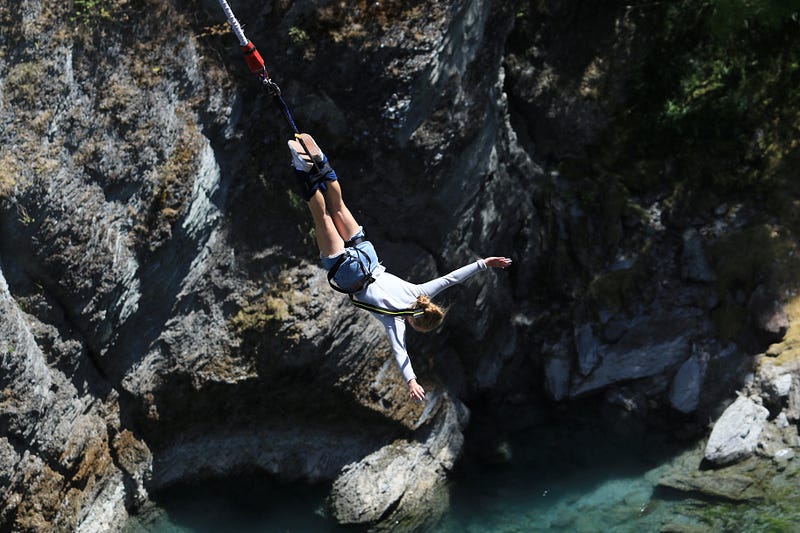
Each person must reconcile themselves to this fact and determine just how much risk they are comfortable with taking. As much as we may consciously decide that we don’t want to pursue risky activities (which for many may constitute bungee-jumping, scuba-diving or riding a motorcycle) it’s foolish to think that risk is only present at the extreme ends of the spectrum.
Risk, like love, is all around us and in every consideration that we make.
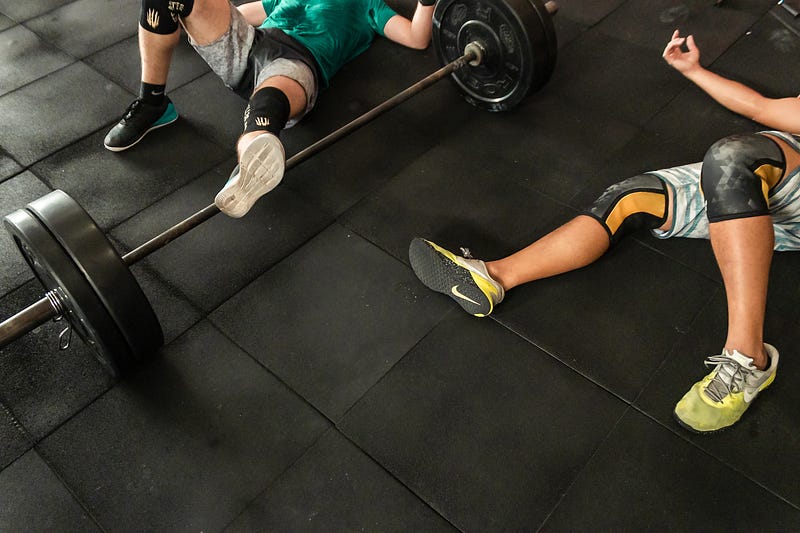
Is it riskier to go to the gym and workout, in pursuit of improving our health or to preserve ourselves by avoiding strenuous activities? Sure, through exercise we may build strength, muscle-tone and endurance but it comes with the risk of straining a muscle or bringing on a heart-attack through exertion. Staying at home, doing nothing and risking the effects of ill-health, heart-disease and obesity also has to be weighed up by those who think the safe path is to do nothing.
Should we seek to broaden our minds and enrich our experience of the world through travel? Surely there’s an inherent risk that we’ll contract a tropical disease, become embroiled in political unrest, become a victim of crime or deal poorly with the foreign climate, culture or water. Our luggage may get lost in transit. The plane might crash. The risks aren’t confined to travel to foreign shores either; to leave the house for a simple stroll puts us at the mercy of careless motorists as we cross the road, and reliant on the quality of the footpaths beneath our feet lest we trip and take a nasty fall.
It’s not just risk to our physical health and wellbeing that most juggle on a daily basis. In professional pursuits too, we deal with the risk of things unfolding contrary to our plans and intentions.
Should I write an article and publish it to the world, risking rejection, apathy or criticism? Should I instead play it safe, doing nothing and notionally avoiding negative feedback but at the same time lacking creative fulfilment and expression? Does this avoidance not also ensure the ongoing stifling and frustration of my desire to grow, improve and achieve?
In a meeting at work, should I be forthright in voicing my opinion, venturing a creative idea and putting my neck on the line as I volunteer for a challenging task, risking a loss of credibility? Would it be a more risky strategy to keep my head down, hoping to maintain anonymity and to play it safe? Am I then not at greater risk of being fired for not being proactive or willing to help others?
I could minimise the notional risk of trying new activities, going to new places, sampling new food, drink and experiences in life, hoping to avoid the chances of failure, dissatisfaction or unpleasant outcomes. Would that not also present a risk that I miss out on discovering new, exciting, rewarding and enjoyable things and experiences that would otherwise enrich my life?
In every choice, we are constantly making a trade-off between the risk of one outcome versus the risk of another.
It’s not just in the binary choices that bring risk to the fore. It’s not that option A is risky and option B is safe. In virtually all of the daily choices that we make, most options exist at a point along a scale of risk and reward. We each have to make a considered evaluation as to where on that scale we are willing to place ourselves.
I’m not talking here about choices as to whether it might be a good idea to inject heroin or to walk blindfolded across a busy road in search of a cheap thrill. Such activities are very clearly high on the risk scale and blatantly low in terms of the potential reward they offer participants. And yet, many may consider such things (or their close equivalents) as routine or even mundane. A bungee-jump may be a once in a lifetime thrill for one person, whereas another person considers that an essential activity for fun on any given weekend.
Eat, drink and be merry, for tomorrow you may die.
Live fast, die young.
We’re here for a good time, not a long time.
Many other clichés exist, which exemplify the mindset of taking enjoyment from each and every moment with little regard for the long-term consequences. Perhaps it’s wise to remember that life is relatively fleeting. To get so hung-up on each and every decision and to make each choice with too-great a regard for the many ways in which it could go wrong would undoubtedly be as unhealthy as it would to blindly ignore every risk.
Certainly there’s something to be said for living each day in the here and now, in the moment. But should we live each day like it’s our last? Doing so, surely increases the chances that with each hedonistic choice made, that we’re going to be right sooner than we think?
Life is a process of finding balance. I’m learning that this point of balance exists in different places for different people.
- Play it too safe and you will never grow, advance or feel fulfilled. Play it too risky and you’ll never feel comfortable enough to relax and trust the process.
- If you’re too self-centred self-absorbed then you will miss out on enriching bonds with others and the true rewards that come from the selfless-service of others. Be too focused on others, on meeting their needs before your own and you’ll come to resent them or at the very least be unable to serve them for having let your own needs go unmet.
- Being too self-indulgent in the things and behaviours you allow yourself tends to result in these losing the magic they bring to your life, as the reward no longer seems as special. Denying yourself of indulgences and kindnesses out of fear for the risk that comes with them and your life will feel devoid of joy, pleasure and reward.
- Taking the safe, steady and proven path delivers minimal benefit and makes you less-inclined to pursue the path-less-trodden in future as you become reliant on order and predictability. If alternatively, you feel compelled to blaze a new trail in each pursuit then you’d better be prepared to fail more often. You’ll also be forsaking the lessons of those who’ve been before you.
- Seeking safety and stability and avoiding risk lowers your resilience and self-belief as you become less able to deal with the unexpected twists, turns and setbacks. Taking the riskier options repeatedly will likely deal the blows, the injuries and the failures that manifest under risky circumstances.
In each and every day, we consciously and sub-consciously process and react to risks all around us. It’s an inherent part of navigating the chaos of the world and part of what makes positive events rewarding, and negative events rich as a source of learning.
I know from speaking with my daughter and mother that both will carry forward lessons from their recent accidents. I am certain that they won’t (and shouldn’t) change how they live. Accidents such as theirs offer a helpful reminder to them and to those of us around them that risk is ever-present and inherent in all that we do as humans.
It’s up to each of us how we adapt to that reality and to live in a way that balances the risk we can tolerate in pursuit of the rewards we crave. That’s just life!
Toby
If you enjoy reading stories like these and would to like to support writers on Medium, consider signing up to become a Medium member. It’s $5 a month, giving you unlimited access to stories. If you sign up using my link, I’ll earn a small commission.
If you’ve enjoyed this article, please feel free to join my email list.


