
RIP Facebook
Gen Z have already abandoned you, now millennials are following suit.
Time is up for the world’s biggest social media platform, and I think it knows it.
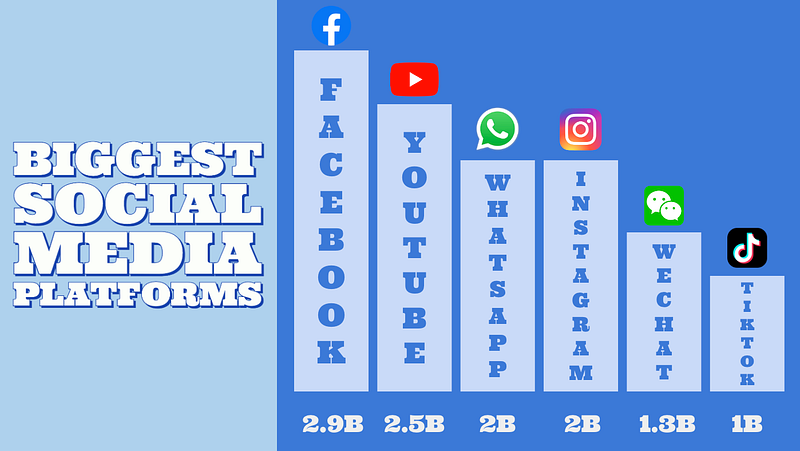
In 2023, Facebook reportedly had 2.9 billion active users, nearly half a billion more than its next biggest rival YouTube.
This means around 36% of the entire global population use Facebook.
That’s a lot, sure, but large numbers don’t necessarily mean the tech giant is going to remain top dog for much longer.
In my job, I work a lot with young teenagers. Recently, we’ve been discussing social media and Facebook in particular.
It first started when I asked them how many friends they had on the platform — I had wanted to conduct a survey out of curiosity.
To my surprise, around three quarters of the young people told me they didn’t have a Facebook account. I was genuinely taken aback.
When I was in high school, if someone had asked us the same question, there maybe would have been one or two people without an account, but now, less than 10 years later, a class of a similar size was telling me around twenty of them didn’t use the app.
This prompted me to do some research on the topic.
In 2014, Pew Research Center conducted a survey of US teens aged 13–17 and asked them which social media platforms they used. In 2022, they conducted a follow-up survey which asked the same question.
The results showed that, in 2014, 71% of the teens they asked used Facebook. In 2022, this number had dropped to 32%.
A 39% decrease in the space of just eight years.
It makes you think, if the numbers have decreased that rapidly in such a short period of time, how much more will it deteriorate in the coming years?
Why are Gen Z abandoning Facebook en masse?
There are a number of reasons why today’s teens aren’t using the platform. When I asked my class, I got answers ranging from privacy concerns to feeling they had no reason to download the app when so many other, ‘better’, alternatives exist.
1. Privacy Concerns
Privacy is undoubtedly a contributing factor.
Gen Z are probably the most aware generation when it comes to their data and privacy. Having grown up surrounded by tech, they are naturally more knowledgeable about how to keep themselves safe and protect their data online.
When social media first emerged, it wasn’t clear to everybody how tech companies used our information. However, today you can find endless sources and studies from all across the internet which make it a bit more easy to understand the ways in which these companies track us, target us and analyse us.
Warning signs flash for Gen Z.
They know Facebook has an incredible amount of power and influence over us and they prefer to steer clear.
They value their privacy.
2. Irrelevance
Throughout the years, there has always been a fair amount of rubbish circulating Facebook.
Be it adverts, sponsored posts or things your aunt shared without knowing why, there have always posts that we take one quick look at and scroll on.
But today, there seems to be more irrelevant fodder than ever before.
In particular, the ‘suggested for you’ posts that seem to crop up all over our newsfeeds which we look at and struggle to see any relevance to our lives.
Gen Z know what they want, they don’t have time to scroll through pointless posts and videos whenever they could go to TikTok and see video after video which are actually relevant to them, thanks to the algorithm.
Facebook has lost its purpose. It seems today to be a mix of Instagram with stories, TikTok with reels and Twitter with posts.
I think what people are realising is that they don’t need Facebook; it doesn’t offer anything unique, just a mix of features which already exist elsewhere.
3. Competition
I already briefly mentioned some of Facebook’s competitors, and they seem to be another reason why Gen Z simply don’t have time for the platform anymore.
Other social media apps just seem to do things better.
Instagram is not only the place to post your best photos, but the young people I spoke to said they liked it because they could use it as a sort of photo book for their memories.
They told me they liked how you can now turn off the like counts on your posts, so they can post about an experience they had, add it to their own page for their own memories and won’t have to worry about gaining too much unwanted attention.
Both likes and comments can be turned off and, unlike in the past, no one can see which posts you have liked now. In other words, it adds an extra layer of privacy.
Snapchat is another very popular platform.
If you want to quickly communicate with your friends, it’s the place to go.
With instant messaging, great voice note features and Snap Map, Snapchat doesn’t try to be something it isn’t, instead it focuses on being the best messaging app out there and it does it brilliantly according to Gen Z.
4. It’s Old
After all other factors have been taken into account, one fact cannot be ignored: Facebook is just old.
It was first created way back in 2004, nearly 20 years ago and a full six years before apps such as Instagram, and it hasn’t really changed.
You had a profile, a photo, you could add friends, join groups, post photos and pretty much do most things that you can still do today.
On the contrary, taking Instagram as an example, in the beginning all you could really do was post square photos, follow people and like their posts. However, nowadays you are able to post different size photos, carrousels, videos, stories, you can go live, view tagged locations on a map and even shop.
The truth is, to Gen Z, Facebook is social media for your mum and grandma.
It’s a place for older family members to be nosy and spy on people they haven’t heard from since college.
What can Facebook do to survive?
At the moment, it seems that the only possible future for Facebook is to shut down.
So are there any steps it can take to ensure its survival?
- Market itself towards Gen Z and Gen Alpha → Facebook could switch tactics and start promoting itself as being a relevant, young, new social media platform. But this is going to cost millions of dollars and might not even work.
- Focus on its most active demographics: Boomers and Gen X → It could start introducing new features that older users would appreciate and focus entirely on this demographic, instead of trying to win back young people. But this isn’t a great long-term strategy and will still result in Facebook dying out.
- Merge with another social media platform → Facebook could accept that it doesn’t offer anything unique or different and could agree to merge with another platform such as Twitter. But this would realistically be very hard to do and would ultimately kill off Facebook overtime as the new merger evolved.
In the end, it looks like Facebook’s only option is failure.
Of course, it still has a number of years left, as the Boomers and Gen X continue to use the platform as they always have, but ultimately the only path that Facebook has to follow is the one which leads to the end.

Final Thoughts
The truth is, Facebook just isn’t as important or useful as it used to be.
It was one of the ‘original’ social medias, and you can’t argue with how influential it has been over the years.
Its history will always be remembered as one the very first, widely used platforms, but sadly even the very first platforms must come to an end.
Although it mightn’t seem like Facebook is going anywhere anytime soon, it’s important to remember that the size of a company doesn’t make it immune from failure.
Remember Myspace?
Myspace was, for a period of time, the world’s largest social network (before being overtaken by Facebook, ironically).
After years of success, it ultimately failed because its product just wasn’t up-to-scratch anymore. People got fed up and left.
And it certainly does seem like Facebook is heading the same way.
Gen Z are the ones who are getting fed up this time.
Ultimately, Facebook is just too much hassle for what it’s worth. No one really fully understands what they’re doing with our data, they’ve become too big, powerful and influential, and it simply isn’t worth it anymore.
It’s all too complicated.
So, thank you Facebook for your many years of dedicated service, but I’m afraid your time is up.
As for me, my account has been deleted.
I’m out.


