
Riley: The Dog Love of My Life
Adopting a rescue rescued our family
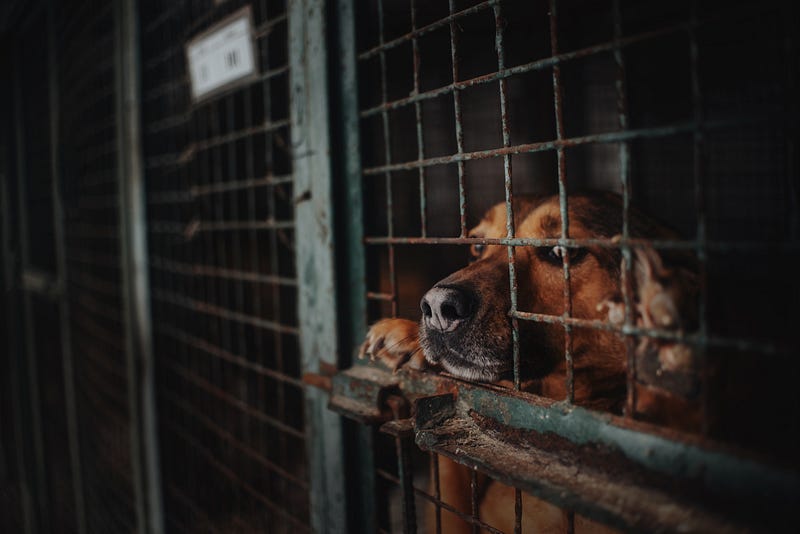
I never knew “kill states” existed until we looked for a dog. These states, often in the South, have many stray dogs and inadequate resources. Government-run shelters euthanize a majority of the animals they pick up within a few days to a week. No-kill rescues operate in those states, but not nearly enough to handle the need.
Adoption means life or death for dogs there. In 2015, our son said he wanted a dog. My wife and I had grown up with them, always pure breeds bought from local breeders.
We didn’t know how much adopting a rescue would enrich our lives. Thousands of dogs are up for adoption online through rescue organizations around the United States. It’s easy to get lost in the pictures.
Then I saw the one. His eyes and face grabbed my attention. I could say they held something magical, or it had to do with fate. But he was probably part beagle, and I’d lost one when I was a small child.
My childhood beagle barked too much for our neighborhood and liked to chase cars. His name was Shorty, something a three-year-old would name a dog. After he’d been with us a year or two, my parents took him to my grandparents’ house to live, maybe because of complaints, maybe to keep a car from running over him in front of me.
Shorty ran away a few months after he got there. I never saw him again. It wasn’t until my mid-forties that I stopped thinking of him.
After finding the dog we wanted online, my wife and I contacted the rescue. They were in Tennessee, a few miles from my father's high school in the late 1950s and not much further from where my grandparents lived when Shorty disappeared.
In the rescue, our future dog’s name was Howard. He was eleven months old, born there. His mother was picked up pregnant. Someone adopted her not long after she delivered. Howard was the last of his litter still there. I still don’t understand why that was, but later, we suspected someone might have adopted and returned him.
We made the arrangements. Our home passed inspection from a local rescue organization. Howard traveled in a trailer with other dogs headed to the northeast from the south. We paid for his ticket and met him at a truck stop in western Virginia about two hours from our home.
We renamed him Riley, wanting him to have a new name to associate with better times.
Leaving the truck stop, we put him in the back of our RAV4, where we thought he’d be safer. Riley balked at that plan and forced his way into the back seat with our son. From there, he was calm but curious, sniffing everything.
We stopped for a break at Manassas National Battlefield. It was late October. We started walking with him across a field, but all four of us were soon running, enjoying the sunshine. Riley kept looking at the leash, attaching him to me like he’d never been on one before.
After we crossed the field, we hiked on a trail for an hour or so. I hadn’t been out in the woods since I was a teenager. My family and I had settled into a sedentary suburban lifestyle, something Riley would change for the better.
Over the coming months, particularly when spring arrived, one of us would see nice weather and say, “Let’s take Riley for a hike.” Soon, we’d hiked in all the local parks, so we ventured on day trips to state and national parks.
I rediscovered what I loved about being in the woods when I grew up hunting in Tennessee. Our son discovered that joy as well. My wife had been a Girl Scout, so hikes brought up fond memories for her.
Of course, Riley loved sniffing everything, seeing wildlife, looking for what’s around the corner. He is obsessed with rabbits and foxes.
My father suggested we take Riley camping and gave us a tent. Over the years, we’ve taken him on many overnight camping adventures. Our favorite place is Shenandoah National Park. The mountains are beautiful with their solitude, and the air is cleaner than what we breathe in suburban Washington, DC.
Our family wanted more of the outdoors. Day trips soon weren’t enough. We rented RVs for adventures in distant parks.
Within a few years, our passion for the road led to my wife and me buying a travel trailer. Riley loves both the overnight tent camping adventures and longer trips. He seemed his happiest when we packed and told him it was time to go.
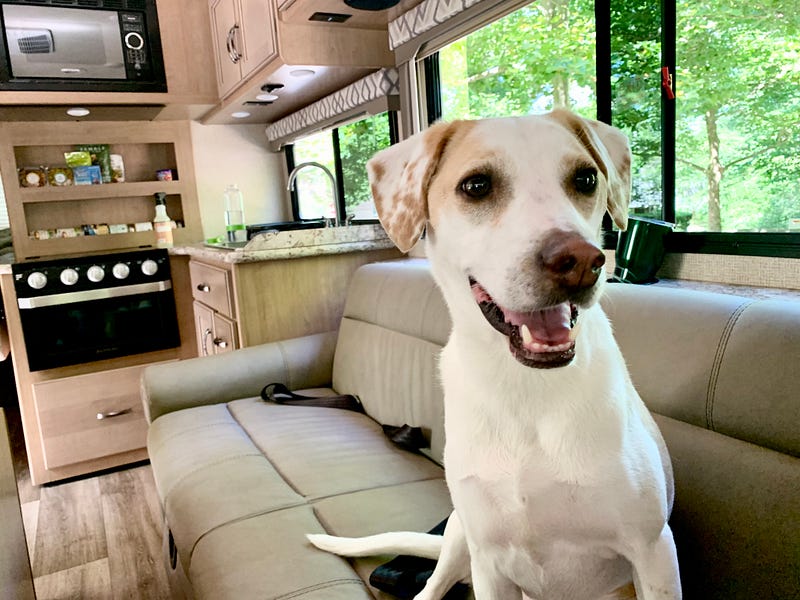
Riley weighs about fifty pounds and is a mix of at least four different breeds. We like to think that makes him smarter than most pure-breed dogs, particularly regarding survival. He’s constantly hunting, both for small animals and new mothers.
We noticed right away that he was very empathic. He uses that skill to flirt with women, knowing they are at the center of our families and more likely to take care of him.
We also learned early that, like many dogs who spend prolonged time in a rescue, he has severe separation anxiety from his adoptive mother, my wife.
I’m a psychiatrist, and my wife is a psychologist. At the time we adopted Riley, I was still in the Navy, working long hours. My wife had started her own private practice. Between patients, she was able to come home. She planned to leave Riley home alone while she saw patients.
Like staying in the back of the RAV4 for travel, Riley didn’t like that plan.
The first time my wife left Riley alone in our house, she put him in our large master bathroom. When she returned, he’d chewed and torn the trim off the frame of the bathroom door. He was shaking, scared from being alone. Seeing her again, he reverted to being calm and curious.
We began to suspect someone might have returned Riley to the rescue after adopting him because of his separation anxiety. Few people have the job flexibility to do what my wife tried next, and it probably wouldn’t have worked out nearly as well for Riley or other owners as it did for us.
Riley’s Therapeutic Effects
My wife took Riley to work with her. She checked with patients first, and they were all sympathetic to him. While she saw patients for therapy, he hid behind her chair. He was quiet the whole time. Many enjoyed petting him, and he seemed to like it.
My wife also noticed he could read her patients’ emotions and often reacted to them, getting closer when they needed comfort and getting behind her if they expressed anger.
She then sought out training for him as a therapy dog. They went through the process together. It turned out he was a natural. She learned how to give him commands, and he learned when to allow patients to pet him and when to give them room if they needed it. She soon listed him on her practice’s website as a therapy dog in training.
That was eight years ago. Many people sought care at the practice because of him. They’ve benefitted, and her practice has grown from his unplanned presence.
I retired from the Navy in 2019. I joined my wife’s practice and learned to use Riley’s skills as a therapy dog with my patients. He helps many relax and talk about things they would otherwise keep to themselves because the words are too painful.
He’s helped keep a teenage girl alive. She loves to visit Riley. When she was intensely suicidal, she agreed over the phone with me to stay alive overnight to see him. The next day, while she petted him and he leaned against her, we talked about healthy ways to deal with those overwhelming feelings that had led to her wanting to hurt herself.
Since then, both she and Riley have been excited to see each other at her appointments. A dog who spent his puppy days caged in a rescue now helps save people’s lives.
Riley just turned nine and is still an essential part of the family.
He’s brought daily joy to our lives and changed our family's direction from sedentary suburbanites to campers and hikers. He’s also helped people suffering from mental illness, bringing joy to many of their lives.
His separation anxiety has gotten better over the years. Now, he can stay at home alone for several hours. He’s also not nearly as shy as when we first got him.
He’s helped us grow, and we’ve helped him, but there remain some downsides. For example, he won’t stay in a crate or overnight at the kennel. If we go on a trip without him, my wife’s aunt stays with him. He loves her as much as us.
Sometimes, I bury my face in his fur and take a long breath. At that moment, his scent connects me to him, to Shorty, to parts of myself I thought I’d lost due to twenty years in the military and the suffering I hear as a psychiatrist. He brings me to a profound peace that feels foundational, deep inside me and below everything else.
Riley’s a vital part of our pack. We’ve never regretted adopting him. He’s saved our family and changed us more than we rescued him.
How about you? If you have pets, I’d love to read your comments.
Thank you for reading my story.


