
Rewilding the Andes
Llama Grazing Initiatives in De-glaciated Landscapes
As global temperatures rise and glaciers recede, exposing barren landscapes devoid of vegetation, high-alpine communities are grappling with the challenge of restoring these ecosystems.
When glaciers melt, the land underneath thaws and takes its first breath of air. After being frozen for hundreds to thousands of years, the newly exposed land is bereft of nutrients like nitrogen and carbon necessary to support plant life. The process of ecosystem development in these post-glaciated regions unfolds very slowly often spanning several decades.
This lag presents a problem for high-alpine communities that are already grappling with the acute impacts of climate change. Disruptions in traditionally dependable weather patterns have precipitated acute food shortages and pose a looming threat to biodiversity in these regions.
Devoid of plant life, newly de-glaciated regions become susceptible to erosion and landslides. Particularly when unprecedented high temperatures accelerate the runoff of glacial melt along barren mountainsides, posing a grave threat to the lives and livelihoods of communities nestled in the valleys below.
Llama Poop
Scientists at the University of Texas Austin in collaboration with local communities of the Cordillera Blanca in Peru have turned to a perhaps unlikely contender to solve this crisis — llama poop.
In a recent experiment conducted in Peru’s Cordillera Blanca, scientists introduced llamas to recently de-glaciated areas. The Cordillera Blanca, once renowned as the world’s most glaciated tropical region, is rapidly relinquishing that distinction, with over 50% of Peru’s glaciers retreating in the last six decades.
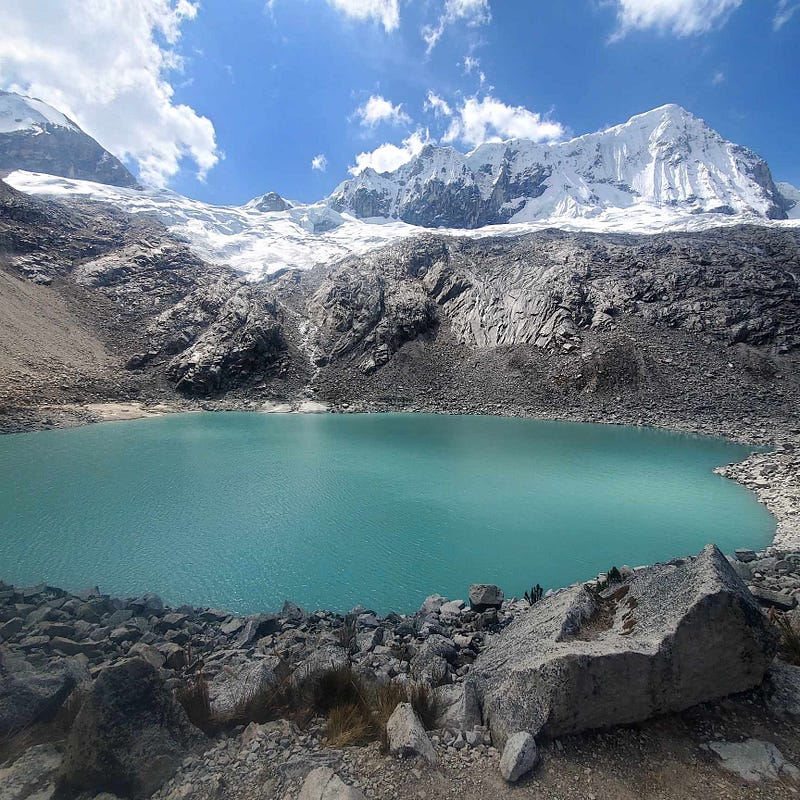
Llama poop contains a high concentration and nitrogen and carbon. These nutrients serve as essential precursors, facilitating a myriad of plant physiological processes. Enriching the soil with llama poop creates a fertile foundation attracting early colonizers, like grass, to these previously ice-laden regions.
This sets in motion a positive feedback cycle. The early colonizers prime the land for more advanced plant growth. Remarkably, in areas where llamas were introduced, researchers found significantly higher plant cover after three years compared to recently de-glaciated zones without llama influence — effectively short-cutting a decades-long process.
Heightened plant cover traps carbonate-rich sediment, fostering more fertile soil. This enriched soil, in turn, facilitated even more plant growth. In plots frequented by llamas, an additional four plant species were observed compared to areas untouched by them.
Why Llamas
Llamas act as seed transporters, bringing seeds from lower elevations or neighboring valleys. While wind is often the primary agent for dispersing seeds onto de-glaciated land, it is limited in what type of seeds it can carry and how fast it can repopulate de-glaciated regions.
Llama-assisted seed dispersal enhances ecological connectedness between valleys. Connected ecosystems are important and foster biodiversity by extending habitats where animals can graze, find shelter, and, notably, poop!
In the high Cordillera Blanca you’ll find more cattle than llamas, yet llama grazing offers distinct advantages over cattle grazing. Researchers at Universidad Nacional Agraria La Molina. Lima. Peru found that Llama grazing has a positive impact on soil hydrology. Compared to cattle, llamas exert gentler pressure on delicate soil. Their lighter weight and padded hooves disperse forces more effectively, reducing soil compaction in areas they tramp on. Less compaction allows water to infiltrate the soil more deeply. As moisture penetrates deeper into the soil, less of it is lost to evaporation making it more fertile in the long term.
De-glaciated ecosystems are becoming an increasingly abundant part of our terrestrial geology. Some of this glacial loss is inevitable no matter how much we reduce our greenhouse gas emissions. So learning how to manage areas that thaw after their retreat is crucial. For limiting sea level rise, ensuring access to fresh water, and preserving the biodiversity of mountainous regions. Intropducing llamas are just one of many ways to mitigate the disastrous effects of the high alpine glacier recession. High alpine communities are some of the most threatened and neglected by climate change. There is a pressing need for more global attention and research to develop creative solutions for restoring areas impacted by post-glacial changes.