
Revolutionizing Manufacturing and Design: The Amazing Potential of 3D Printing
3D printing, also known as additive manufacturing, is a process that involves creating a physical object by layering materials based on a digital design. It is called “3D printing” because, like traditional printing, it involves adding layers to create a final product, but in the case of 3D printing, the layers are added in a three-dimensional space rather than on a flat surface.
The first 3D printing technology was developed in the 1980s, but it was not until the 21st century that the technology became more widely available and affordable. In the past decade, 3D printing has experienced rapid growth and adoption in a variety of industries, including manufacturing, healthcare, and even fashion.
One of the key benefits of 3D printing is its ability to create complex, customized products quickly and inexpensively. Traditional manufacturing processes often require the production of large quantities of a single product, which can lead to excess inventory and waste. 3D printing allows for the creation of a single, customized product at a time, reducing the need for excess inventory and making production more efficient.
In addition to its customizable nature, 3D printing also allows for the creation of intricate, complex designs that would be difficult or impossible to achieve using traditional manufacturing methods. This makes it an ideal tool for prototyping and product development, as it allows companies to quickly and inexpensively test out new ideas and make changes as needed.
Overall, 3D printing is a versatile and innovative technology that has the potential to greatly impact the way that products are designed and manufactured. As the technology continues to advance, it is likely that 3D printing will become even more integral to these industries.
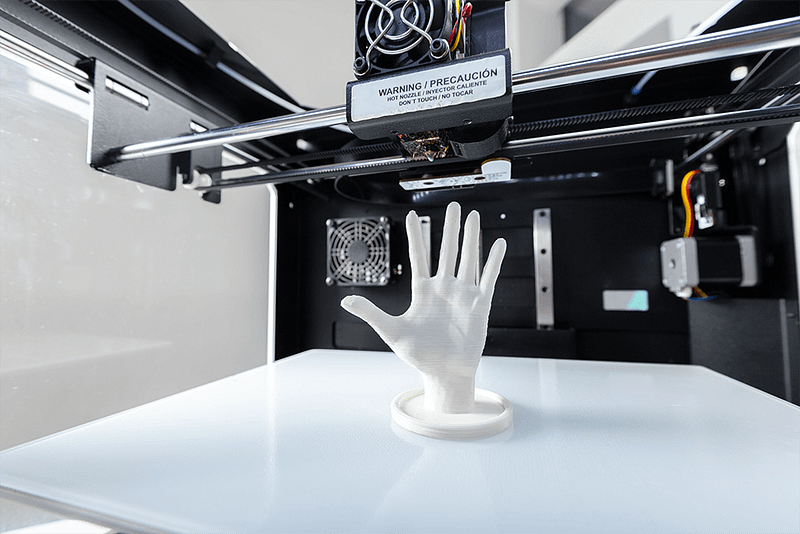
3D printing, also known as additive manufacturing, is being used to create a wide range of products in the manufacturing and design industries. Here are a few examples of how 3D printing is being used in action:
1.Prototyping and product development: 3D printing is an ideal tool for prototyping and product development because it allows companies to quickly and inexpensively test out new ideas and make changes as needed. It is also a valuable tool for creating prototypes of complex designs that may be difficult or impossible to produce using traditional manufacturing methods.
2.Customized products on demand: One major advantage of 3D printing is its ability to create customized products on demand. Traditional manufacturing processes often require the production of large quantities of a single product, which can lead to excess inventory and waste. 3D printing allows for the creation of a single, customized product at a time, reducing the need for excess inventory and making production more efficient.
3.Replacement parts and tools: 3D printing is also being used to produce replacement parts and tools for a variety of industries. For example, aerospace companies are using 3D printing to create spare parts for planes, and car manufacturers are using the technology to produce custom tools and fixtures. 3D printing allows for the rapid production of these parts and tools, which can be especially valuable in industries where downtime is costly.
Thank you for reading about 3D printing in manufacturing and design. 3D printing is a technology that allows for the creation of customized products and is used for prototyping and making replacement parts. It is also more sustainable than traditional manufacturing methods. If you liked this article, check out my other blogs for more information on new technologies.
1.The impact of social media on mental health nowdays

2.The Future of Employment:the Gig Economy
