
Revolutionary Violence of the “New Left” in the 1960s & 1970s: An Overview
Murdering Cops, Robbing Banks, Blowing Shit Up and More!
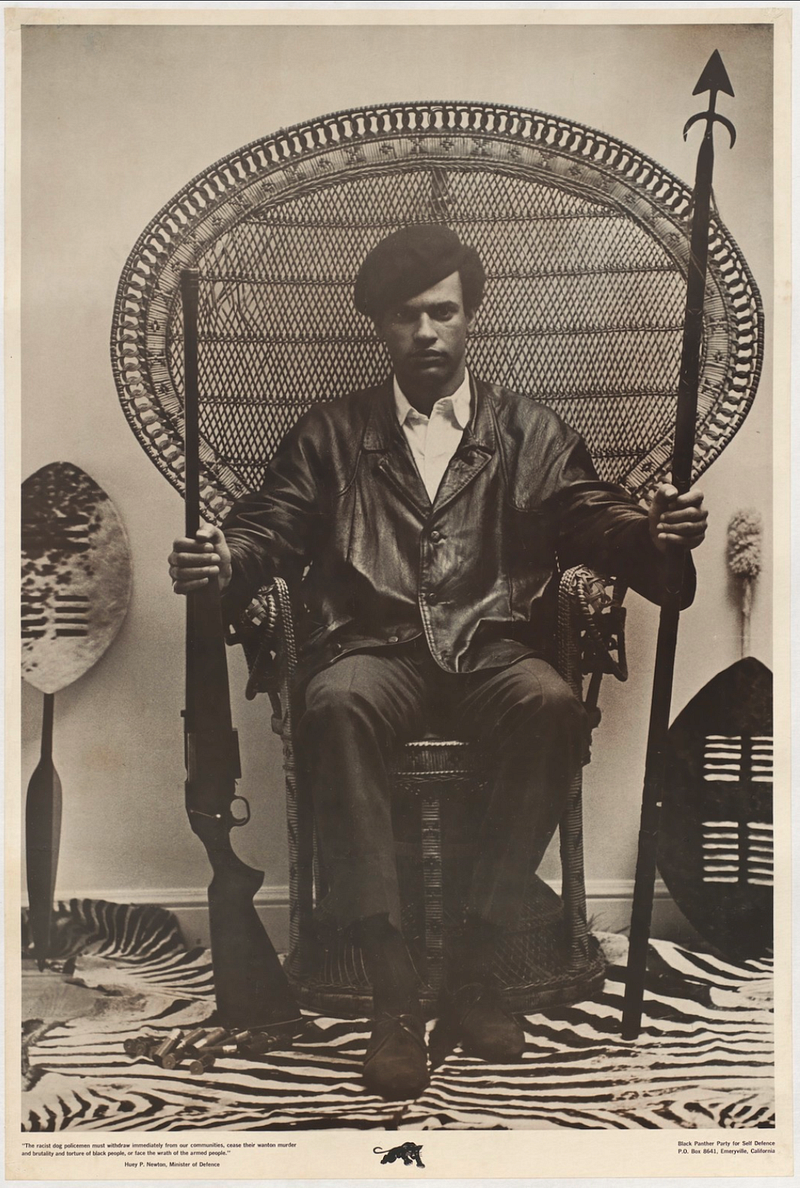
Historical Snapshot: The “New Left” in 1960s United States
The 1960s were an explosive time around the world. The USA was no exception.
During the ’60s, a drastic split emerged in American society between those who were outraged by injustices they saw perpetrated by the government and those who defended the status quo.
Some of the injustices being grappled with:
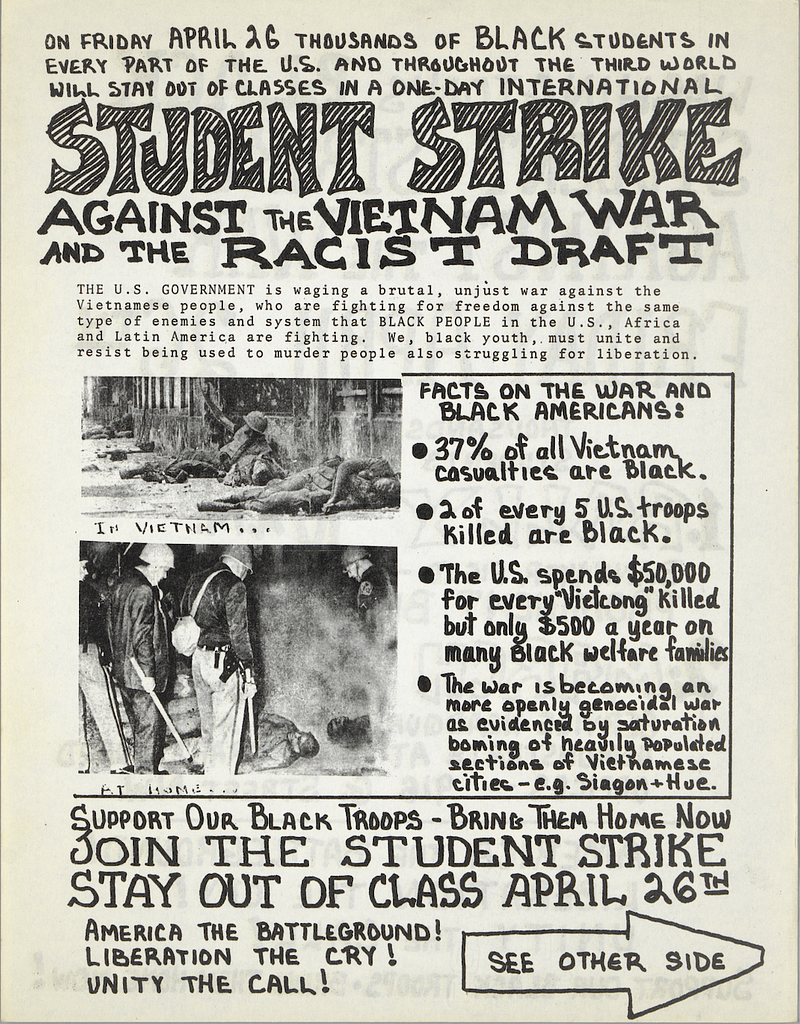
1. The Vietnam War (U.S. involvement from 1965–1975) showed, in searing televised detail, the blatantly imperialistic and inexcusable brutality of the American government. It exposed the American regime as an unscrupulous international bully that had few qualms sacrificing the lives of young American men and massacring close to two million innocent Vietnamese citizens in the name of “fighting communism”. Historians agree, this fear of communism was exaggerated by the American government and hidden agendas were at play. Huge, nationwide anti-war efforts ensued in response.
2. Civil Rights for black citizens were a huge issue. The ugly legacy of slavery and Jim Crow laws continued to oppress minorities in egregious, human rights-violating ways. Serious confrontation of these racist policies became the norm.
3. Women’s liberation movements were cropping up in the 1960s too. The invention of birth control in 1960 catalyzed women to break out of their main societal role, that of a homemaker and a second-class citizen.
4. Other groups, such as the gay/queer community, Native Americans, Puerto Ricans, and Hawaiians organized to fight against the oppressive conditions the United States government imposed on them, currently and historically.
The main demographic of American citizens battling the injustices came to be known as the “New Left”, as they were leftist leaning politically, yet embraced socialism more than the traditional left.
From marches, sit-ins, and rallies to justice-based organizations, clubs, and conferences, concerned citizens of the “New Left’’ made serious efforts to mobilize supporters throughout the ‘60s.
Some examples of justice-seeking organizations of the 1960s: Student Nonviolent Coordinating Committee (SNCC), Youth International Party (aka the Yippies), Students for a Democratic Society (SDS), and the American Indian Movement (AIM).
On top of all that, a psychedelic revolution, spearheaded by the charismatic ex-Harvard psychiatry professor, Timothy Leary, permeated the country’s psyche and charioted the rise of the colorful “counter-culture” at the time, which overlapped with the “New Left” demographic.
The counter-culture & “New Left” — with their bold fashion & art, free love norms, compassionate embrace of the marginalized, experimental openness, and political vitriol — stood in marked contrast to older generations, the political right and other “squares” of society who preferred muted predictability, traditional hierarchies, and conservative conformity.
The rise of “New Left” Revolutionary Units in the late 1960s
In the late 60s, several of these “New Left’ social justice organizations split up, with some members going off to form “revolutionary” combat units.
Many of these groups grew out of previously non-violent organizations, such as the Black Panther Party for Self-Defense (BPP) emergence from Student Non-violent Coordinating Committee (SNCC), or the Weather Underground’s emergence from the Students for a Democratic Society (SDS).
These leftist revolutionary groups were diverse in methods, intent, and member-base, yet united in the idea that the U.S. would not change unless its institutions and values were threatened with violence. They rejected pacifism because they had employed non-violent tactics endorsed by the likes of Martin Luther King Jr. throughout the 1960s……and felt like it didn’t work. In their eyes, there wasn’t enough change.
Ostensibly and generally (although not always clearly or effectively), the radical revolutionaries were fighting for the rights and protection of the marginalized and were heavily influenced by socialist and communist ideology, from the likes of Marx, Mao, Franz Fanon, and Che Guevara. They stood in solidarity with third-world countries and opposed American imperialism.
These revolutionary combat units were in their heyday from around 1968 to 1975.
Around this time, many Vietnam soldiers had returned from the war. Many veterans felt personally betrayed, used, and deceived by the American government. The veterans involved with leftist revolutionary politics were volatile and hurt, incubating deep and merciless vendettas against “the establishment” for forcing them into a war that killed so many innocent people.
Socialist revolutions like Mao in China (1966–1976), Ho Chi Minh in Northern Vietnam (1945–1954), or Castro in Cuba (1959) were major beacons of hope to American revolutionaries. Over a dozen other countries experienced successful socialist revolutions during the 1960s, mostly led by guerrilla forces.
The thought amongst some radical American leftists was: if all of these other relatively small bands of guerrilla fighters could topple a government, then this could happen in the USA as well.
Most of the United States’ revolutionary groups had only a few hundred members and a few chapters, maximum…..but more commonly, they had less than a hundred core members.
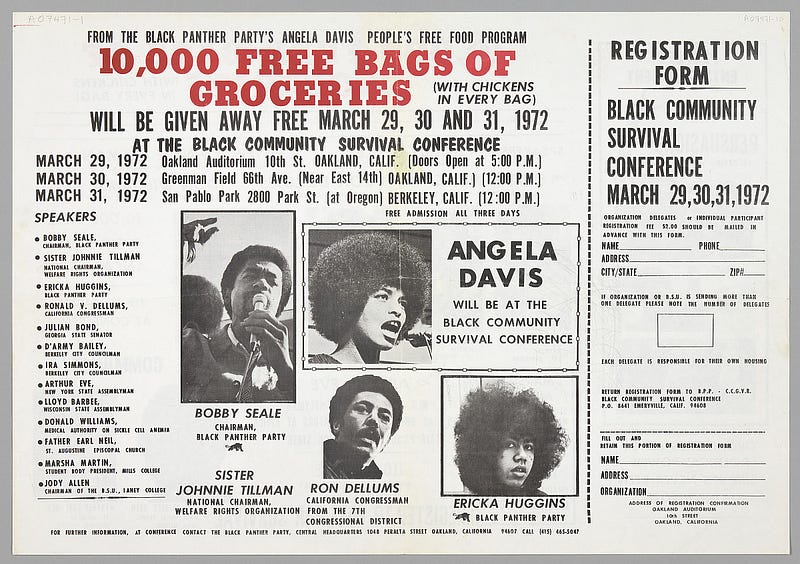
In the 1960s, intellectuals spearheaded most of the revolutionary groups. In the case of the Weather Underground, it was Ivy league students from Columbia University, like Bernadine Dohrn or Mark Rudd; in the case of the Black Panthers, college students Huey Newton and Bobby Seale created the group based on teachings of famous political activists and orators like Malcolm X and Stokley Carmichael, and accrued members like professor Angela Davis.
These intellectual leaders attempted to rally working-class youth, black liberals, and high school students to take up arms for their militant radical cause….but, all said and done, it didn’t work. These demographics were unmotivated to join these ambitious (and ruthless) revolutionary groups in any significant numbers.
Revolutionary Violence of Radical Lefties
So….what exactly were these revolutionary groups doing that was so “revolutionary”??
The most popular mode of societal disruption by these groups was bombing. The standard procedure was to build a bomb, place bomb in desired location, and then call in and issue a bomb threat which would clear the area of any people (this wasn’t always effective, some threats weren’t taken seriously).
The places chosen to bomb were usually related to corporations, police units, prison or jail systems, politicians, utility companies, or “fancy” establishments like upscale restaurants or department stores. Of course in those days, there was barely any surveillance and extremely lax security, so it was easy for a plainclothes revolutionary to walk in with a concealed bomb and leave it somewhere inconspicuous.
In an eighteen-month period between 1971 and 1972, the FBI tallied 2,500 bombs exploded domestically in the U.S.A — which is nearly 5 bombs a day. As insane as that sounds, most of these explosions were not lethal since bomb threats were issued, or bombs were set to go off in the middle of the night.
It was a symbolic attack on the part of the radicals.
A lot of the public in the 1970s actually viewed bombings as an inevitable nuisance, or even as a legitimate form of protest, kind of like a petition “with a bang”. Check out this mind-boggling list that details dates, locations, and groups responsible for different “revolutionary” crimes at this time.
Not every group used bombs, although most did. There were other forms of revolutionary violence, such as hunting down and murdering cops (a preferred tactic of the Black Liberation Army), “expropriating” resources from elites (aka, robberies, mostly of banks & armored trucks, many different groups did this, the most prolific of which was the United Freedom Front), prison breaks (like Weather Underground breaking Timothy Leary out of prison, or Mutulu Shakur’s group “The Family” breaking Assata Shakur out of prison), kidnappings (The Symbionese Liberation Army famously kidnapped heiress Patricia Hearst) and organized riots (like Weather Undergrounds’ gathering in Chicago known as the “Days of Rage”).
When revolutionary groups committed a crime, they usually issued a communique to accompany it. The communiques were written statements, or sometimes oral recordings, taking credit for the crime and often included the groups’ demands, motives, intentions, grievances, and ideologies. Sometimes they were brief, sometimes they were long and convoluted.
The revolutionaries would anonymously arrange a pick-up or delivery of the communiques to radio stations, TV stations, or newspapers, who would then broadcast the messages in the communiques to the public. These journalistic outlets were somewhat coerced into sharing the communiques, thinking it would appease the groups and lead to a lessening of violence.
Let me be clear though, these revolutionary groups weren’t solely about violence. For instance, the Black Panthers distributed goods to their communities and audited police encounters to deter police harassment of black citizens. Likewise, the Weather Underground issued, nationwide, deeply researched publications explaining their tactics and ideology, and also published detailed bomb-building manuals (which was very helpful of them). Other groups followed in the same vein.
The Anatomy of a Radical Revolutionary Group
These revolutionary groups had “above ground” members and “underground” members. The underground members were the ones carrying out the illegal acts.
To conceal their identities, underground members used alternate names, fraudulent identification materials (a common trick was sending away for dead newborn infant’s birth certificate, and then filing for a social security card with their identity), communicated via pay-phones & “dead-drops”, wore wigs & other disguises, moved their residence regularly, and other such tactics.
Above-ground members used their real names but stayed incognito about their affiliation with any revolutionaries, and therefore could move freely and take care of “outside” world tasks for the group.
The Radical Scene in the 1970s
By the time the 70s rolled around, the New Left radical scene was fizzling out.
The Vietnam war ended in 1973 (although troops weren’t pulled out completely until 1975), resulting in a loss of public interest and support for revolutionary groups, since the most pressing societal grievance had been eliminated.
On top of that, by the early 1970s, the major revolutionary groups of the ’60s were imploding in on themselves, rife with in-fighting among members. The groups had also been crippled by arrests, assassinations, and warrants from police and the FBI. Underground revolutionaries found their pictures splashed across newspapers, beamed from television screens, and front and center on FBI “most wanted” posters all across the nation.
And yet, would-be radicals found themselves undeterred. Historian Bryan Burroughs explains:
“The American underground was poised for an explosive rebirth, one that would spawn headlines unlike any seen before, along with a series of ‘second generation’ protest bombers. This new eruption of armed cells would be peopled by a motley collection of wannabes and never-were’s, those who had missed the Weather [Underground] and BLA [Black Liberation Army] trains or who saw in those organizations’ exploits a path toward the greater meaning so many radicals sought once the seismic energies of the 1960s faded.”
Days of Rage, p. 259–260
An Unexpected Alliance
This resurgence of underground radicals in the mid-1970s came in part from the unusual alliance between white middle/upper-class liberal university students and minorities, especially black men, who were victims of the prison system in the United States.
The liberal university students at this time were children of the radical 60s and believed in its ethos. Furthermore, it was at liberal universities, like UC Berkeley, where students were able to immerse themselves in the literature and history of social justice, socialist/communist philosophy, and other related fields.
The prison population offered a demographic that was desperate enough and angry enough due to the oppression of the U.S. incarceration system to embrace violence against the United States government. Prisoners also had hours of time on their hands to immerse themselves in study.
In fact, the radical movements in the 1960s & 1970s were hugely influenced by books written by inmates themselves. Books like Blood in My Eye (1971) by George Jackson or Soul On Ice (1968) by Eldridge Cleaver were two of the most popular books written by prisoners. These books explored the harsh realities that black people, criminals, and the impoverished faced in “Amerikkka”.
Inmate writing was so prevalent and influential, that police and politicians took notice, and banned inmates from collecting money from their writings, starting in 1977. This was done under the guise of preventing prisoners from profiting from their crimes, but really, critics believe it was to keep the public in the dark about the horrors of the incarceration system.
During the late 1960s and early 1970s, American prisons allowed university students to come in and teach prisoners. This is still the case today, of course — volunteers of all suits flow in and out of prisons and jails. However, in the 1960s/70s, there was very little oversight when it came to the content being taught to inmates.
As it turned out, these classes between the student and inmates delved into communist and socialist literature, other inmates’ books, and explorations of impending revolution.
As one of the white tutors at Vacaville Prison in the Bay Area California explains:
“There were inmates….. who had mapped out the revolution from beginning to end, leaving nothing out in between. They knew what time the revolution would start in the morning and what day. They knew how to form a vanguard and how it would split up into cadres from the east and the west and the north and the south. To hear them talk you would think that they knew exactly how to do away with the system. The guards would hear this shit twenty-four hours a day, seven days a week. There were people who could quote long passages from Che and Mao and Marx and revolutionaries that I never heard of.”
Eric Cummins, The Rise and Fall of California’s Radical Prison Movement, p. 240–241
The most famous group to come from this kind of partnership is the Symbionese Liberation Army, but there were others, such as Venceremos.
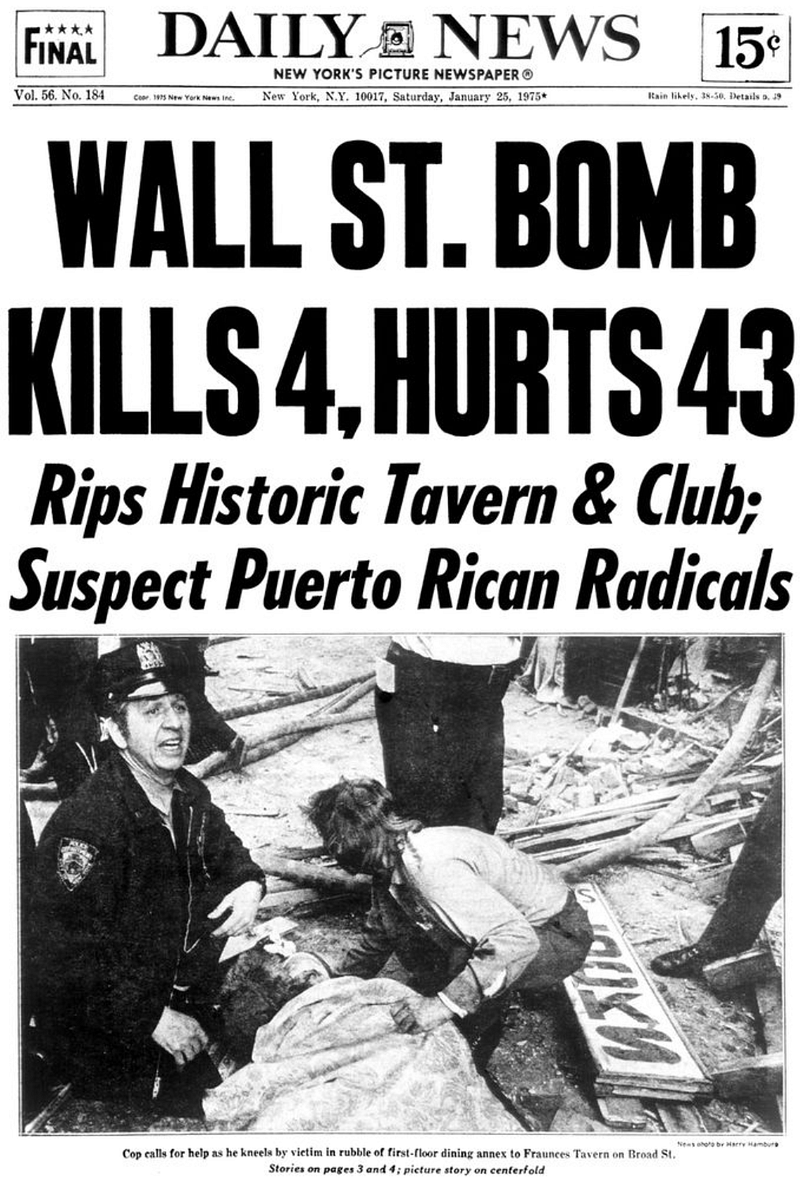
Some other notorious revolutionary groups that emerged in the 1970s include FALN ( Fuerzas Armadas de Liberación Nacional aka Armed Forces of National Liberation; this group was for Puerto Rican Independence), New World Liberation Front, May 19th Communist Organization, United Freedom Front, Mutulu Shakur Group aka The Family, and the bizarre Symbionese Liberation Army.
All groups ended up killing and maiming people, inadvertently or not, many of them innocent working-class people, of many different races, that got caught in the wrong place at the wrong time.
Conclusion
I’ll close with an elucidating perspective from a historian of these times, Bryan Burroughs. He writes, in his mind-blowing book on the topic, Days of Rage:
“In the end, the untold story of the underground era, stretching from 1970 until the last diehards were captured in 1985, is one of misplaced idealism, naïveté, and stunning arrogance. Depending on one’s point of view, its protagonists can be seen as either deluded dreamers or heartless terrorists, though a third possibility might be closer to the truth: young people who fatally misjudged America’s political winds and found themselves trapped in an unwinnable struggle they were too proud or stubborn to give up…..
It is ultimately a tragic tale, defined by one unavoidable irony: that so many idealistic young Americans, passionately committed to creating a better world for themselves and those less fortunate, believed they had to kill people to do it.”
Ah, the irony! What’s that they say about good intentions again…..?
— —
If you enjoyed this, stay tuned! I’m going to be doing a series of articles profiling in detail different revolutionary groups of this time & their various antics….cause, oh boy! does it get wild..….. Thanks for reading :D !