
Yes
Revive and Survive, CPR in 2021.
Should you even bother?
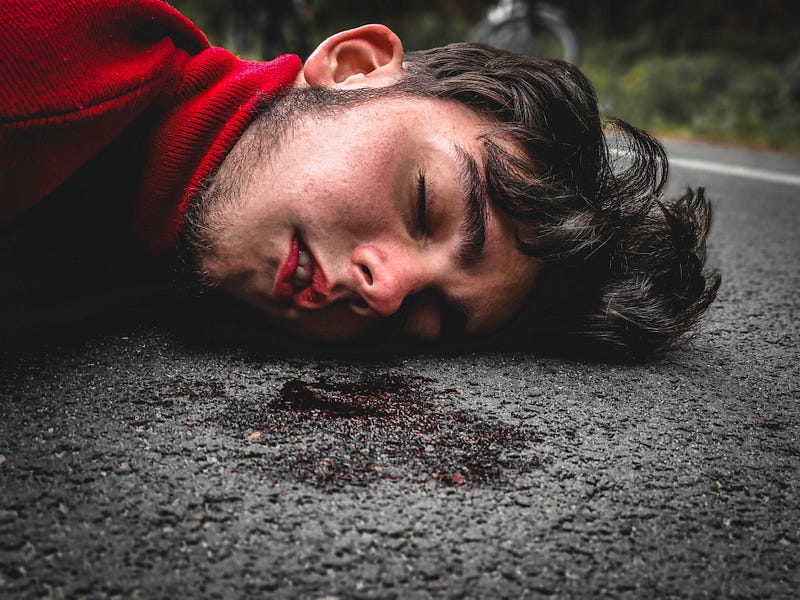
It’s Two P.M. in Beaver Willow
You pull into the grocery store lot and put on that blasted mask as you shuffle toward the entrance with a taste for Pop-Tarts and Chilli Beans. Suddenly an old fellow takes a nosedive right into the cart corral. A young man checks him over and starts a frantic chest pump.
“Call 911”
You fumble in your pocket for the phone and hit the digits, your stubby old fingers quivering. A crowd is forming. In Beaver Willow, the ambulance takes its sweet time, there's only one. Used to be the hearse came direct and looks like that would be the most economical notion here. You look the old man over with dismay, sizing up his dirty pants and four-day stubble.
By the time the ambulance shows up to take him to Memorial, it's been thirty minutes. Got to hand it to those fellas, they kept at it and didn't give up on that old-timer. You see the EMS crew shock him with paddles, put a tube in his mouth, then load him up. Gone to meet his maker seems like.
“I wonder if they ever make it.”
So let’s look into it
CPR Some General Notions
William Kouwenhoven really began the promotion of CPR to the public.
This work culminated in 1960 when he reported a 70% survival rate in twenty patients and emphasized that it was possible to treat a cardiac arrest (with CPR) outside a hospital environment and without the aid of any skilled medical personnel
Some of these were young drowning victims which explains the good outcomes.
In 2021 chest compression is emphasized in training both because it has been shown to be effective and because the public is wary of mouth to mouth especially during a pandemic. Students are taught to follow the cadence of “Staying Alive” by the BeeGees.
If you’re not trained in CPR or worried about giving rescue breaths, then provide hands-only CPR. That means uninterrupted chest compressions of 100 to 120 a minute until paramedics arrive. You don’t need to try rescue breathing.
Two critical elements of “out of hospital” CPR is yelling out “call 911” in hopes of summoning an ambulance and trying to get an AED, an automatic device that shocks the heart. The AEDs are intended for use by anyone and have large type well-designed instructions. They are easy to buy and should be in all major buildings.
Semi-automated defibrillators (AEDs) analyze the heart’s rhythm, and if an abnormal heart rhythm is detected that requires a shock, then the device prompts the user to press a button to deliver a defibrillation shock.
Should You Even Bother?
But what does any of this accomplish? When it's your time it's your time right? There are two important conclusions:
- Most people do not survive out of hospital cardiac arrest even with CPR
- CPR improves the odds significantly
The best way to survive a heart attack is not to have one. Don't smoke, get exercise, and get your cholesterol checked. The next best way is to have your heart stop in a hospital. This doubles your survival odds. Note IHCA is in hospital. OHCA is out of hospital cardiac arrest.
About 40% to 50% of IHCA patients achieve ROSC(their heart starts beating again)initially. The majority (approximately 60% to 70%) of cardiac arrest patients (either OHCA or IHCA) who initially achieve ROSC subsequently die in the hospital, with rates of survival in the United States of approximately 12% for OHCA and 24% for IHCA.
Think about this, sudden death outside the hospital means your odds are one in two of making it to the hospital alive and about one in eight of making it back home even with the terrific EMS service available today. Not too great.
One of the dreaded consequences of CPR can be massive brain injury from poor circulation over an extended time. Survivors may be left alive but in a vegetative state permanently attached to a ventilator, something all of us fear. This is just one reason why CPR is sometimes withheld from frail elderly patients with underlying health problems. They are more likely to suffer a brain injury.
So if the odds are so bad, why bother? Well in 2019 they did a study following 30,000 people who had an out-of-hospital cardiac arrest in Sweden. About 68% got CPR, which is really good. The bottom line, CPR doubled the survival rate when administered early.
“CPR in its simplest form is just chest compressions. Doing only chest compressions doubles the chance of survival, compared to doing nothing,” Riva explained.
YES
We just want the facts so here they are.
- Do what you can to avoid a big heart attack. No tobacco unless you are nuts and have a death wish.
- Go to a hospital if you have unexplained chest pain, that's the place to be if your heart stops
- CPR is a lifesaver, get Red Cross training if you can. But sadly even with CPR, most don’t make it if their heart stops.
More from the Author: