
Revisiting Forgotten Fat Loss Tools: Litvinovs
Litvinovs or “Lift and Sprints” are an exercise combination popularized by Dan John, that should find its way into your fat loss routine.
About 15 years ago I put together a quick workout for my wife and I. At the time we were still living in a condo so we didn’t have a lot of space inside nor much equipment. What we had was a parking lot and a 40lb kettlebell.
I had started to read about this new fancy workout methodology called “Crossfit” and their fascination with the 21–15–9 rep scheme, so I made a simple routine of:
21 kettlebell swings ~ sprint to the end of the lot ~ 21 pushups ~ sprint back…repeat with 15 repetitions and then 9 repetitions.
It was simple and it f*cking smoked us. Not only cardiovascularly, but with a we had a serious muscle pump in our entire posterior chain, the likes of which I had never felt before. I should have continued to do these lift and sprints the next 15 years. I would have been in seriously good shape. Instead, I continued to use the same program hopping that got me very mediocre results. This is even after reading an article by Dan John on the subject (T-Nation).
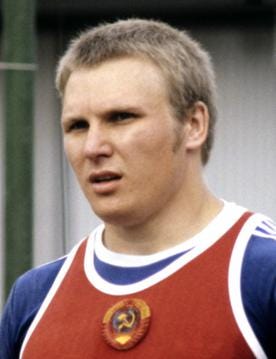
Dan John wrote the article back in 2006. The athlete referenced; Sergey Litvinov, competed in the 80’s. So why hasn’t this method been more popular? Why didn’t I just do Litvinovs after reading about them? The simple explanation: it’s a pain in the ass to bring equipment to where you can actually sprint. It’s a pain in the ass to find or get to a spot where you can sprint alone. For the vast majority of us that means either a local track at a high school or the asphalt road in front of our house.
Something else I have observed at play; after years spent sprinting in various sports throughout school and with clubs, adults suddenly become averse to sprinting in general. So let’s say you get over the embarrassment and get your ass to a track to run some 400s; are you really going to drag a barbell and plates too? Are you going to get arrested for dropping weights onto track itself?
So What’s Changed?
One product: Assault Runner. What used to be solely the domain of high end sports training; such as NFL Combine trainees at Exos, curved treadmills have spread to all manner of gyms like an itchy rash after Spring Break. There are a few brands now that make them, but it is definitely thanks to Assault Fitness for popularizing them. Its mainstream move started with their inclusion in the Crossfit community and by making them affordable. In a nice change of pace from most fitness trends; this is actually beneficial to people.
Curved Treadmills
There are a number of advantages to curved treadmills
- Manually Powered — The user is the one that makes the belt move rather than a motor. On a motorized treadmill, you typically have to raise the incline +3% to simulate running on flat ground. This occurs because the motorized treadmill is actually pulling your legs back behind you when you have a footstrike. Speaking of footstrike…
- Higher Footstrike — When running on a curved treadmill, your foot is going to hit the treadmill slightly higher than if you were running on normal terrain. This forces your to engage your posterior chain way more than a regular treadmill thus training you to be a stronger runner.
- Running Form — Unless you had a GOOD track coach in middle or high school, you never learned how to run. I had no idea I didn’t know how to run until I started training on an Assault Runner and then went running on normal ground. Both of the aforementioned points help teach good running form, but the big contributing factor to this is the speed regulation. You have to control the speed in which you run. Move too far forward and up the treadmill’s incline and you will go too fast to maintain your speed. Stay to far back and you won’t maintain enough speed. The curved treadmill forces you into the right positioning and keeps you in upright posture too.
- Sprinting — On a motorized treadmill, sprinting sucks. How fast are you? no idea, the treadmill is however fast you set it to. On a manual treadmill you can actually see how fast you are. On a curved treadmill, you can even see how powerful your running is through wattage. You have the ability to start off slow and then build up spread naturally rather than through pressing a button over and over again while mid stride.
So What’s The Point?
With any exercise combination, we want to achieve is a sum that is greater than it’s parts. Heavy explosive lifting is great. Sprinting is great. Can we combine them to make 1 + 1 = 3? I believe the answer is yes. I think Litvinovs are an amazing combination of muscle building, athleticism and fat burning (EPOC: Excess Post-exercise Oxygen Consumption). Once you try one and FEEL it, you will understand. It boils down to economics: how can we get the most out of the limited resources we have. Time and compliance are chief among these.
Time is the simple domain to control. We know we could do an exercise intensely for 5–10 minutes that will also give us a great workout. Just straight sprinting can achieve this. If you have ever done a Tabata; a real Tabata (not some horsesh*t 20min HIIT class Tabata), then you know you can achieve a lot in a short period of time. Can you keep that up though? Can you consistently do that workout? To do something that intense you need a way of tricking yourself into it. That’s not a joke. These are the mind games we play for workouts if we want to achieve a real goal. Combining two exercises together is a way of achieving this and Litvinovs are the best.
How to perform Litvinovs
In most instances you should just follow the exact protocol cited by the experts or originators. Litvinovs are one of the exceptions. They can be tinkered with and produce the desired result. When Sergey Litvinov was observed doing his lift-n-sprints, he performed 8x front squats at +400lbs. That is a metric f*ck-ton. He then followed that up with a 400 meter sprint. Then he rested as much as needed and performed that couplet twice more.
3 sets: 8x Front Squats(400lbs) + 400 meter sprint.
Dan John played around with some different movements such as kettlebell swings, overhead squat and snatch. He wasn’t a big fan of back squats nor trap bars. The former because of the necessity of a rig at a track to get an appropriate weight and the latter because the of difficulty jumping out of the trap bar. Personally I really like the trap bar version. Coach Dan John would also shorten the distance and tried it with hill sprints because those fit the need of the athletes he was coaching.
For our purposes; chiefly fat loss, I would suggest maintaining that 400 meter distance (Assault Runners convert to about 80% of this distance so 320 meters). For the lift portion, we want to use something that targets either the glutes, quads, hamstrings or all three.
I’ve toyed around with different loaded carry variations (loaded carry then sprint). I have found that it needs to be a loaded carry that taxes your glutes in order to work. Overhead carries, farmers carries, nor suitcase carries really achieve this. Bear hug carries do. I’ve always felt front loading taxes the upper gluteus maximus.
If you want to combine jumping and sprinting, then go for it. In my experience, box jumps aren’t a great option. Squat jumps are an excellent option though.
Give them a try. If you found this article useful, follow my me her and on Twitter @FatBrokeAnrgy