
Reviewing My Living Expenses in Singapore 2021 (as a Malaysian graduate)
My (real) expenses in SGD (rent, food, transport). Also talks about different lifestyles and their costs.

If I get 1 cent every time someone in Malaysia asks me how is the living expenses in Malaysia, I will probably be getting 20 cents now. It’s not even a dollar mainly because I don’t have many friends and I don’t talk to people that much. It’s sometimes tiring for me when I’m being my introverted self. Anyway, getting asked about my living expenses in Singapore 20 times a year is still a lot. So I’m writing this article so that I can just send my friends a shortened link next time (and literally earn cents from them if they have Medium membership. :P).
Intro
I will split this into 3 parts based on the variance and range. In later sections, I’ll discuss the Pros & Cons of the various options, as well as my estimated spending in detail.
- Rent + utilities. Rent varies HUGELY for ex-pats depending on the lifestyle choice. Some choose to rent luxury condos in the CBD area; while some choose a co-living lifestyle (4–5 digit SGD rent) in shared rooms in the far North, far East, or the far West (couple hundreds SGD).
- Food. Hawker centers in Singapore feed you on $2–5 a meal while ‘atas’ (high end) restaurants can cost up to 2 digits SGD (shop lots) or 3 digits SGD (fine-dining).
- Transport. Public transport (bus / MRT) is very affordable and usually would be the preferred choice for most residents. Taxis & Grab costs more ($10–30+ depending on distance and time of the day). While owning a car costs the most, this YouTube video in 2019 mentioned it’s about $52 a day to own a car, and it seemed to only increase with time.
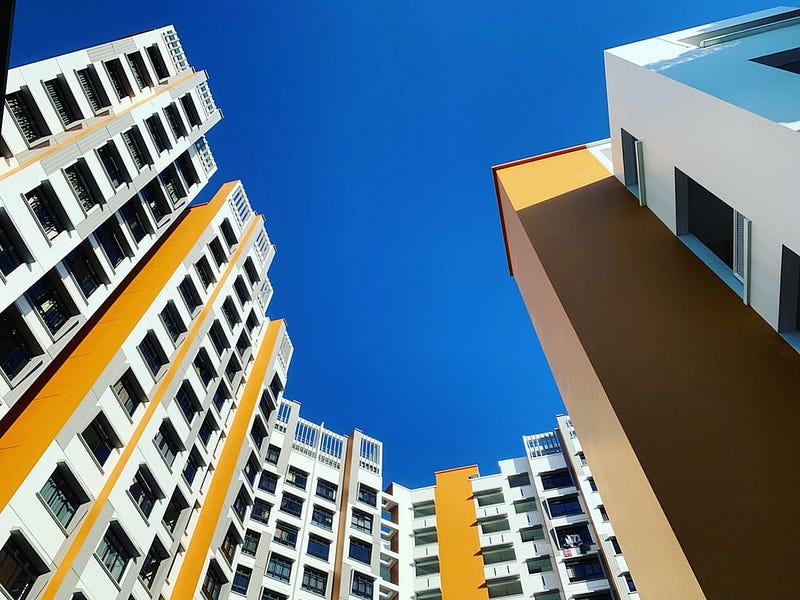
Rent + Utilities
I have lived in 3 places in my 2 year+ here in Singapore.
(1) Living in My relative’s house (an *HDB common room)
When I first came here, I lived in my aunt’s house. She’s been in Singapore for a very long time and had bought an *HDB unit here.
[Glossary] (Singaporeans love A.C.R.O.N.Y.M.S.)
HDB: Housing Development Board, basically government flats which houses ~80% of Singapore residents. Despite being public housing, these are really well maintained and livable.
common room: Common rooms are rooms in HDB / condos without attached toilets. The convention is that only Master rooms have attached toilets.
[Pros]
- You get to live with family or extended family, basically people you know. This really makes the house feel like a home.
- Home-cooked food! 😍 Which are usually healthier and tastier (IMO).
- Saving in rent. More often than not, relatives don’t wanna charge too much because they know living expenses in Singapore is high.
[Cons]
- Longer travel time to work (usually). From what I observe, Malaysians’ relatives in Singapore usually bought HDBs in less mature estates (which are much, much better value-for-money). Thus, the commute time to work can be longer. My friends who stay in their relative’s house usually would have about 1 Hour of travel time from home to work.
- Fewer choices & need some luck. Unless your family is huge, you might not have that many relatives in Singapore and a chance that there’s an empty room for you.
[My estimated expenses]
While my aunt doesn’t want to collect rent, I transferred her $500-600 monthly, which is already below the market rate. I was very ‘paiseh’ (feeling sheepish) while staying there because she cooks every day for me and bought a lot of snacks for me too.
(2) Rented a room in a *condo.
Then, my girlfriend also got a job in Singapore, and her office is too far away from my aunt’s house. So we decided to rent a common room (with exclusive usage to the toilet) in the condo near the Circle line.
[Glossary]
condo: usually private housing and have more facilities
[Pros]
- There’s usually a swimming pool and a gym! And we really enjoyed these facilities.
- It also felt more secure because there is usually a guardhouse.
[Cons]
- Usually smaller, especially kitchens can be quite small.
- More suited for people with cars. Some condos can be inconvenient or don’t have a covered walk path to bus stations or MRT.
- Living with people you don’t know and there is some risk with that.
We’re glad to have met friendly housemates who would sometimes cook for us. But hearing a lot of bad landlord-tenant stories on social media can sometimes be making us anxious when looking for a new place.
[My expenses]
We paid $1100 in total for 2 people. The utilities were included in the rent. It is a small common room price with exclusive toilet usage so we thought it was a fair deal.
(3) Rented a whole HDB unit.
After some months, my girlfriend’s parent came over to Singapore and we’re looking to rent an entire HDB unit. We found and signed the tenancy agreement to rent a whole HDB unit with 2 bedrooms (they call it a 3-room HDB here, counting the living room as a ‘room’).
[Pros]
- Don’t have to share or “queue” to use a common area. The bedroom, toilets, kitchen, and living room are all yours.
- We felt much more at ease at home because we were living with people we knew before.
[Cons]
- Price is higher, and we had to pay utilities, aircon servicing, internet, and professional cleaning fees too.
- A little less privacy. Compared to condos, HDBs were designed with windows and doors facing each other. Perhaps it’s designed in a way so neighbors can look out for each other.
- Usually no balcony. Having lived in Malaysia, we’re still not used to sticking out bamboo poles to dry our clothes. So we tend to dry our clothes indoors near to the windows.
[My expenses]
We paid a total of $2300 in rent. Utilities (electricity + water + refuse) were about $100 a month. Internet $30 per month, aircon servicing was $200 / year, which is about $17 per month. In total, it’s about $2500 for 3 people.
The first month, we were shocked by the water bill. Water is ~14x more expensive here in Singapore *($2.73/m3; RM 8.19/m3) than in Malaysia ($0.19/m3; RM0.57/m3).
*includes meter rate + waterborne fee + 50% water conservation tax
The electricity rate is okay, Singapore ($0.25/kWh; RM 0.75/kWH) is about ~3x more expensive than Malaysia ($0.07/kWh; RM0.22/kWh). It’s about the same as the currency exchange rate.
To summarize my expenses on rent:
- HDB common room in the relative house: ~$550 per pax (Note that I occupied the entire room as my girlfriend was not in Singapore yet, and I shamelessly consume my aunt’s home-cooked food and snacks she bought every day.)
- Condo common room + toilet: $1100 for 2 persons,~$550 per pax
- Whole HDB unit: $2500 for 3 persons, ~$833 per pax
Food
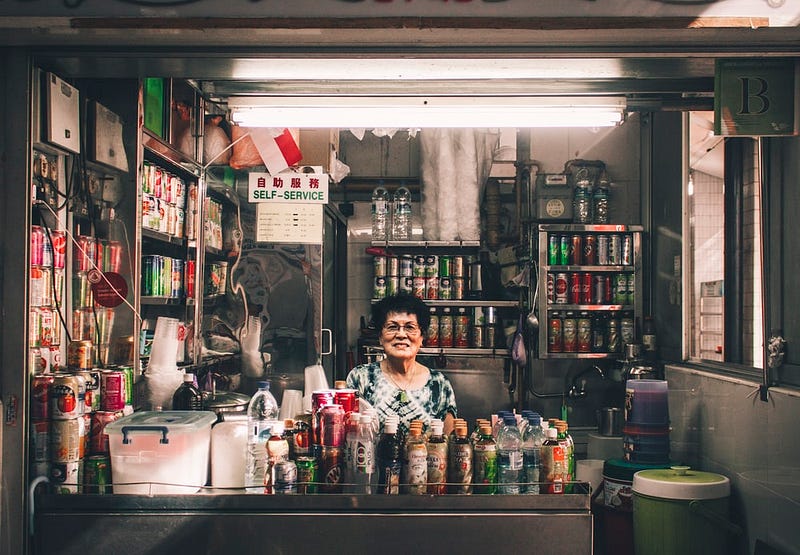
Hawkers
Food can go very cheap at Hawkers or the food stalls in HDBs ($2–5). You can get tasty local cuisines like mixed rice ($2–4), chicken rice ($3–4), nasi lemak ($2–4), roti prata (aka roti canai ($1–2), Singaporeans calls it differently) that will fill you up for a meal. Drinks like ‘kopi’ (coffee) and ‘teh’ (tea) are about $1–1.6.
Fast Foods
Another cheaper option is fast foods like McDonalds’ (~$5 for a McChicken set). We love the McDonalds’ grilled chicken salad too (~$6 healthier option)! I don’t think Mekdi sells salads in Malaysia.
Cooking
The 3rd cheaper option is to cook. If you’re renting a whole unit HDB, you can cook. If you’re renting a room, you need to check what kinds of food you can cook. Some landlords allow only instant noodles and some allow light cooking. Vegetables are around $1–2 [for about 2–4 pax], raw chickens are usually below $3 [2 pax], salmon about $8 [2–4 pax], and beef/pork about $5–6 [2 pax].
Restaurants
Going to restaurants can be more expensive ($6–20 per pax or higher) and we really don’t go that much. A big reason is to save money, another one is just that there are cheaper and tastier hawker stalls almost everywhere in Singapore.
Fine Dinings
And going super ‘atas’ (luxe / upper class), fine dining (e.g. 5-course dinner) is about $100–300 per pax.
Beverages
If you like buying crafted beverages, usually bubble teas and Starbucks-like drinks cost less than $10 each.
[My expenses]
My spending on food and grocery was typically about $350–420 a month (per pax). Some months go up to $500+ when we eat out more (catching up with friends or special occasions).
I tend to think this is on the low side because we rarely eat out even during the weekends. If you have more social events it can get much higher.
Transport
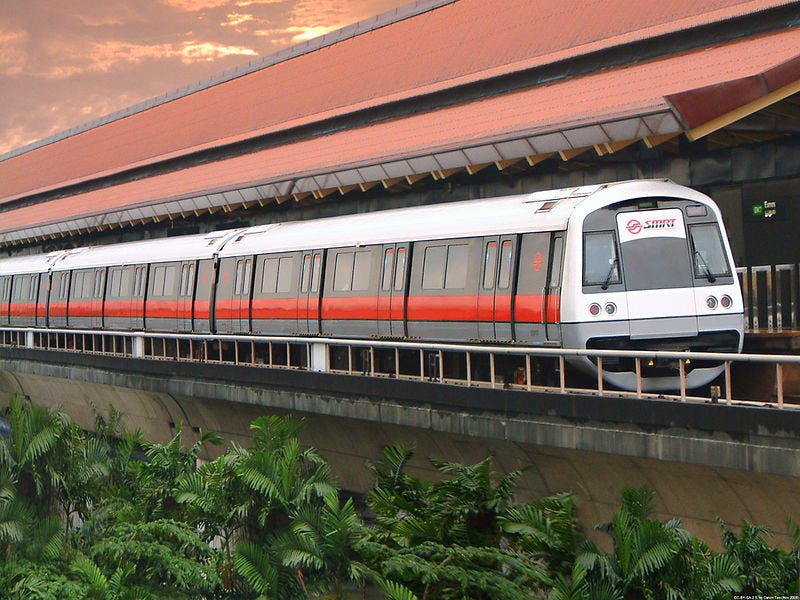

Public Transport
Taking Busses and MRT typically takes about 30 min to 1.5 hour+ to go anywhere, including the walking and waiting time. And the costs are very cheap. They start at about $1 and increase as distance increases, but usually it will stay below $2 for the entire one-way trip.
Taxis/Grab
Taxis and Grab can get you from point A to B in a much shorter time (typically 10–30 min). However, these options also cost more. Depending on the distance and time of day, they can cost $10–30+ per trip.
[My expenses]
I typically spent about $40–50 per month on public transport (per pax). We don’t take Grab that often.
Total Spending per Month
So, I had shown above the bare minimum to “survive” in Singapore — shelter, food, and mobility. Here’s a quick summary.
Bare minimum spending per month
Staying at relative’s house = ~$550 (rent) + ~$200 (food)+ ~$40-50 (transport) = ~$790–800 per pax
Renting a condo common room (with my girlfriend) = ~$550 (rent) + ~$350–500 (food) + ~$40–50 (transport) = ~$940–1100 per pax
Renting HDB whole unit (with my gf & her parent) = ~$833 (rent) + ~$350–500 (food) + ~$40–50 (transport) = ~$1223–1383 per pax
Note: The numbers were for 2020 and 2021. These were my best estimates as I did not track every expense down to the exact dollars & cents. Hence some margin of error is expected. Rent had also increased by a lot now and Singapore’s core inflation rate is expected to be 2–3% in 2022 (source: MAS SG). Please take all numbers as a reference.
Now, there are still a lot of other things you should or could spend on. E.g. insurance (medical fees are very expensive, even in public hospitals), daily necessities (shampoo, toiletries), telco, fashion, entertainment, tech gadgets, or gifts. These can add up very quickly.
I also hadn’t included income tax! So, unlike in Malaysia where income taxes are deducted automatically in our payslips, Singapore tax payers have to fork out the amount from bank accounts and pay to Inland Revenue Authority of Singapore (IRAS) every year. That being said, income tax in Singapore is considered low, comparing to other first world countries. Full income tax rate here: https://www.iras.gov.sg/taxes/individual-income-tax/basics-of-individual-income-tax/tax-residency-and-tax-rates/individual-income-tax-rates
As a reference (as of Oct 2, 2022), the gross income tax are as follows:
- Salary of 3k SGD / month → 410 SGD / year
- Salary of 5k SGD / month → 1950 SGD / year
- Salary of 7k SGD / month → 3810 SGD / year
- Salary of 10k SGD / month → 7950 SGD / year
Final Thoughts
The idea of a earning 3x currency exchange rate is lucrative but Singapore is also an expensive city to live in (ranked 3rd most expensive city in the world, just after Tel Aviv and Paris according to Economist Intelligence Unit (EIU)’s survey in 2021).
I hope that this article can help you have additional reference when deciding whether you want to move to Singapore to work.
TBH, a big reason I chose to come to work in Singapore is because I wanted to see the world. Singapore had attracted a lot foreign investments, especially so in the tech field. And the idea that I could still be near to my home (Malaysia) and work in amazing companies in Singapore was really exciting for me.
That’s it for this time, see you in the next post! :D
Follow my social presence for useful content!
Instagram | Twitter | LinkedIn | YouTube | Medium
Check out my book — “Tech Resume Guide”!
A short book on how to craft the perfect resume to work in tech! It includes my resumes which got me offers in Meta/Facebook Singapore and Shopee Singapore!
(Use code “MEDIUM” and get 20% off! Limited time only!)