
Review: “Fossora” Sees Björk Dig Into Grief, Looking For Human Contact
The tenth record from the art pop legend explores feelings of loss and disconnection during this tumultuous era.
When it comes to art pop, no one can dispute that Björk holds a place atop the genre’s proverbial pedestal.
Now 56, the Icelandic songstress has been making music professionally since the age of eleven, both as a solo artist and a singer in many different groups, most notably The Sugarcubes. Ever since the release of her 1993 international solo debut album, appropriately titled Debut, she has received acclaim from critics for her inventive combinations of genre, expressive vocal style, and radical artistic ideas.
Each new album sees a reinvention of Björk and her sound, always in service of her concept. For example, 2001’s Vespertine features wintry and intimate “microbeats,” meant to represent the new love she started with artist Matthew Barney. Compare that to 2015’s Vulnicura, which explores her heartbreak at that relationship’s acrimonious ending with doleful, heavy string arrangements. Or contrast the emphasis on artificial sounds in her 1997 record Homogenic with 2017’s Utopia, an album replete with woodwind and bird calls.
Five years on since Utopia, her most recent release prior to this year, Björk’s world looks incredibly different than it did then. In addition to going through the COVID-19 pandemic with the rest of the world, she also lost her mother in 2018. Consequently, loss, motherhood, and human connection are the predominant themes of her newest album, Fossora.
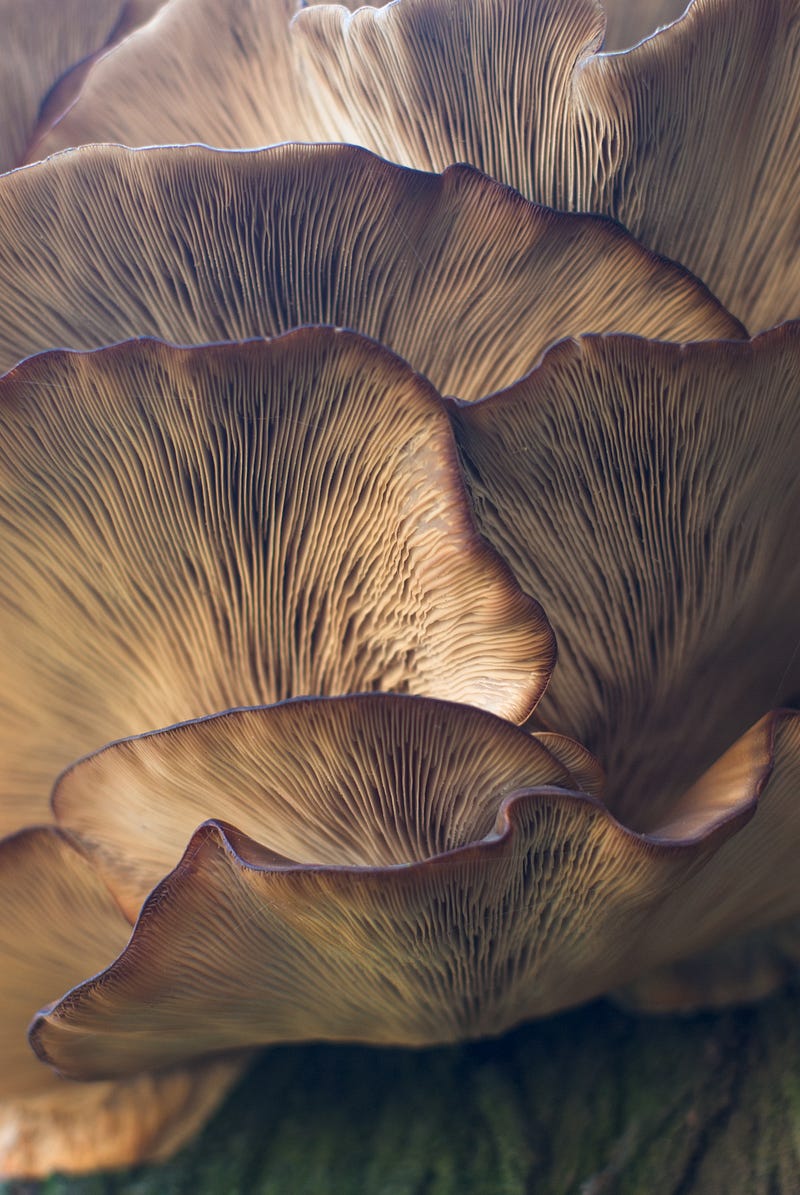
These motifs bleed through the symbolism in Björk’s visuals, an incredibly important aspect of all her albums. The cover art of Fossora (which loosely translates to “she who digs” from Latin) shows her appearing as a psychedelic superhero, surrounded by colorful mushrooms of all shapes and sizes. Mushrooms here are both representing death, reflecting their role as nature’s decomposers, but also as a means of connection, both to humans and other living things. But despite the solid artistic foundation laid here, the execution of Fossora comes across muddled and unclear at times.
Lead single and opening track “Atopos” gives us a big taste of the sounds and themes of Fossora like only Björk could. The bulk of the backing tracks here come in the form of layered vocals and a bass clarinet sextet, a mixture of her Medulla and Utopia albums in a way. The earthy and deep clarinet tones collide beautifully with the intense gabber breakbeats that take over the final leg of the song. Over this, Björk repeatedly asks “Are these not just excuses to not connect?”, and imbues this question with apocalyptic gravity:
If we don’t grow outwards towards love
We’ll implode inwards towards destruction.
She smacks us with more driving gabber in the record’s title track, alongside the catchiest hook on the record by far. The production work Björk puts into the back half of the song is truly remarkable, mixing her voice so high in order for it to project over the dense instrumental of polyphonic clarinet and blasting bass. Lyrically, she poetically likens the digging of mushroom roots through barren soil to the emotional digging she had to do after her mother’s passing.
We stayed
In one place long enough
To shoot down deep hyphae roots
That penetrate concrete and plastic
Even though the ground is burnt
Underneath monumental growth.
This thematically culminates with “Ancestress,” Fossora’s longest song. A multi-phased odyssey of folk strings, Indonesian gamelan, industrial percussion, and her own son Sindri on guest vocals, Björk described this as an “epitaph” for her mother. In between descriptions of her rebellious spirit and disdain for doctors, she reckons with how aspects of her mother have become parts of her:
By now, we share the same flesh
As much as I tried to escape it
This is no mediocre debris
My ancestress this is.
Outside of these tracks, though, her message lands with much more mixed success. “Fungal City,” continuing the woodwind-gabber production trend, lands best for me, translating the mushroom symbolism away from death and toward romantic relationships:
Fungal city subterranean
Curve the forest floor
We walk on this sunken mystery
Trunks bursting through the moss from our love.
Conversely, “Allow” and “Freefall,” while both individually beautiful songs, feel more like holdovers from past albums. The heavenly chorus of flutes on “Allow” sound wonderful and pair perfectly with Björk’s voice, but keen fans will catch that it’s definitely a track from Utopia that failed to make the cut. Moreover, the lyrical themes of both come across much less terrestrial and more celestial, reminiscent of her 2011 Biophilia record. It becomes hard to fit them into the big picture of Fossora.
Fortunately, Fossora ends with the meditative conclusion “Her Mother’s House.” Featuring vocals from her daughter Ísadóra, they sing interlocking phrases over gentle woodwind chords. The lyrics are unquestionably some of Björk’s finest. She ponders the harsh duality that a parent’s love results in a child no longer needing them, but also provides them unlimited freedom, concluding they always have a place within her:
When a mother’s house
Has a room for each child
It’s only describing
The interior of her heart.
Production: 7/10
Lyrics: 8/10
Songwriting: 6/10
Overall: 7/10
****************************************************************************
Thank you for reading! What did you think of this album? Leave a comment with your thoughts, and click here if you want to be the first to see my next review.