
RACISM
“Reverse Racism” and a Holiday Tempest in a (Boston) Teapot
Sorry, folks, “reverse racism” is as real as Santa Claus and the Easter Bunny
It’s an unfortunate fact of life. Whenever visible minorities address the fact of white privilege, social inequities, or the necessity of DEI, we inevitably hear outraged cries of “reverse discrimination” and “reverse racism.” Or, as we will see, when we seek to gather in a space without white people. Any conversation or attempt to redress racism is quickly shushed from the beginning with overt racists and even well-intended white liberals alike intoning that they “don’t see race” and that everyone is “colorblind.”
Well, it ain’t.
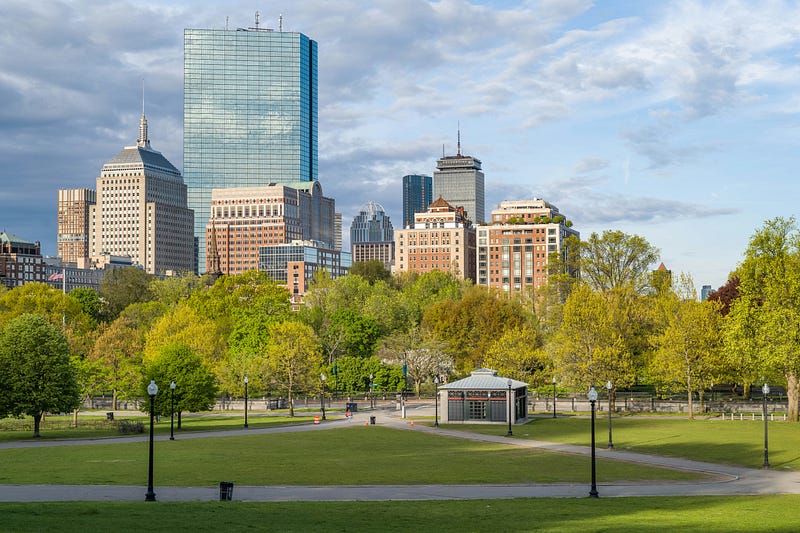
Amid the furor over Harvard President Claudine Gay’s alleged anti-Semitism and plagiarism in her Harvard doctoral thesis, a smaller tempest in a Boston teapot was brewing over another Harvard graduate, Boston Mayor Michelle Wu. You see, she had the audacity to hold an “Elected of Colors” holiday party on December 13, 2023.
Wu was immediately deemed guilty of “reverse racism” and “reverse discrimination.”
In case some of you missed this none-too-happy Christmas carol last month, the controversy was set in motion when Denise DosSantos, the Director of City Council relations, emailed an invitation to 13 city council members for an “Electeds of Color” Holiday Party. Another email was sent out 15 minutes later, clarifying that the invitation was only intended for six recipients — namely, those of color. Oops.
Supposedly, that’s when the seven white councilors discovered they were not invited. Two were unhappy: like the uninvited fairy in the tale of Sleeping Beauty, City Councilor Frank Baker called it “unfortunate and divisive” while former Boston councilor Michael McCormack sniffed contemptuously, saying that the event was “not something that anyone in the mayor’s office should be proud of.” The mayor’s predecessors would never have hosted such an event, he added.

Public angst was such that four complaints were filed with the Massachusetts Attorney General, Andrea Campbell. Weeks later, she ruled that the party did not violate public accommodation laws that prohibit discrimination. (For a photo of the “notorious” occasion, see the link above.)
It should be pointed out, however, that despite the hoopla, the holiday party for the elected councilors of color was not by any means unique to either the mayor or even the city itself. It was in fact at least a decade-long tradition — and merely Wu’s turn to organize it in 2023. As City Councilor Ricard Arroyo tweeted:
Never let facts get in the way of some manufactured outrage. Electeds of Color has existed for over a decade and the holiday party is an annual tradition. Wait until someone tells them about the Congressional Black Caucus or MA Black and Latino Legislative Caucus. The horror!!
In other words, the recriminations were much ado about nothing.
Sadly, however, the corporate media predominantly comprised of white commentators, did get their (white?) panties and briefs in a twist over this apparent outrage as they berated Wu for “reverse discrimination” and “reverse racism.” Wu hates white people! (Never mind that Wu has been called a number of anti-Chinese names like “Mayor Wuhan” and a member of the Chinese Communist Party. But we’ll save that for another story!)
This story may feel like stale Christmas fruitcake since it eventually faded away. But as we head into Black History Month, this Boston brouhaha of minority-only spaces is an important one to address. Because what passes for white conservative and even liberal reasoning in our corporate media can help us understand just how and why blindness to the issues of visible minorities continue to plague our so-called woke society.
Folks, it’s time to wake up our own sleeping beauties. So let’s take a look at some of the coverage of the party and examine the ways in which these writers whitesplain their disingenuous ideas of equality and color blindness to readers.
Conservative journalist compares Wu and the Electeds of Color to Ku Klux Klan and Governor George Wallace
I’ll begin with the conservative journalist, Howie Carr, and his article for the Boston Herald with its already incendiary title, “Mayor Dreaming of a non-white Christmas.”
Here, Carr is quick to equate minorities-only affairs with whites-only affairs, wondering what if a reverse scenario had taken place, with a white mayor holding a “whites-only” party.
Not so fast, Mr. Carr. The two situations are not even remotely comparable. As Kelsey Blackwell has explained nearly six years ago in the journal, The Arrow, there is a distinct need for minority-only spaces that has grown out of oppression:
People of color need their own spaces. Black people need their own spaces. We need places in which we can gather and be free from the mainstream stereotypes and marginalization that permeate every other societal space we occupy. We need spaces where we can be our authentic selves without white people’s judgment and insecurity muzzling that expression. We need spaces where we can simply be — where we can get off the treadmill of making white people comfortable and finally realize just how tired we are.
Blackwell adds that such spaces offer “healing” where “We can reclaim parts of ourselves that have been repressed” and “redefine ourselves and support one another in embracing who we are.”
Or as Michal Jones puts it succinctly, “these spaces are often in response to oppression — we need to be with each other and away from the abuse of racism and white supremacy.”
Let me add here that as an Asian growing up in the 1970s and attending college in the 80s, I can certainly attest to the feelings of exclusion in purportedly integrated spaces, from classes to stores and neighborhoods where I was one of the few Asians around or sometimes the only one.
Why then does our corporate media consider it so surprising that we visible minorities seek a place where we belong? Why have so many whites ignored the social and cultural segregation of visible minorities, whether it’s universities (as prior to 1975) or country clubs, but furious when the tables are seemingly turned on them? I say “seemingly” because the reasons why whites have excluded minorities from their society are very different from the reasons why minorities do so — as mentioned by Jones. Incidentally, it’s worth reminding ourselves here how even white women were also excluded from many of these spaces–which is why women’s colleges and associations were created during the last two centuries.
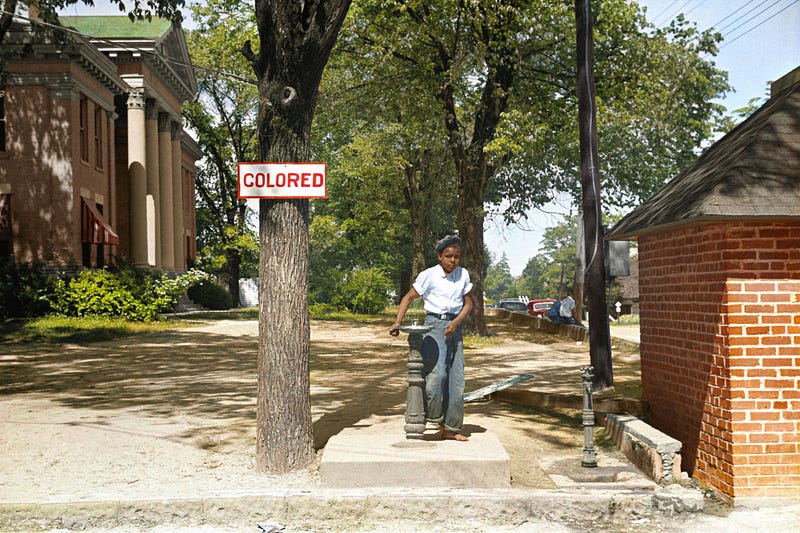
But back to Carr: after pulling this false equivalency between minority separatism and white separatism, he goes on to mockingly imagine minority response to a whites-only party.
He believes such would have brought “the end of the world, a national story for days if not weeks on end.” There would have been “rioting, or looting and violence” or “more looting and violence than usual.”
Note that this observation plays with a wink and a nod to racist tropes of Black violence especially in the wake of George Floyd’s death and the Black Lives Matter movement. (Oh, but never mind the predominantly white bodies involved on January 6, 2021!)
Carr then refers to the party as a “Wu Klux Klan” party before quipping that “Michelle Wu was just trying to put the ‘party’ back into apartheid.”
Again, as if a party held for “electeds of color” even resembled a Klan gathering or South African apartheid in the slightest! Do some whites fear that a get-together of visible minorities will take the form of a latter-day slave rebellion? Like Nat Turner 2.0? Or that our congregating together will take the same, malevolent form of exclusion that whites repeatedly meted out to us over the centuries? Let me repeat a la Michal Jones that spaces for people of color were created as a reaction to a long legacy of historical exclusion, discrimination, and yes, apartheid in the West.
But of course, it’s easy for conservatives like Carr to dismiss this tradition of systemic racism, when he posits the “discrimination” exhibited by Wu as a direct equivalent to the barriers placed against minorities: “The confusion was, white people had thought they had something called equal rights, especially in public accommodations.”
It is a reasoning that aligns very neatly with white opposition to DEI and affirmative action. The fact of continued de facto race segregation in public schools nearly 70 years after Brown v. Education and the fact that women and minorities still earn less than white men for the same jobs with comparable education and skills shows that some people are still more equal than others as I’ve discussed in previous articles. (See links at the end of the article.)
From here, Carr proceeds to pillory the Democratic party. Now, I’m barely a fan of our present Democrats (let alone Republicans), but to associate present-day Dems with the instigators of Civil War, the assassination of Abraham Lincoln, the Ku Klux Klan, Jim Crow, Plessy v. Ferguson, lynchings, the Dixiecrats, Woodrow Wilson and George Wallace is downright duplicitous. Not surprisingly, Greg Gutfeld of Fox News makes the same comparison. Why are conservatives so allergic to truth? (Rhetorical question.)
Unfortunately, Carr conveniently “forgot” that the Democratic party underwent a change with Lyndon B. Johnson and his passing of the Civil Rights Act. That’s when the Democrats became more racially liberal. Those who opposed the Act thus joined the Republicans–Carr’s soulmates.
Martin Luther King, Jr. was right: white moderates are hardly better than conservatives
But white centrist writers can prove to be just as disingenuous, if not more so in their efforts to rationalize their inherent racism. Such is the case in a Forbes article written by Susan Harmeling, described as a “Harvard-trained Professor of Inclusive Global Leadership, Business Ethics and Entrepreneurship.”
Unlike Carr with his open contempt, Harmeling is more subtle but every bit as noxious. She chastises Wu for only apologizing for mistakenly sending out invitations to white councilors but “not for their exclusion from the event.” Harmeling nonchalantly explains that “this underscores growing divisions that inclusive leaders must work to heal, not further exacerbate.” Such events, she opines, “cannot mend systemic prejudice” but only “inflame it.”
You see, by “promoting exclusivity over inclusivity” — wait for this word salad — this “understandable desire for affirmative fellowship should not absolve the inherent myopia underlying any racial litmus test.” Cue the pretentious Ivy League polysyllabic nonsense here!
More remarkable still is her dismissal of necessary spaces for people of color. Her word salad continues with a long-winded rejection of these spaces, whitesplaining that:
Well-meaning statements on wanting space to connect over shared struggles sound righteous, until one recognizes the corollary they imply: that engaging with white peers somehow impedes this self-care.
Why not just claim flat out like conservatives do that spaces of color are “racist,” period? Harmeling’s verbal flatulence merely stands as an attempt to fool the reader into thinking that she is highly insightful.
Even worse, she defends her argument by having recourse to a white male writer, the conservative and elite-educated David Brooks. Certainly, he knows more about “pluralism” than anyone else, white or minority, right?
Now wait as our Karen cues white tears, failing to acknowledge that for centuries, people of color have been victims of exclusion far more often than whites — particularly white males. “Selective events,” she pontificates, breed “resentment” while “the reactive backlash in response underscores just how charged and fragile tensions around identity remain today.”
White fragility, anyone? But that’s not all. More wordy, windy dribble follows immediately:
Yet we must also acknowledge when efforts at corrective support themselves enable prejudice, such as restrictions that exclude anyone who doesn’t share the same marginalized background. We must consider how every action serves to either expand or restrict our unity and the common sphere of belonging.
This invokes yet more white fragility as she exhorts all local and “nationwide” leaders to “go out of their way to validate and include all those feeling aggrieved, not just historically persecuted groups.”
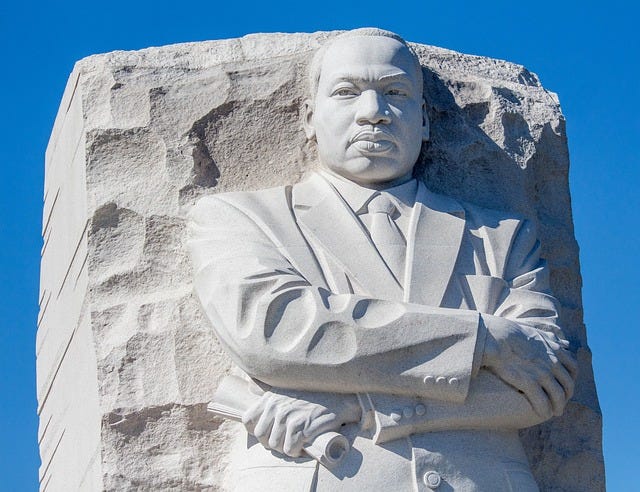
But perhaps most egregious of all is her attempt to harness remarks from Martin Luther King to her purpose —not unlike other disingenuous white conservatives and liberals. For just as Greg Gutfeld of Fox News and other conservatives twist King’s famous statement “I have a dream that my four little children will one day live in a nation where they will not be judged by the color of their skin but by the content of their character” in order to deny private spaces for minorities and decry affirmative action, Harmeling perverts the meaning of this other famous King quote:
Martin Luther King, Jr. once ruminated on the irony that Sunday church services were America’s most segregated hour, and he implored faith leaders to reflect on such divides. Similarly, we must ask if an “electeds of color” gathering in a proudly liberal city promoting inclusion aligns with professed values if it deliberately excludes white peers.
In short, she is implying that King was opposed to Black activism.
Not so fast. Evidently, this Harvard-trained professor of global leadership never read King’s Letter from Birmingham Jail (1963) because the context of King’s remarks is quite different. King was in fact criticizing white churches for their active discrimination against Blacks. Let’s examine what he actually said:
I must honestly reiterate that I have been disappointed with the church…. I felt that the white ministers, priests, and rabbis of the South would be some of our strongest allies. Instead, some few have been outright opponents, refusing to understand the freedom movement and misrepresenting its leaders; all too many others have been more cautious…
If anything, Harmeling’s words vindicate King’s distrust of white liberals, whom he regarded as worse than “the White Citizens Councillor or the Ku Klux Klanner.” The true problem was
the white moderate who is more devoted to order than to justice; who prefers a negative peace which is the absence of tension to a positive peace which is the presence of justice; who constantly says, “I agree with you in the goal you seek, but I can’t agree with your methods of direct action”; who paternalistically feels that he can set the timetable for another man’s freedom;
Amen, Dr. King! That is precisely the problem with these so-called white liberals who are ultimately as blind as conservatives where race is concerned. It’s the difference between Tweedledee and TweedleDUMB.
A room of our own

As I reflect on this tempest in a teapot, I can’t help but think back to my undergraduate years in the 1980s when these topics were debated. I hate to say it, but things have worsened with the arrival of a more virulent strain of racism.
Maybe we didn’t use the term “safe spaces” back then but many of us in our college community who were visible minorities, whether Black, Asian, Hispanic, LGBTQ, understood that we needed our own organizations and our own spaces. It was not about “hating white people” as some white conservatives and liberals would allege.
Instead, we were aware that sometimes even the most well-intentioned white folks don’t always understand or recognize racism. It’s not because they are “racist” per se, but simply because they have not experienced bias as frequently or witnessed it happening to their white friends and family. Interestingly, many white students back in the 1980s understood this back then— even conservatives.
Let’s face it — it is stressful enough for visible minorities to recount the instances of hate or bias we encounter without the presence of whites questioning our every statement. “Are you sure he was racist? What if he was in a bad mood?” “Oh, I know her; she’s not racist at all.”
After all, who wants to feel defensive or pressured when explaining a racist situation? Who wants to feel fearful of offending others — or worse yet, be told that our experience was not racist? To return to the words of Kelsey Blackwell, people of color would like nothing more than to “get off the treadmill of making white people comfortable and finally realize just how tired we are.” Yes, ma’am, we want a space where we can “share stories about the discrimination we’ve faced, and find understanding and support.” We want to define ourselves on our own terms.
For instance, as much as I support the lesbian or fat communities, I would feel awkward joining them because as a straight, skinny woman, I have not faced the same biases. In fact, I recently heard of a preposterous case where a skinny woman had tried to join a group for fat women: how could she possibly identify with them when she has probably never encountered half as many problems finding clothes that fit or being looked down on constantly?
And while I might have a number of shared experiences with Black and Hispanic women when it comes to race and sex discrimination, I would consider it intrusive to enter their separate group gatherings: this is because each group has its unique, particular challenges in a predominantly white society. That’s why there are separate organizations and clubs for Blacks, Asians, and Hispanics — in addition to more general groups for people of color. This is no different from the clubs for Italians, Germans, Poles, and Irish folks in earlier decades.
This is also why we need special months to commemorate Black, Asian, Hispanic, and Native American heritage. When our history, literature, and culture are often overlooked— if not outright blocked as in some states, there is all the more need for time and space on our calendar to redress these blanks.
The fact is this: if conservatives and liberals claim that they, like MLK, cannot wait for the day when we all will be judged for the content of our character rather than skin, perhaps they need to begin by acknowledging our basic need for an occasional separate space. A space to heal and recuperate before rejoining the rest of humanity.
© Frances A. Chiu, January 30, 2024. All Rights Reserved.


