
Revealing the Past: Alexander the Great’s Father’s Grave and the Presence of a Child
Where was Alexander the Great’s father buried? This question has been a source of controversy and disputes among scholars for years. After almost half a century, we finally have confirmation of the speculations.
Alexander the Great is rightfully called one of the greatest military commanders in history. The king gained fame through his extensive conquests. During an 11-year campaign, he reached deep into Central Asia, all the way to the Indus Valley. Earlier, his armies achieved triumphs, among other places, in Egypt.
The history of the Macedonian in monuments
The figure of Alexander the Great continues to fascinate not only historians to this day. Even though he ruled over two thousand years ago, archaeologists still uncover new revelations about the ruler and his close associates. One of the greatest attractions related to Alexander the Great in Greece is the palace where he was crowned. Recently, the ruins of the structure were reopened to tourists after years of renovation.
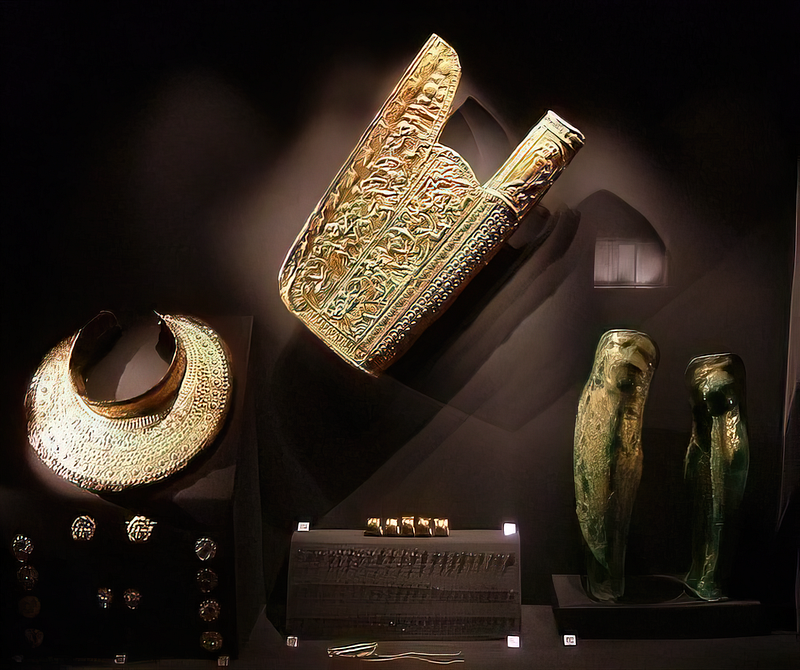
In recent days, the focus is not on the Macedonian himself, but on his father, Philip II. This is because, after years of speculation, researchers have finally confirmed that this king is buried in Vergina in northern Greece. In the same place, the remains of Alexander’s stepmother, his half-siblings, and his son were also found. The discovery includes armor and other items that belonged to Alexander during his lifetime.
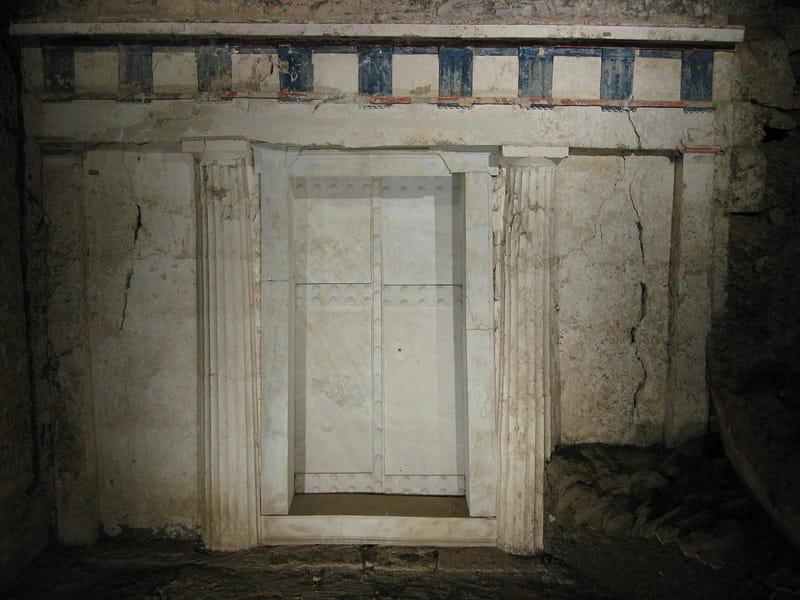
This is where Alexander the Great’s father is buried
The tombs, inscribed on the UNESCO World Heritage List, were discovered in 1977. It was almost immediately clear that the remains belonged to close relatives of Alexander. Yet, it took researchers almost half a century to determine exactly who was buried there. For this purpose, the authors of the analysis published in the “Journal of Archaeological Science: Reports” used osteological studies, macrophotography, X-rays, and anatomical sections of ancient remains along with historical sources. This revealed that in Tomb I, there were the bones of a man with a wounded knee, as well as a woman and a child. The infant at the time of death was only a few days or weeks old.
https://youtube.com/shorts/mPqHvsIlNzk?feature=share
Archaeologists confirmed that the buried man is the Macedonian king Philip II — the father of Alexander the Great. Historical trivia played a role in the findings, as it is known that he had a limp. The remains of the infant found in the same place also fit the story of Philip’s murder in 336 BCE. The ruler was assassinated a few days after the birth of his wife Cleopatra. His bodyguard carried out the murder on the orders of Olympias — Philip II’s previous wife and the mother of Alexander the Macedonian. After killing Philip, Olympias was said to have burned Cleopatra and her child alive, clearing the way for her son to ascend the throne.
In summary, based on skeletal evidence, Tomb I belongs to Philip II, Cleopatra, and their newborn child. Earlier suggestions proposed that the king could be buried with his spouse in Tomb II. However, this was ruled out due to the absence of the child’s remains and the lack of visible injuries on the alleged skeleton of Philip II.
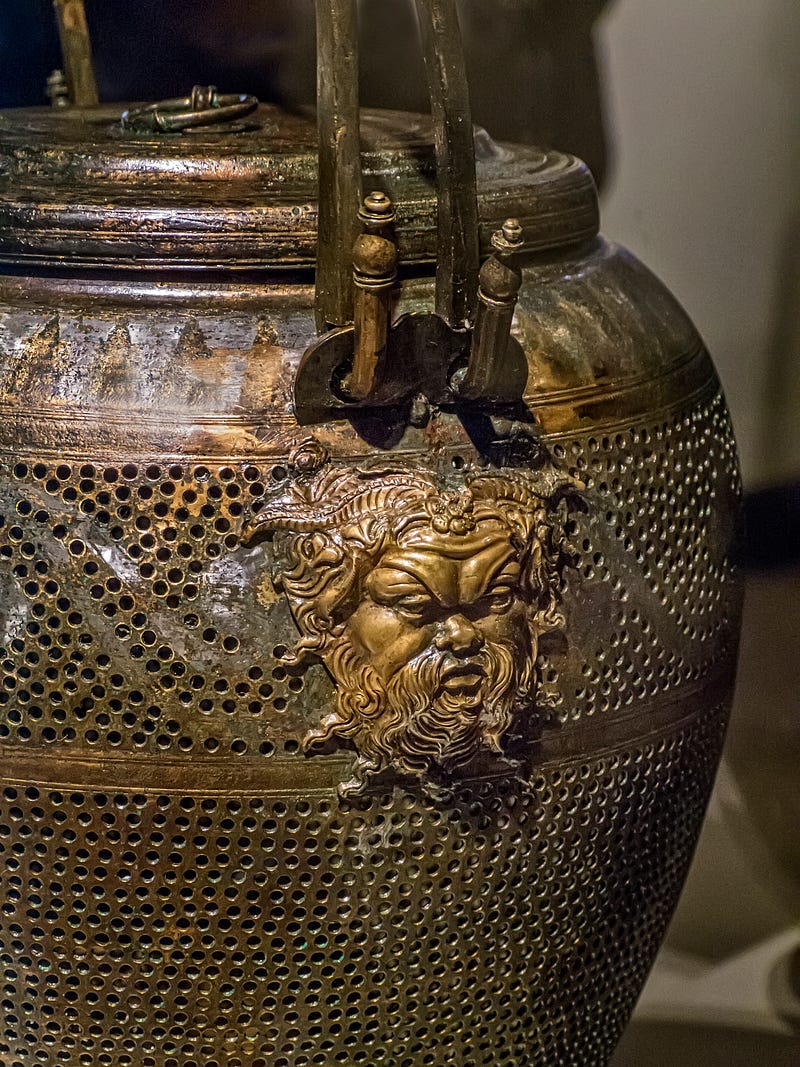
Alexander the Great and his close ones
Family ties endure. The researchers determined that the remains in the second tomb belong to Adeia Eurydice. The warrior was the wife of Alexander’s half-brother Arrhidaeus. The man buried next to her is, therefore, not Philip II but Arrhidaeus. Archaeologists explain this more extensively in the article.
- Based on ancient descriptions, some scholars suggested that certain items found in Tomb II, such as armor, belonged to Alexander the Great. This would only be possible if it were Arrhidaeus’ tomb, not Philip II’s — we read.
Scientists also have no doubts that the remains in Tomb III belong to Alexander IV, the teenage son of Alexander the Great.
Attention all readers!
As content creators on Medium.com, we face minimal compensation for our hard work. If you find value in my articles, please consider supporting me on my “Buy Me a Coffee” page. Your small contributions can make a big difference in fueling my passion for creating quality content. Thank you for your support!


_with_Pan_relief_from_the_tomb_of_Philip_II_of_Macedon_in_Aigai_336_BCE_02.jpg)