
Reunited with My Woodland
After a long time away, it feels good to be home.
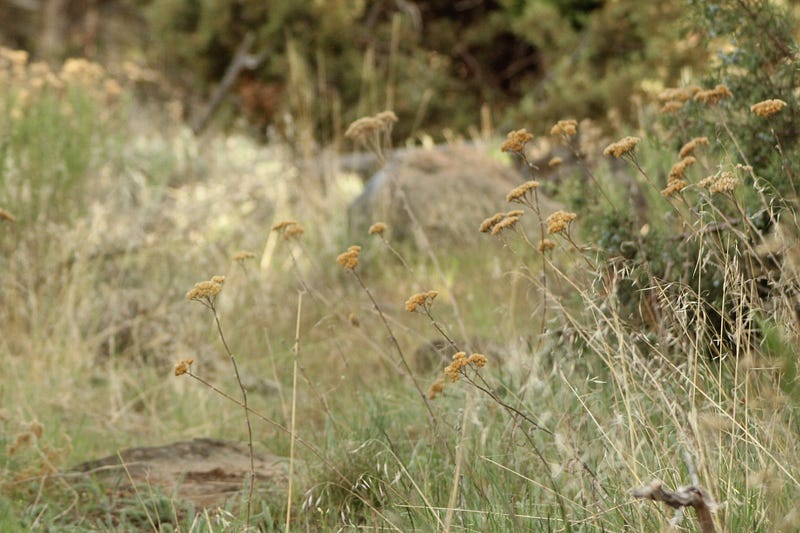
There is a path through the junipers that I know so well. It twists and turns until you find yourself at the top of a hill, looking over a green field below. This path is lined with sage and wild yarrow.
It beckons to me.
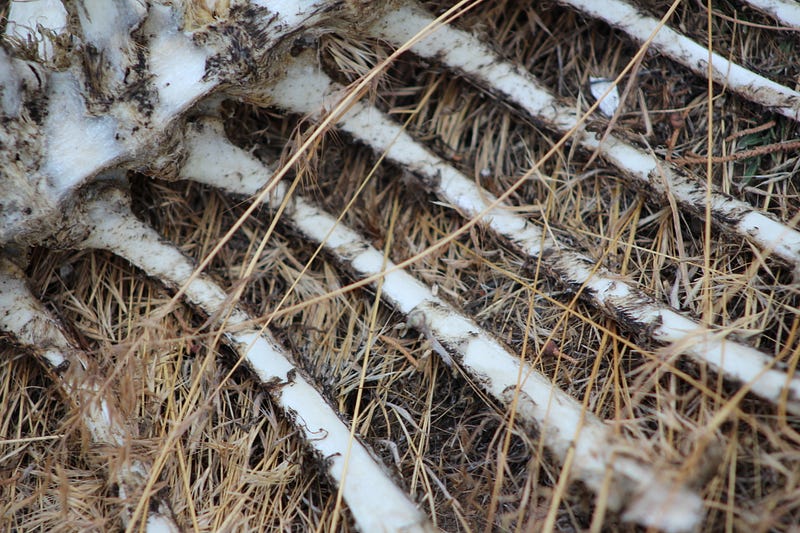
Just down the hill is a pile of bones. A stag whose neck was broken while sparring with a rival. These bones have been lying among the waving grasses for the past six years, cleaned by hungry, gnawing coyote teeth. I have passed these bones on countless winter afternoons and summer evenings, sometimes kneeling beside them and touching their smooth, porous surface where, in warm weather, ants scamper back and forth.
A little ways beyond is the run-off pond, tucked into the hillside, lined with swaying willows. One summer, when I was a young woman, the pond overflowed, spilling hundreds of tadpoles into the field below, where they darted back and forth in the streams that trickled between the rows of alfalfa grass, moving against the flow, like salmon, in a desperate attempt to avoid being carried away to the places where the water seeped into the dirt, disappearing. My mother, siblings, and I squatted in that field for hours, scooping up those tadpoles — as many as we could save — putting them into bowls filled with water, and moving them across the woods to the larger pond above the hill, where they would be safe.
Beyond the pond in the hillside is my favorite place in these woods. A little glade beneath the shade of a several towering junipers, enclosed by walls of Oregon grape, carpeted with mullein in its first year of life. It’s a boggy area in the summer time, a favorite place for the magpies, flickers, and starlings to rest, where they can eat the Oregon grape berries and relax in the shade. One summer, I sat there for hours, listening to the water in the nearby pond, the wind in the junipers, and watching a lazy porcupine slowly climb one of the trees, settling himself on a branch where he slept until sunset.
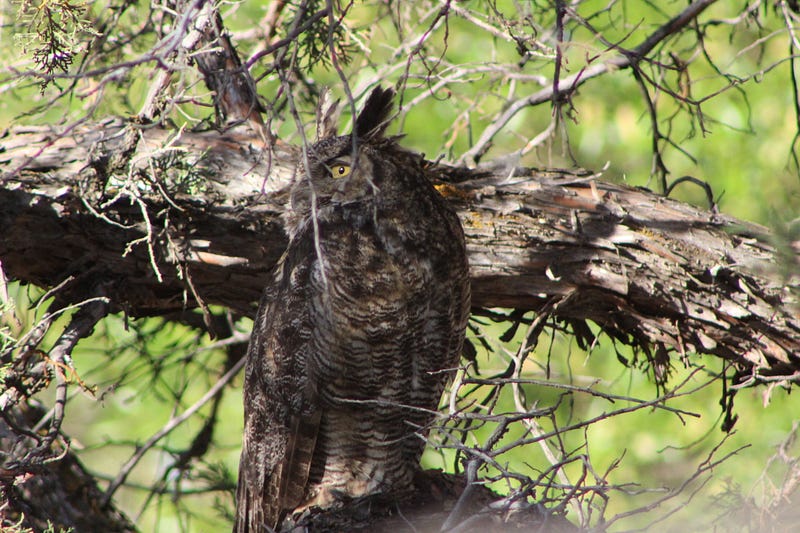
Further along the path is the densest part of the wood, thickly layered with junipers whose arms reach out toward one another, making the area impassable unless you stay on the path. If you are daring, and push your way through those branches, letting them scratch your skin and catch at your clothing, you’ll emerge at the edge of the trees. This is where the great horned owls like to sit every evening, where they have a perfect view of the field below and all the mice that scamper by.
One summer evening, not long ago, I followed one of the owls when he swooped over the field and landed on the other side. As I stood below, watching him, I noticed he was looking just behind me, which is not typical of a wild animal who will always keep one eye on a suspicious human who’s nearby. A moment later, he dove over my head, and as I turned, I saw him land hard and fast in a stand of rabbitbrush. Seconds later, he emerged with a mouse in his beak, swallowed it, and gave me a glare that made it clear he was not happy with me disturbing his hunting time. So I returned to the path.
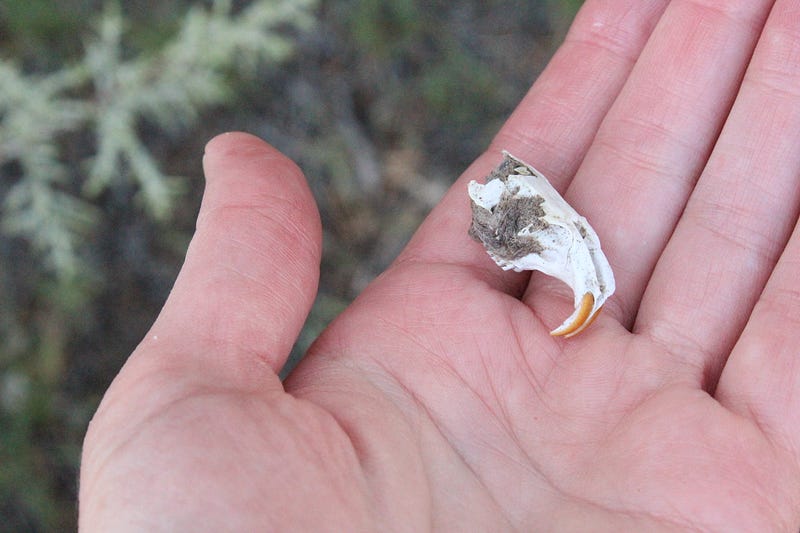
There, where the owls like to roost, you will find tiny bones that have emerged from owl pellets that have disintegrated after years of rain, snow, and sun. The tiniest rib bones you can imagine, miniature femurs, and skulls with big, rodent teeth, sharp and fierce.
When you come to the edge of the woods, the path opens up to a stretch of grasses, sage, and only a handful of trees. The earth here is sandy, constantly shifting under the weight of your feet. If you come here in the evenings, it is revelatory to emerge from the dark woods into this clearing where the light from the setting sun flows like a river eager to embrace you. Far away, off the path, but within view of that spot, is a large tree where the owls like to nap at midday. If you walk by that tree at eleven in the morning or two in the afternoon, they will silently evacuate, swooping so low over your head that your hair will stir from the force of their wings. And you will watch, entranced, as they disappear into the trees just beyond.
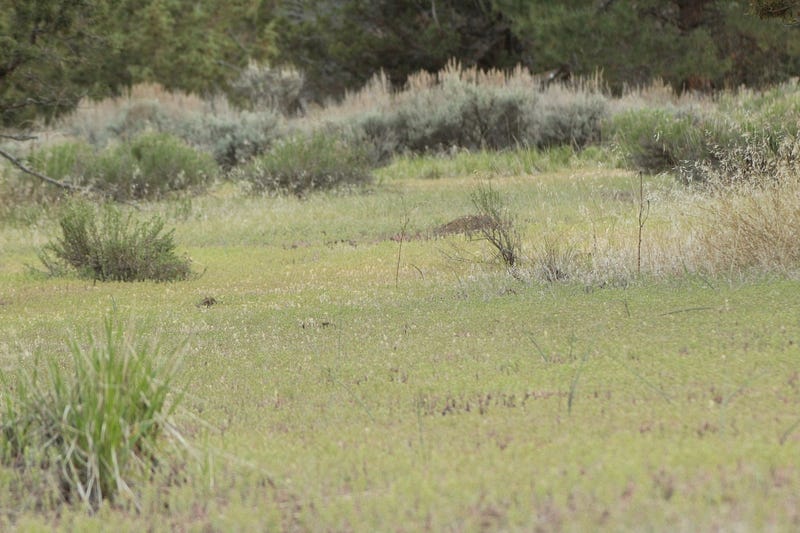
The path, though, moves away from that tree, veering westward, through a stand of trees and piles of boulders. Here, it is desert, not forest, and your feet kick up a fine, sandy dust with every step.
Eventually, you will reach a bridge that spans a little creek. There are tufts of sage all along this place and riotous, golden St. John’s wort, on which the bees like to perch. The path here is hard to keep. It disappears beneath the bushes again and again, only reappearing when it wants. Cloven prints line this stretch of sandy pathway, revealing where the deer have trod.
Here, in this dark, shady passageway, the coyotes will pass by, taking a shortcut to where the vegetation is lower, where the mice are plentiful. They love the mice as much as the owls do. You can barely see them in this place, the grasses and weeds as tall as they are, their coats the exact same color as the land around them. I once encountered a coyote here, meandering through the bushes until she noticed my presence and looked up at me with eyes almost yellow.
As the trees once again taper off into another clearing, there appears a second bridge over the creek. Here, the path seems to fade away, until you find it again a few yards to the east. Now, it runs parallel to the creek, so as you walk, you can hear the water giggling just to your right. But you cannot see it, for it is hidden by the trees. If you venture off the path, just for a moment, you will find a large, flat rock that hangs over the edge of the creek — a perfect place to sit and listen to the water, to watch the journey of its current.
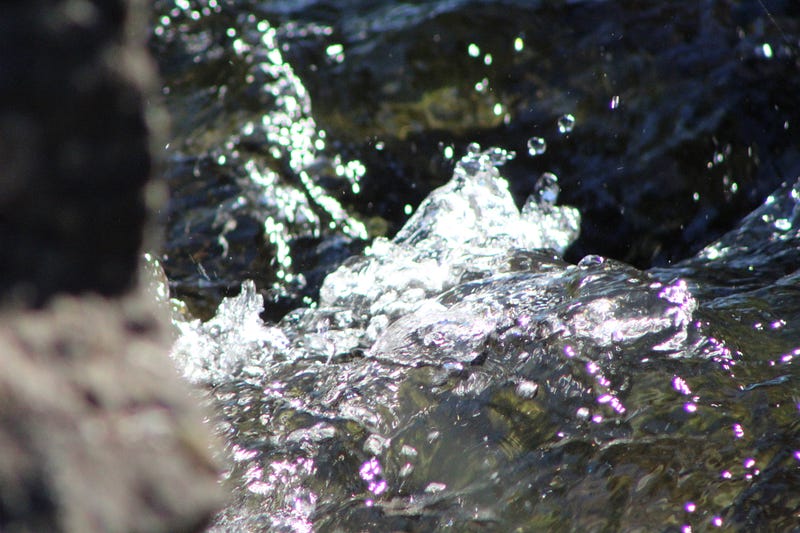
I take my three older nephews here sometimes, and they argue endlessly over who gets to sit on the rock first, until I remind them that they can all fit on it at the same time, at which point, they gleefully take their places, take an exaggerated inhale, then, argument forgotten, they leap off the rock and run back to the path, ready for another adventure.
There is one more stand of trees here, where I have found owlets sitting so many times, safe in this quiet, still area. Just below are countless sage bushes, as if the land had been consumed by blue-tinged wildfire.
The creek and the path move closer and closer together until you are walking just at its edge, the water singing, singing, singing, sunlight bouncing off its surface and into your vision. The second pond is there, surrounded by a court of willows, just like its sister, down the hill.
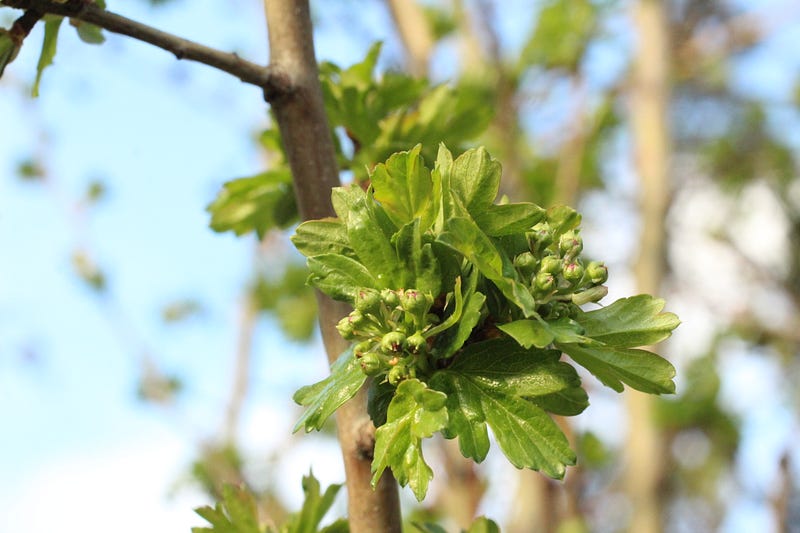
At the end of this path is a towering pine tree, and then a diminutive, delicate hawthorn whose skinny trunk was once split when another tree fell on it during a windstorm. The hawthorn miraculously survived and if it’s May when you pass it, its deep pink blossoms will be begging for your attention.
This is the end of the path. Or rather, the beginning, because if you keep going, you will find yourself exactly where you started, winding through the juniper and emerging at the top of the hill, overlooking a pile of bones.
I have walked this path so many times over the past 27 years; I know it all by heart. Every plant. Every tree. The texture of the earth beneath my feet. The way the light will fall in every season.
My footsteps cross those of the deer, the coyotes, the raccoons, the porcupines. Above us is another intersecting layer of travelers: owls, hawks, magpies, flickers.
Back and forth, back and forth we go, across this landscape that we all know so well, our pathways weaving together with every step, creating the tapestry of our entwined existence, leaving our marks on this land.
© Yael Wolfe 2020
More from my woodland: