
‘Returning to the Music Festival Where My Daughter Died,’
“It was the third time she’d ever had [ketamine] and she had little”
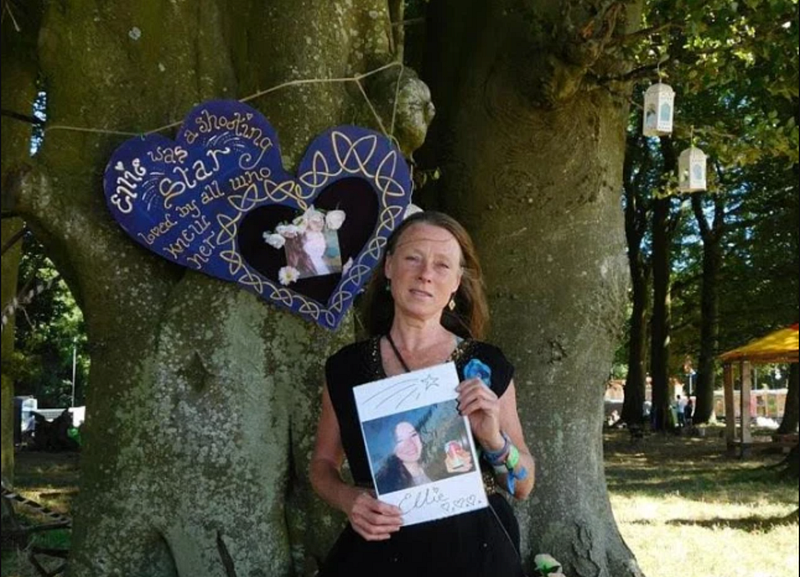
Three years after the tragic death of her 18-year-old daughter Eleanor Rowe, Wendy Teasdill found herself placed on a small stage in the field next to where the tragedy took place.
The festival was Boomtown Fair, a theatrical and immersive music festival that takes place near Hampshire.
Despite not knowing if she would even be able to speak at first, wearing a black dress and clutching a family picture of her daughters, she told her story:
“It was the third time she’d ever had [ketamine] and she didn’t have a lot,” Wendy said, standing on a small stage behind a white screen, to the small congregation of revellers.
“She took it [with alcohol] in a tent with some friends, they woke up and it transpired that Ellie was dead. Different people tried for a long, long time to revive her — first her friends then a first aider, and then the paramedics.”
Speaker’s Corner, a new attraction after the tragic death, focuses on “drug awareness and human consciousness.”
Billed as “a place for serious discussion and provocative thought”, the space hosted hard hitting speeches and lively debate on a range of social issues including drug awareness, racial inequality and sexual assault.
Wendy, from Glastonbury, spoke to me in 2016 about what it was like to go back to the place where her world was ripped apart and what she learned from the experience.
“Doing the talk was absolutely terrifying,” she said. “I’m used to writing about El, I write about her a lot, but I wasn’t used to talking about her.”
“But afterward I felt a huge transformation. The extraordinary thing was that when we’d done the talk we all stayed. We actually enjoyed ourselves which was so weird.”
“Beforehand, Boomtown was a horrible, dark place to me. It was the place that gobbled up our daughter. Suddenly I actually thought it was a nice place.”
So what reaction did Wendy get from the people gathered to hear her message? “It was fantastic,” she says. “People were totally riveted, the attention was 100%.”
“Many people walking past stayed until the end and afterward people were queuing up to hug me, it was really lovely. I put everything I had into it even though before it I didn’t know if I was even going to be able to speak. But I did.”
“One girl actually approached me afterward and said that she thought she would try ketamine at the festival. But after she heard my talk, she said she’d changed her mind.”
Despite suffering a horrifying personal tragedy, Wendy thinks that the festival does take steps to protect the safety of their clientele.
“At the end of lots of performances, the acts would say ‘look after each other, be safe’,” she said. “And that’s what was flashed up on large screens. They are putting the message out there that if you are going to do drugs, don’t do them alone and be sensible.”
“They’re not saying don’t do them — that doesn’t work with young people. You don’t want to do what you’re supposed to do when you’re young.”
Wendy had gained a lot from the whole experience: “I didn’t realize how stupid young people can be,” she says. “I understand that I’ve been very naive, I learned a lot more about what young people do and think is normal.”
The event of Ellie’s passing and everything that went with it has shaped her opinion of festivals in general. “I’ve been going to Glastonbury since 1979 so I don’t really think about festivals in the same way that most people probably do,” she says.
“In fact, if anything I’ve got a rather rose-tinted vision of them. I used to work at them in a yoga tent and I know that you don’t have to be off your head to attend.”
“Maybe that worked against me, maybe if I was a middle-class person with the idea that you go to festivals just to take drugs then maybe I would’ve asked more questions.”
“I would never have imagined that she would do something as stupid as taking ketamine. But what I didn’t know is how prevalent that drug is among young people. That’s the thing.”
The year after Ellie — who had aspirations of being a human rights lawyer — died, her picture was in the festival program and there is now a “wishing tree” on the site dedicated to her.
Wendy went to the tree, where people can make a small donation to a charity of her choice ( The Umbrella Foundation) and tie their wish to the tree, to meditate and perform a chant. She spoke about the support she received from the organizers of the event.
“Boomtown took the whole thing very personally,” she said as her tone turned reflective. “They reacted in a very human way. I’ve been very touched and supported by that and it has made a difference to a lot of people.”
I found it interesting that Wendy chose to stay at the event after the talk. We know what music events can be like, did she see people taking ketamine?
“I didn’t actually see anyone taking drugs but I did see, and speak to, people who had been,” she says. “I just don’t see people actually taking them — I don’t know if it’s a kind of blindness I have.”
“I spoke to highly intelligent people, who I thought would have known better, describing taking ketamine to me as “touching God”, another saying that being on it was like being in a state of super-consciousness.”
What was the main message behind Wendy’s activity since that fateful day at Boomtown? “I’m not here to lecture, or to tell anyone what to do,” she maintained during the speech.
“I’m saying watch what you ingest. I don’t like being told what to do and neither did Eleanor; she was her own person. She was unlucky. If you took what she did you’d probably be absolutely fine. It doesn’t happen every time, but it did happen.”
“I’m not saying that everyone who takes ketamine will die or anything like that. I just want people to think about it.”
“Our brains are amazing chemical factories — far more powerful than anything that’s produced inside an underground lab in India or China. To just give that away is… It’s a tragedy.”
It’s useful to note that while ketamine is a banned substance, which was upgraded from a Class-C to a Class-B drug in 2014, some argue that it is not one of the most dangerous.
In 2010, leading psychopharmacologist Professor Nutt ranked drugs in terms of harm to the individuals using the drug and the harm the drug caused to society.
Alcohol was number one while ketamine placed below cannabis, tobacco, and GHB at number 11. Still, there is little debate between scientists when it comes to combining substances, or “poly-drug use,” which increases risks considerably.


