
Rethinking Remdesivir: Is It Really That Effective for Covid-19?
As more clinical data are out, scientists are doubting the efficacy of this costly drug.
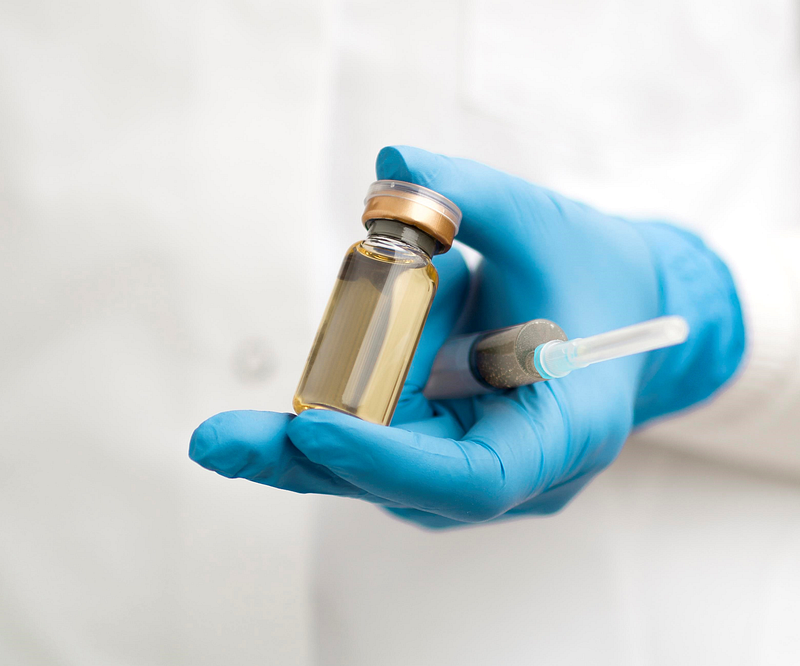
Remdesivir is an antiviral agent that is said to work against Covid-19. Gilead Sciences developed it in 2017 to treat Ebola. Although the drug did not work well against Ebola, it showed promising results against coronaviruses in cell culture and animal studies. Remdesivir interrupts the enzyme the coronavirus needs to make its genes and, thus, decreases viral replication.
While the FDA has not approved remdesivir, it is widely used to treat Covid-19. Remdesivir costs about 2–3k USD for a five-day course, although it can be cheaper in developing countries. But the scientific community has raised skepticism in the efficacy of this costly drug against Covid-19. Why?

Dubious results from RCTs
A randomized placebo-controlled trial (RCT) published May in The New England Journal of Medicine (NEJM) recruited 1063 Covid-19 patients, of which 88.7% had severe Covid-19 at enrollment, across ten countries. Investigators found that a 10-day remdesivir course enhanced recovery rate from 15 to 11 days compared to standard care (placebo). But no significant differences in death rate were observed.
Another RCT in China published May in The Lancet with 237 patients with severe Covid-19 found that a 10-day remdesivir course improved neither disease duration nor death rate compared to placebo. And serious side effects were observed that the trial was terminated early. No wonder China does not use remdesivir for Covid-19.
A third RCT published in August in the Journal of American Medical Association (JAMA) enrolled 584 patients with moderate Covid-19 from hospitals in the US, Europe, and Asia. Results showed 70% of patients treated with a 5-day remdesivir course had clinical improvement compared to 61% of patients receiving standard care, “but the difference was of uncertain clinical importance.” This means that while results reached statistical significance, the effect size is small. Oddly, the 10-day remdesivir course did not provide any more clinical benefits than standard care.
“Regrettably, the current assessment of remdesivir does not seem to be entirely positive…In a word, at least now remdesivir is not a magic panacea.”
Notably, a non-RCT study showed that a 5-day and 10-day remdesivir courses both provided the same but slight improvement in clinical outcomes in a sample of 397 patients with severe Covid-19. But this study has no control group to which the results can be compared. Nonetheless, this study’s results contradict the third clinical trial (mentioned above) where a 5-day remdesivir course, not the 10-day one, provided some clinical benefits.
What academics think
“Thus, there are now 3 RCTs of remdesivir in hospitalized patients with differing results, raising the question of whether the discrepancies are artifacts of study design choices, including patient populations, or whether the drug is less efficacious than hoped,” said an August editorial of the JAMA upon reviewing the three RCTs above. “As today no study convincingly supports the use of remdesivir in severe patients,” agreed a mini-research review in the journal New Microbes and New Infections.
There is also no convincing evidence that giving remdesivir to mild cases of Covid-19 would prevent disease progression. “It is not yet clear whether early administration of remdesivir in mild/moderate disease may prevent hospital admission, clinical deterioration, or impact on transmission,” an August review published in Clinical Medicine stated.
“Is the remdesivir a definitive treatment regimen for Covid-19? Regrettably, the current assessment of remdesivir does not seem to be entirely positive,” said a research review of Jin-Hong Yoo, a professor of infectious diseases and internal medicine at the Catholic University of Korea. “In a word, at least now remdesivir is not a magic panacea.”
Remdesivir alone may not be enough
One drawback of remdesivir is it does not block the body’s overzealous immune responses that cause additional damage to organs. Further, remdesivir is administered over five to ten days through an intravenous (IV) route. It requires healthcare supervision and not as simple as swallowing a pill.
“Thus, there are now 3 RCTs of remdesivir in hospitalized patients with differing results, raising the question of whether the discrepancies are artifacts of study design choices, including patient populations, or whether the drug is less efficacious than hoped.”
Research has now focused on combinational therapy against Covid-19 — to attack the disease in many different, synergistic ways. It makes sense for a complicated illness to be treated in complicated ways, after all. As Jesse Smith mentioned in his article, “Drug Combinations May Be Our Best Hope For Treating Covid-19,” mixed therapies are preferred for complicated infections such as HIV/AIDS.
In fact, hydroxychloroquine (antimalarial) plus azithromycin (antibiotic) and lopinavir plus ritonavir (both antivirals) have been used for Covid-19, but both combinations failed to show encouraging clinical results.
A drug duo that is said to be useful is remdesivir plus dexamethasone. Dexamethasone is a cheap and widely available immunosuppressive and anti-inflammatory steroid known as the first lifesaving drug for severe Covid-19. However, there is no clinical trial comparing dexamethasone plus remdesivir to dexamethasone alone. So, the contribution of remdesivir, in this case, is ambiguous. But it should work in theory, remdesivir would slow the virus replication while dexamethasone controls the immune system.
“It is not yet clear whether early administration of remdesivir in mild/moderate disease may prevent hospital admission, clinical deterioration, or impact on transmission.”
Another promising drug combination is remdesivir plus interferon-beta (IFN-ß; an anti-inflammatory drug used to treat multiple sclerosis) that is entering phase III clinical trial in August. Specifically, the trial will compare remdesivir plus IFN-ß with remdesivir alone.
Short abstract and closing
Current evidence shows that remdesivir provides modest clinical benefits for moderate-to-severe Covid-19, particularly in shortening symptom duration. But the important issue is how substantial (i.e., effect size) is the clinical improvement? Concerningly, all RCTs on remdesivir to date can’t seem to agree on this question. And experts have raised concerns if remdesivir is really useful for Covid-19. Regardless, present guidelines from the international review panel in the British Medical Journal (BMJ) states that:
- “Remdesivir is a new drug with uncertain benefits and undetermined cost-effectiveness…The significant opportunity cost and potential to exacerbate existing health inequities in resource-limited settings may well justify policy decision not to offer remdesivir to patients until more conclusive evidence is available.”
- “We suggest remdesivir rather than no remdesivir for the treatment of patients with severe Covid-19 infection (weak recommendation).”
- “Randomized controlled trials examining remdesivir in patients with covid-19 should continue.”
October updates: A new Solidarity phase III/IV clinical trial organized by the WHO does not support remdesivir use for Covid-19 mortality, need for ventilation, or hospitalization duration. More details here:


