
Rethinking Race: The Age of New Discovery
“Considering it by itself, I have been able to distinguish, on physiological grounds alone, three great and clearly marked types, the black, the yellow, and the white […] the negroid variety is the lowest, and stands at the foot of the ladder. Essai sur l’inegalité des races humaines (1853–55) — Arthur de Gobineau.
The mid 15th century onwards saw the dawn of what is often known as ‘The Age of Discovery’. Motivated by a desire to discover new trade routes and opportunities, Europeans at various points in history took to the oceans in exploration, with hopes of discovering novel natural resources they could exploit and profit from. Inevitably this lead to confrontations with many new indigenous people groups, with distinct cultures and societies.
Continued exploration of the world by Europeans also coincided with an important era, referred to as the ‘Age of Enlightenment’. Many enlightenment thinkers put forward a myriad of ideas that attempted to make sense of what was being discovered.
The 18th and 19th century saw a particularly intense fascination with human origins, accompanied often by abysmal efforts to classify the peoples of the world. Scientists claimed that the human species could and should be stratified into discrete groups, based mainly on their distinct physical characteristics. It was from this point that the modern language and idea of ‘race’ started to become popularised.
Help From Henri
Henri Tajfel was a polish-born social psychologist. From a series of studies he conducted, Tajfel developed the theory he became well known for, the ‘Social Identity Theory’.
Side note: Yes, this is a theory and not without its flaws. However, I believe that if we analyse the occurrences that played out from the mid 15th century onwards through its lens, it may give us some insight into what occurred from a fresh perspective.
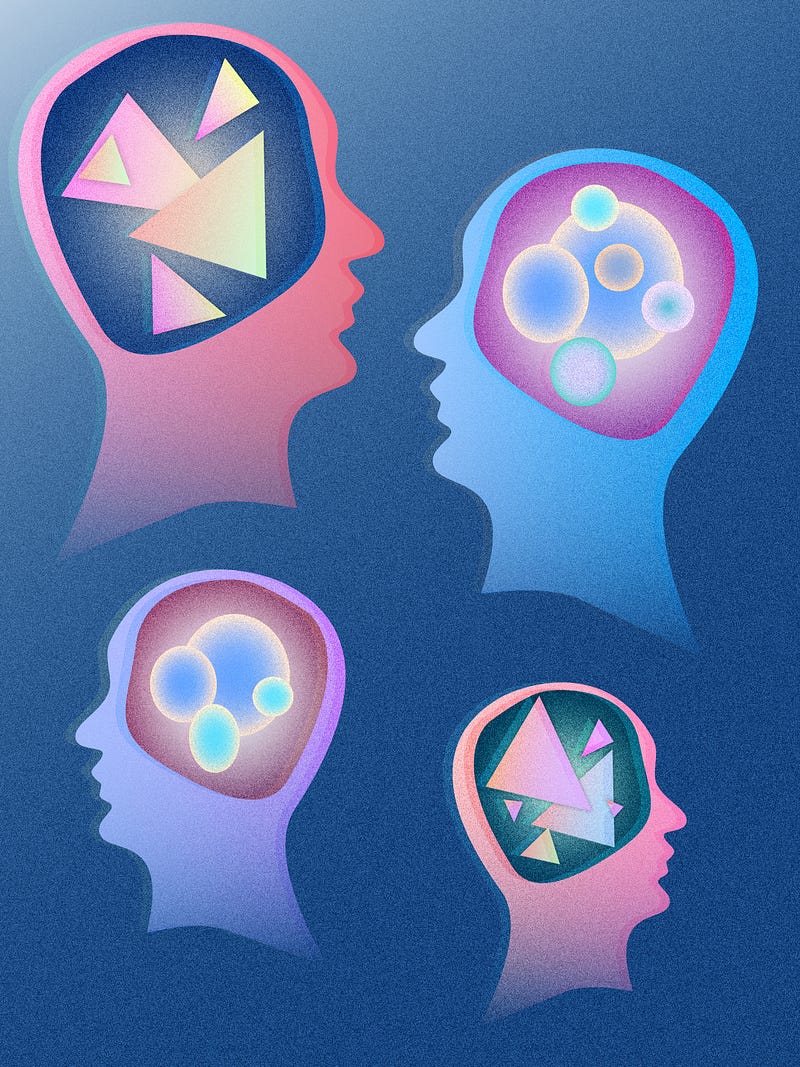
Tajfel proposed three cognitive processes that occur when we think about ourselves and others; social categorisation, social identification and social comparison — here’s a brief tour.
Categorisation.
From a young age as we begin to make sense of the world around us, we learn to name and categorise everything that we see. For example, apples and oranges are fruits; horses and dogs are animals, and so on. Categorising items allows us to associate them with specific traits, enabling us to process information quickly. As we know, this categorisation is not only limited to objects, it also extends to ourselves. The visible physical and behavioural differences between us, enable our minds to distinguish people from each other.
This may have been why European scientists and thinkers attempted (very badly) to make sense of what they saw by categorising themselves and others. They did so by using the differences they observed between people to group individuals into racial categories, each with their own innate ‘characteristics’.
Identification.
Groups with which we identify as our own, form part of our individual identity, they are an extension and reflection of who we are. This has a powerful effect on us. Our deepest emotions, fondest memories and strongest bonds are shared with the individuals within our groups. As such we conform our behaviour and become a loyal member.
European thinkers and scientists were often the most educated and respected within their societies and cultures. They saw themselves and the other individuals they associated with as the most educated, proper, intelligent and noble. Therefore they spoke and conducted themselves in a way that was expected of them.
Comparison.
Once we have developed our group identity, comparisons with others comes naturally. A key observation within this stage is that at this point we have already developed an intrinsic bias for our group, due to our positive associations with the individuals within it. And inevitably any comparisons made against ‘the others’ often ends with us viewing our group in the most favourable light. Unfortunately this can lead to severe prejudice towards others.
In the case of Europeans this surfaced in the biased, skewed stratification of people. The ‘white’ European group was their reference point, and as such all other races that did not resemble the ‘norm’ were inferior. But here lies the irony, any form of objective, rational, scientific method used to ascertain these conclusions was severely warped by their natural inclination to be the superior group. Their now pseudoscientific observations were simply used as confirmation bias.
Straight facts
The last decade has gifted us monumental advancements in our understanding of human genetics, marked by the conclusion of the human genome project in 2003. We now understand that the discrete, concrete racial groups that were defined, are merely social constructs not reflected on a biological level. The idea of race is simply just that, an idea.
However if enough people believe in an idea, whether true or not, it becomes a reality. Outdated theories about race have been around for a long time and have become widely accepted. They have wedged themselves deep within the cavities of our modern societies. So much so, that we find it difficult to shift from these views, even when presented with the toothpaste of objective evidence that tells us otherwise.
We’ve all been duped
Here’s the thing, no one is exempt from the effects of our perceived social identity. For example, the effects of social comparison not only played out between Europeans and Africans during the transatlantic slave trade, it also played out on the ethnic and tribal level. The majority of African slaves initially transported to new lands, were already slaves captured during intertribal conflict between Africans. They were then traded for weapons and goods by their captors. As demand grew for slave labour, this descended into opposing tribes raiding and capturing each other to trade into slavery.
This point is not intended to minimise or act as an excuse for any of the atrocities committed to human bodies, minds and lives throughout history. Light must continue to be shed on the darkest cracks of our humanity, we should shout and draw attention to injustice and we must be angry about what is unfair. However, our conversations and ideas involving race are still founded upon archaic ideas, made popular by individuals bent on the division and domination of others.
As we continue to function within these paradigms without stopping to consider their broken origins, we all blindly perpetuate division and hatred. I believe the conversations we have and continue to have about race have done much good, but they can do much much more. Rather than bursting to say our piece and leaving it there, we must begin with the goal of advancing the human condition. And we must end by leaning on the richness of our universal experience to birth new, tangible solutions for all.
Parting note
Understanding the formidable, objective truth of who we really are will help us achieve this. That is, from a genetic perspective we are not split into concrete, discrete groups. Rather we are something far greater. A magnificent, dynamic, symphony of survival. A fluid, overlapping, gradient of variation. As we allow this truth to deconstruct and rebuild our most basic identity, we will discover the silver bullet that will help us defeat the beast; our innate desire to divide and hate.
For centuries the outmoded idea of race has whispered to us that we must go to war with the others before all. But the truth is that we must go to war with our deepest motives first. Atop that lonely mountain is where the thunderous river of change springs from.
Over and out ✌🏾— Ato.
b(L).


