
Who’s Giving You Advice? 5 Traits to Seek Out before you Listen In
Intentionally diversify your advisers

Most of us have a group of people we look to for advice, unconsciously or intentionally, during times of crisis or critical decision making. Some of these people are in your personal circle, privy to your adulting challenges and values, and have offered their advice throughout your life. Some originate from your professional network, influencing your resume, career growth, and professional choices and aspirations. They may not have known it, but these people are your natural Personal Board of Directors.
The multiple dimensions of everyday life intersect at a much higher frequency than before the COVID-19 Pandemic. There has been a massive shift of knowledge workers from face-to-face collaboration to work-from-anywhere — along with a hefty investment in technology and corporate policy that suggests this practice will not revert. Parents of school-age children have experienced even more work/home creep, with the challenge of working while homeschooling during shutdown periods. Those who live in multi-generational households encountered different unforeseen complexities, with difficulties accessing home-health aid and accommodating aging parents with various needs. In addition, as a society, we are navigating racial tension and injustice issues. The pandemic has accelerated the blurring of the boundaries, with everyone being forced to adjust to meet the challenges.
With our frontier constantly shifting, it’s a good practice to seek advice from others. Likewise, with this macro change in our environment, it’s a good time to pause and re-think your mix of advisers in your personal circle, purposely choosing people who can help you navigate this new normal. Read on for five essential traits to include in your choices for your Personal Board of Directors to ensure your life decisions reflect diverse and holistic approaches to decisions, help enlarge your thinking, and build social capital.
Build a sounding board, not an echo board.
In “Think Again,” Adam Grant breaks out the differences in our personalities to show how our proclivities affect our ability to influence or evolve our thinking. Having people close to you who will challenge your thinking can help you grow your mental flexibility.
Is your natural stance a politician, scientist, prosecutor, or preacher? You can take Grant’s quiz, with ten quick questions, here: https://www.adamgrant.net/quizzes/think-again-quiz
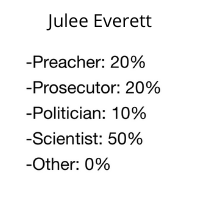
My natural scientific, evidence-based approach is evident in my tendency to rely on rational logic and persuasion. I can overwhelm people with data and sources when adopting a more persuasive stance could build support. I benefit from people who help me adopt a preacher stance, using emotional persuasion as an influential approach. My friend, whose re-thinking quiz rated her at 30% preacher, benefits from my scientist influence when negotiating or making transactional-based decisions.
Board Member #1: Jedi Master of Mental Flexibility. Find that person who always seems to know the right approach to achieve the desired outcome, balance the stances that challenge you with their natural strengths, and is a master negotiator.
2/3 of the time, our emotions get the best of us.
People accurately recognize an emotion as they experience it only 36% of the time. This startling statistic implies you need a Board member who is part of your day-to-day interactions to help you become aware of how your words and actions impact others. In addition, receiving candid and immediate feedback will help you grow your emotional quotient (EQ) and evolve from emotional reactions to intentional responses. And that leads to fewer regrets.
Board Member #2: Jedi Master of EQ. Who is the person you can count on to moderate their words and actions, naturally has deep empathy for others, and is a master relationship builder?
If you have a brain, you have a bias.
We all need help re-thinking and breaking our inherent confirmation bias. Prejudice and stereotypes can be nuanced and complex and quickly lead to discrimination. Discrimination is costly for everyone involved — and avoidable, through learning the myriad of ways bias shows up in our day-to-day, despite our best intentions. Gaining exposure to other people’s experiences with prejudice and inequities builds awareness and empathy. Championing others who don’t look or think like you builds social capital and combats prejudice.
Valerie Alexander is a renowned expert on workplace happiness and a leading voice on equity and inclusion, and the author of “Happiness is a Second Language.” Alexander beautifully articulates how nuanced exclusion and cultural marginalization can be.
An observation from Alexander made me re-think how a common network event, like a happy hour with the boss, might exclude non-drinkers, single parents, or those struggling to make ends meet from spending time with leadership. Alexander offers a tip on neutralizing the subtle bias hidden in the happy hour invite with an alternative: provide a chance to mingle with leadership, such as a company-sponsored breakfast with the boss — paid for by the boss.
A member like Alexander will help you become more aware of how a subtle but prejudiced action may belie your good intent. Alexander quips, “The biggest room in the house is the room for improvement.”
Board Member#3: Jedi Master of Re-Thinking. This person may look, think and behave in an entirely different way than you. That’s great! Choose someone who actively champions diversity and is a master at busting the status quo.
Harmonize masculine and feminine energy.
Regardless of gender, people who can balance masculine and feminine energy can provide broader perspectives. Like accessing the scientist versus the preacher mindset when the scenario calls for it, strive for equality in the contributions of masculine and feminine energy in your decision-making.
Consider when assertiveness, considered masculine energy, would benefit your decision-making versus accessing feminine energy such as vulnerability. Recall an instance when observing others' assertiveness helped facilitate desired results, such as standing up for personal values or business negotiations. The value of assertive energy seems apparent. Vulnerability, however, doesn’t seem as effective at first thought.
Brené Brown, author of “Dare to Lead,” describes how imperative it is for leaders to show their vulnerability. As Brown explains, “You can’t get to courage without rumbling with vulnerability. Embrace the suck.” The next time you witness courage, observe the vulnerability behind it.
Brown claims “vulnerability is teachable, observable, and measurable.” So who better to teach, observe, and help you measure your masculine or feminine energy than a trusted adviser who exemplifies the capabilities you might find challenging to channel?
Board Member #4: Jedi Master of Balanced Energy. This person is the one you turn to who helps you avoid binary thinking and decisions. Choose someone who is a master at balanced identity and energy.
Who’s Watching your Six?
The term “Got your Six” is a military reference for people watching your back (from the six o’clock position.) In police tactics, a similar phrase, “Watching your Six” refers to being hypervigilant about your surroundings.
Everyone needs someone looking out for them who is ready to spend some personal collateral when required. That last part is essential–someone who defends your back and is willing to take action in your defense, sometimes at a cost to themselves. Why would they be willing to do this? Because they know you would do it for them.
This person is the one you call in the middle of the night for help, and they come. They focus on ministering to you, not judging you. They are someone you have known for some time, have worked through conflicts with you, weathered their own life events, and are unwavering in their loyalty to you. While you might be buried in the complexity of the decisions in front of you, this person is watching your six.
Board Member #5: Jedi Master of Defense. Choose someone who is a master of trust and loyalty to you.
There’s power in the ask.
You may already have a good idea of the people you want on your Personal Board of Directors. Don’t keep it a secret. There is an honor inherent in asking someone for their mentorship. Ask those who have traits you desire to grow if they would be willing to serve you in this capacity — and explain why their opinion is important to you. It’s an invaluable way to communicate the traits that attract you and why they would be a valuable member of your Personal Board.
I value your opinion and your experiences — please add your comments.
~Julee Everett
Live your truth; hone your craft; show your thanks
To get full access to thousands of writers, and every story on Medium, consider becoming a Medium member using this link. Your membership fee directly supports Julee Everett and other writers you read.
Visit my YouTube Channel to access a growing library of professional development webinars, or subscribe below for more content like this.