avatarVallerie Wilson

Free AI web copilot to create summaries, insights and extended knowledge, download it at here

5364

Abstract

edium=referral">Szabo Viktor</a> on <a href="https://unsplash.com?utm_source=medium&amp;utm_medium=referral">Unsplash</a></figcaption></figure><p id="8fcf">Running a YouTube channel also seems super cool and fun.</p><ul><li>Truly endless options for flexing your <b>creativity</b>. The sheer variety of what humans come up with amazes me. For example…</li></ul><p id="dcda" type="7">A Korean housewife shoots these mesmerising soft-focus videos of her cleaning house.</p><p id="b8a0" type="7">My husband is particular to a channel that is just a professor giving lectures about geology.</p><p id="319c" type="7">This woman explains the particulars of Disney vacation packages</p><p id="f095">The business model does take <b>quite a while to build up</b>. Nearly everyone says you should expect to feel like you’re shouting into the void for the first year.</p><p id="980e">But that’s not why I ruled it out for me. First, I don’t love the idea of <b>being the face of a business / brand </b>because I don’t want to be tied down. I want the freedom to change my mind at any time without feeling like I have to reinvent myself in the eyes of all my social circle.</p><p id="49bb">In other words, I want to divorce my personal identity from my money-making endeavors. This is a late-in-life thing I learned the hard way.</p><p id="6817">There are ways to do faceless YouTube channels, and that’s something perhaps I’ll circle back to at some point.</p><p id="a65a">The bigger reason I ruled this out is because, after shooting only a few videos, I began to feel like <b>my personal life was becoming a commodity.</b> When I was spending time with my family and doing something half-way interesting, I found myself thinking about whether I should be filming it.</p><blockquote id="3ee9"><p>Would this be a good angle? How is the lighting?</p></blockquote><p id="9f27">This is a yucky feeling. I am striving to be fully present with my family, not figuring out how to monetize them. Even if I chose a subject other than my family, such as a hobby, I could feel how it might suck the fun out of the hobby by aiming the camera at it.</p><h2 id="ab3a">Involved and Related Affiliate Marketing</h2><figure id="82d7"><img src="https://cdn-images-1.readmedium.com/v2/resize:fit:800/1*[email protected]"><figcaption>Photo by Myriam Jessier on Unsplash</figcaption></figure><p id="e5c2">Lastly, I experimented a bit and then ruled out the “associated” forms of <b>affiliate marketing.</b></p><p id="42d7">I make that distinction because affiliate marketing can be done a couple different ways. With one approach, your business model is just about making effective online ads and selling products that you don’t personally know about or endorse in any way. That’s called <i>Unattached Affiliate Marketing</i>.</p><p id="fd21">Then there’s <i>Involved Affiliate Marketing</i>, where you are marketing a specific product because you personally endorse it. People who do this still need the same skills to make good online ads, but typically they are showing up in those ads to endorse the product. You have to stand behind the product and, effectively, put your reputation on the line for it.</p><p id="e317">The third type of affiliate marketing is referred to as <i>Related Affiliate Marketing.</i> Some would describe it as the middle ground between the other two approaches.</p><p id="f84c">Essentially you have an audience (because you are a writer or run a YouTube channel, etc) and you regularly send offers to your audience for various products and services.</p><p id="e6aa">I called both of these last two types “associated” affiliate marketing because you, personally, associate yourself with the offer.</p><p id="5f88">I have no judgement for any of these three models. Respect.</p><p id="4bf2">Here’s what I learned:</p><ul><li>All three can be very <b>lucrative</b>.</li><li>All three require great <b>marketing skills.</b></li><li>Making online ads, especially videos, is really <b>fun</b>.</li><li><b>New AI tools </b>make all the steps easier and faster.</li><li>The greatest <b>time freedom</b> is gained when doing Unattached marketing because you’re just doing ads, so you can take breaks whenever you want. But it’s also very possible to gain tons of time freedom with the other two approaches by being smart about automated systems.</li></ul><p id="4fda">So why did I rule them out? I felt a lot of resistance to being associated with endorsements or showing up in any ads. <b>I don’t mind getting a commission for recommending a product I would have recommended anyway; </b>I just don’t want to make my entire business model about personally recommending other people’s products because then you never know whether I’m being genuine or just profit-seeking.</p><p id="3ccd">Nor was I interested in doing all the work and exercising the <b>patience it takes to grow my own audience</b> (again, most anecdotes suggest this takes at least a year).</p><p id="898b">My experiment with this was tiny. Since I have essentially no audience yet, the results from embedding a few Amazon affiliate links here and there in various Medium articles have yielded predictable results:</p><figure id="c291"><img src="https://cdn-images-1.readmedium.com/v2/resize:fit:800/1*KV4tt3K4pu_VjKk8Aih_CA.png"><figcaption></figcaption></figure><h1 id="4d5b">Those I’m stil

Options

l experimenting with</h1><h2 id="0061">Online writing, specifically on Medium and Substack</h2><figure id="007a"><img src="https://cdn-images-1.readmedium.com/v2/resize:fit:800/0*iBM6vM2stb0I-FoM"><figcaption>Photo by <a href="https://unsplash.com/@sincerelymedia?utm_source=medium&amp;utm_medium=referral">Sincerely Media</a> on <a href="https://unsplash.com?utm_source=medium&amp;utm_medium=referral">Unsplash</a></figcaption></figure><ul><li>Writing helps me <b>process</b> my thoughts</li><li>Should people actually read and comment upon said writing, I would feel part of some kind of <b>community</b>. Given that no one in my real life is pursuing online money-making, this would be welcomed.</li><li>Alas, everyone keeps pointing out that it takes like a year before more than a dozen people bother reading your work. That’s a bummer that it <b>takes so long</b> to reach critical mass.</li></ul><p id="63b5">I am still in the experiment phase with this one, and not ready to make a decision.</p><p id="0aa6">The first reason I remain ambivalent is that, again, it directly ties one’s identity to the money-making endeavor. It is <b>personal</b>. There is a relationship built between the readers and the writer. Your friends and family can read all those things you write.</p><p id="9023">The second reason I remain ambivalent is that, when I was researching the paid newsletter method of monetizing writing, it became very clear that <b>I value being able to be inconsistent and flighty </b>(with this online money-making thing, at least). Certain types of online writing lend themselves to that, and other’s don’t. If you’re running a paid newsletter, you must deliver consistently.</p><p id="4900">Given that even with my tiny audience I’ve already seen a few cents roll my way on Medium, I do feel like this might have legs. We shall see…</p><figure id="139e"><img src="https://cdn-images-1.readmedium.com/v2/resize:fit:800/1*revwGe5F4N7LacntFz7sIg.png"><figcaption>Screenshot by author, showing her tiny earnings on Medium from September 2023</figcaption></figure><h2 id="bab5">Unattached Affiliate Marketing</h2><figure id="4a3b"><img src="https://cdn-images-1.readmedium.com/v2/resize:fit:800/0*GcZiY0w5S-Pm5fgR"><figcaption>Photo by <a href="https://unsplash.com/@hostreviews?utm_source=medium&amp;utm_medium=referral">Stephen Phillips - Hostreviews.co.uk</a> on <a href="https://unsplash.com?utm_source=medium&amp;utm_medium=referral">Unsplash</a></figcaption></figure><p id="8143">While I ruled out the two types of affiliate marketing that require you to endorse the products you market, I am still seriously considering <i>unattached</i> affiliate marketing.</p><ul><li>I like that it’s completely <b>anonymous</b>, and separate from my private life</li><li>I like that it’s analytical and <b>scientific</b></li><li>I like that I can pursue it when I feel like it and have time, and <b>ignore it</b> other times</li><li>I like the <b>creative</b> part of making the ads</li></ul><p id="7e84">I’m not far enough in to draw conclusions yet.</p><h1 id="52d6">Those I’ve selected so far</h1><h2 id="269d">Indie-publishing via Amazon KDP</h2><figure id="4d53"><img src="https://cdn-images-1.readmedium.com/v2/resize:fit:800/0*Phzd5DI3xA9Ax4Jh"><figcaption>Photo by <a href="https://unsplash.com/@kimberlyfarmer?utm_source=medium&amp;utm_medium=referral">Kimberly Farmer</a> on <a href="https://unsplash.com?utm_source=medium&amp;utm_medium=referral">Unsplash</a></figcaption></figure><p id="2616">This last one has successfully exited the experiment phase and received my green light.</p><p id="e23a">I’m 10 books in so far, with a mix of medium-content and high-content books.</p><ul><li>I find the process really fun and <b>creative</b>. I actually enjoy all the steps, including research, writing, formatting, illustration, cover design, and listing it. (The Ads, not so much. But I’ll get there.)</li><li>Using<b> pen names</b>, I’m free to explore all kinds of genres and keep my personal identity separate from the work if I so choose.</li><li>The profits are very modest so far, but the path to scaling is clear. If you think of <b>each book as creating a tiny passive income source</b>, and just accept that it’s a volume game, even small profits are exciting.</li></ul><figure id="1599"><img src="https://cdn-images-1.readmedium.com/v2/resize:fit:800/1*[email protected]"><figcaption>Screenshot by author showing Amazon KDP Royalties vs Ad spend</figcaption></figure><h1 id="d605">I learned a couple of things about myself through these experiments</h1><ul><li>I don’t want to deal with people. This is my retirement semi-passive business we’re talking about. I’ve already put in my time during my real career dealing with mediocre competence and people politics.</li><li>I want to be free to explore whatever curiosities I feel like. That means I don’t want to be locked into anything. Don’t want to be the face of the brand. Don’t want to be expected to churn out content daily or even weekly. <b>I want to feel retired with some fun hobbies that make money.</b></li></ul><p id="4c20">Your own criteria for selecting an online business model most definitely varies from mine. Do me a solid and leave a comment to let me know how you’re doing on your own experiments. What have you learned about yourself?</p></article></body>

Results From My 8 Online Business Experiments

I’m spending extra time outside of my 9–5 dream job to grow a semi-passive retirement business.

Rather than go all-in on a business idea I’m not sure is a great fit, my approach is this:

  1. Learn about a wide variety of online business models
  2. Select a handful I think I might like
  3. Run a short experiment to determine if I like it and whether I am seeing any traction

My mission is to hit upon a model that does all of these things:

  • Super fun for me
  • Can be done when I feel like it and ignored when I don’t feel like it
  • Requires < 5 hours per week to run once it’s established
  • Nets me > € 2,100 per month, minimum

My priority diagram looks something like this:
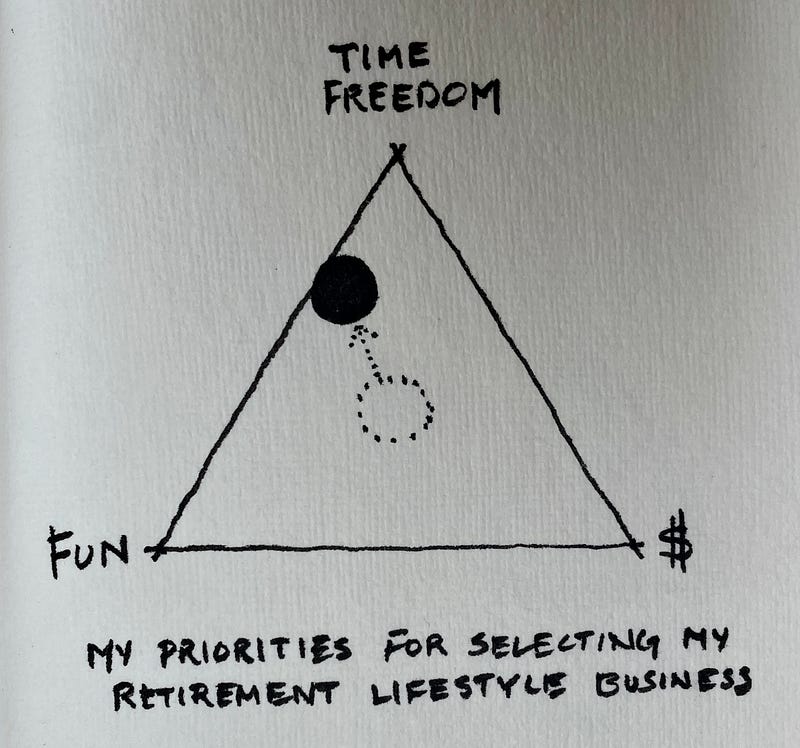
Diagram of priorities, by author

If I were looking for the fastest way to make that money in only a few hours a week, it would probably be online sex work or something. It doesn’t interest me. (Though I guess, to be fair, it’s not one of the experiments I ran. Maybe I’m wrong. Maybe I would love it. Anyone have experience with that and want to convince me to add it to my experiment list?)

I have spent a focused 9 months learning about and experimenting with different business models.

While I may have casually looked at a few more, here’s what I seriously researched → what I tried / experimented with → what I found.
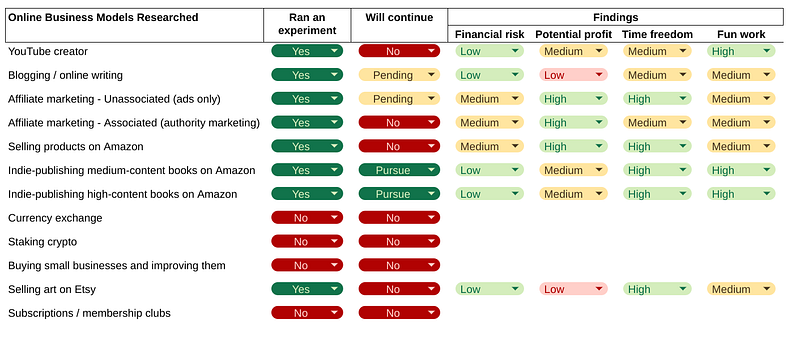
If you’re on a similar odyssey, maybe I can give you a tiny shortcut. Here is a summary of how each model works.

What I ruled out because it was too hard to make money

Etsy

Yes, there are a lot of stories about people making great money on Etsy. I do know I didn’t do the best job of researching products in high demand for many of the designs I listed, but I did do a side-by-side comparison that speaks volumes.

I created a printable / digital download product for Etsy and then turned it into a paperback and posted the same exact product on Amazon KDP. In both cases, I used good keywords in the descriptions.

During the first 3 months of side-by-side comparison, here are the results:

Etsy sales: 1

Total profit after ads: €1.98
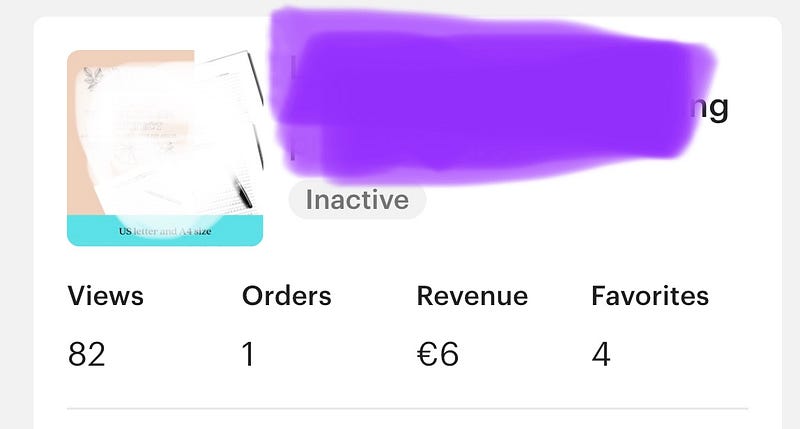
Screenshot by author, showing Esty product listing

Amazon sales: 162

Total profit after ads: €120.46
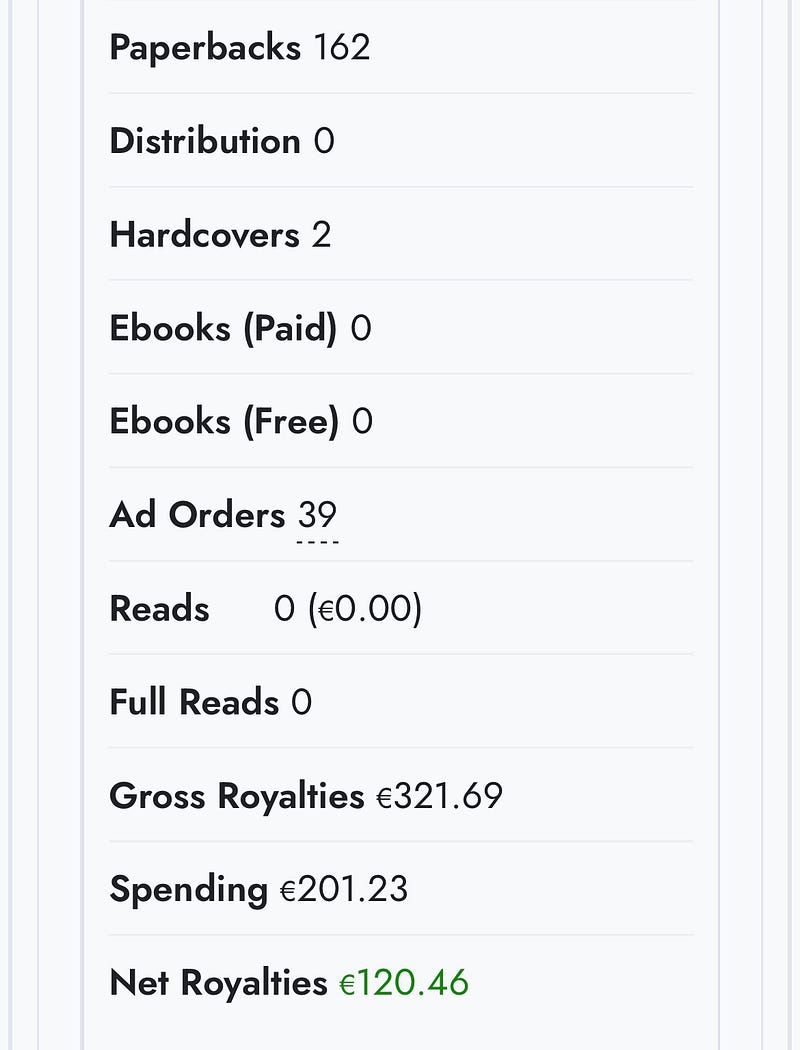
Screenshot by author, showing Amazon listing results during the same time period

I mean, this is literally the same product. When I learned that Amazon has >50% of all eCommerce activity in the world, this made sense. I concluded Etsy wasn’t worth my efforts.

Those I ruled out because I didn’t like the work

All of these actually seem like quite viable business models. In other words, these will make you money if you do them well. I just didn’t enjoy doing them!

eCommerce through Amazon FBA
Photo by Christian Wiediger on Unsplash

When I tried my hand at the Fulfilled-By-Amazon program, there were plenty of things that seemed really fun and creative.

  • Using data to find products that are in high demand without too much competition is fun.
  • Creating an outstanding listing with beautiful images and videos is very creative.
  • I really enjoyed that you could do a product and let it sell out and then just take a break from it whenever you want. In other words, there’s no demand that you stay consistent to make the business model work.

I ruled this out for me because I found it frustrating working with the suppliers. Getting the necessary info out of them was just harder than I wanted it to be. Honestly, this is absolutely something you could overcome by getting some experience under your belt.

What it revealed for me is that I’m just at the point in my life where I’m uninterested in relying on or coordinating with other people for my business endeavors; I prefer to be a lone wolf.

YouTube content creation
Photo by Szabo Viktor on Unsplash

Running a YouTube channel also seems super cool and fun.

  • Truly endless options for flexing your creativity. The sheer variety of what humans come up with amazes me. For example…

A Korean housewife shoots these mesmerising soft-focus videos of her cleaning house.

My husband is particular to a channel that is just a professor giving lectures about geology.

This woman explains the particulars of Disney vacation packages

The business model does take quite a while to build up. Nearly everyone says you should expect to feel like you’re shouting into the void for the first year.

But that’s not why I ruled it out for me. First, I don’t love the idea of being the face of a business / brand because I don’t want to be tied down. I want the freedom to change my mind at any time without feeling like I have to reinvent myself in the eyes of all my social circle.

In other words, I want to divorce my personal identity from my money-making endeavors. This is a late-in-life thing I learned the hard way.

There are ways to do faceless YouTube channels, and that’s something perhaps I’ll circle back to at some point.

The bigger reason I ruled this out is because, after shooting only a few videos, I began to feel like my personal life was becoming a commodity. When I was spending time with my family and doing something half-way interesting, I found myself thinking about whether I should be filming it.

Would this be a good angle? How is the lighting?

This is a yucky feeling. I am striving to be fully present with my family, not figuring out how to monetize them. Even if I chose a subject other than my family, such as a hobby, I could feel how it might suck the fun out of the hobby by aiming the camera at it.

Involved and Related Affiliate Marketing
Photo by Myriam Jessier on Unsplash

Lastly, I experimented a bit and then ruled out the “associated” forms of affiliate marketing.

I make that distinction because affiliate marketing can be done a couple different ways. With one approach, your business model is just about making effective online ads and selling products that you don’t personally know about or endorse in any way. That’s called Unattached Affiliate Marketing.

Then there’s Involved Affiliate Marketing, where you are marketing a specific product because you personally endorse it. People who do this still need the same skills to make good online ads, but typically they are showing up in those ads to endorse the product. You have to stand behind the product and, effectively, put your reputation on the line for it.

The third type of affiliate marketing is referred to as Related Affiliate Marketing. Some would describe it as the middle ground between the other two approaches.

Essentially you have an audience (because you are a writer or run a YouTube channel, etc) and you regularly send offers to your audience for various products and services.

I called both of these last two types “associated” affiliate marketing because you, personally, associate yourself with the offer.

I have no judgement for any of these three models. Respect.

Here’s what I learned:

  • All three can be very lucrative.
  • All three require great marketing skills.
  • Making online ads, especially videos, is really fun.
  • New AI tools make all the steps easier and faster.
  • The greatest time freedom is gained when doing Unattached marketing because you’re just doing ads, so you can take breaks whenever you want. But it’s also very possible to gain tons of time freedom with the other two approaches by being smart about automated systems.

So why did I rule them out? I felt a lot of resistance to being associated with endorsements or showing up in any ads. I don’t mind getting a commission for recommending a product I would have recommended anyway; I just don’t want to make my entire business model about personally recommending other people’s products because then you never know whether I’m being genuine or just profit-seeking.

Nor was I interested in doing all the work and exercising the patience it takes to grow my own audience (again, most anecdotes suggest this takes at least a year).

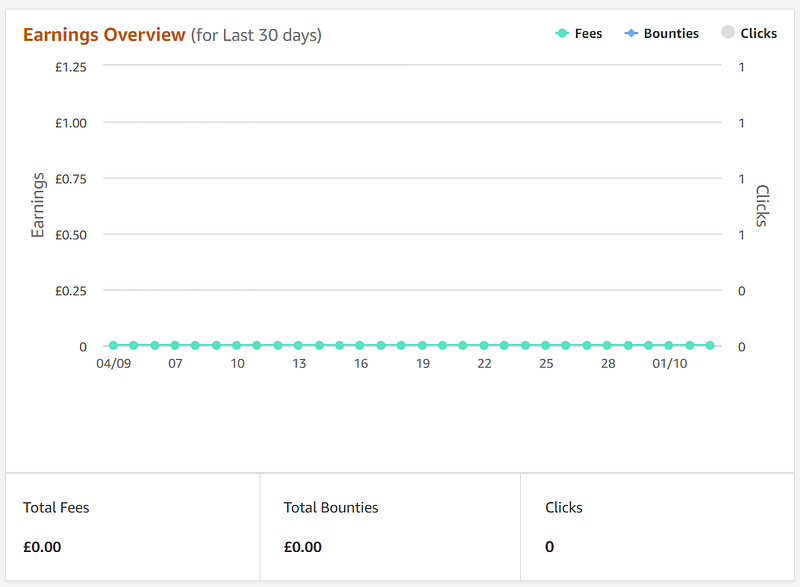
My experiment with this was tiny. Since I have essentially no audience yet, the results from embedding a few Amazon affiliate links here and there in various Medium articles have yielded predictable results:
Those I’m still experimenting with

Online writing, specifically on Medium and Substack

Photo by Sincerely Media on Unsplash
  • Writing helps me process my thoughts
  • Should people actually read and comment upon said writing, I would feel part of some kind of community. Given that no one in my real life is pursuing online money-making, this would be welcomed.
  • Alas, everyone keeps pointing out that it takes like a year before more than a dozen people bother reading your work. That’s a bummer that it takes so long to reach critical mass.

I am still in the experiment phase with this one, and not ready to make a decision.

The first reason I remain ambivalent is that, again, it directly ties one’s identity to the money-making endeavor. It is personal. There is a relationship built between the readers and the writer. Your friends and family can read all those things you write.

The second reason I remain ambivalent is that, when I was researching the paid newsletter method of monetizing writing, it became very clear that I value being able to be inconsistent and flighty (with this online money-making thing, at least). Certain types of online writing lend themselves to that, and other’s don’t. If you’re running a paid newsletter, you must deliver consistently.

Given that even with my tiny audience I’ve already seen a few cents roll my way on Medium, I do feel like this might have legs. We shall see…
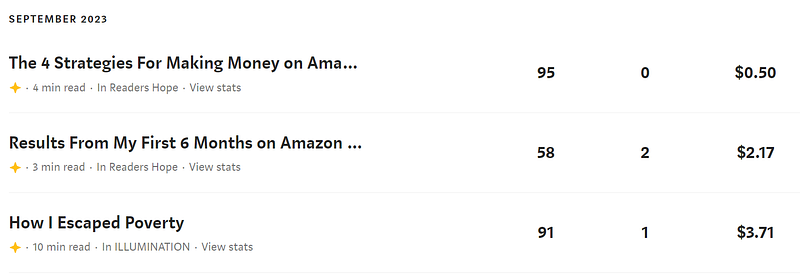
Screenshot by author, showing her tiny earnings on Medium from September 2023

Unattached Affiliate Marketing

Photo by Stephen Phillips - Hostreviews.co.uk on Unsplash

While I ruled out the two types of affiliate marketing that require you to endorse the products you market, I am still seriously considering unattached affiliate marketing.

  • I like that it’s completely anonymous, and separate from my private life
  • I like that it’s analytical and scientific
  • I like that I can pursue it when I feel like it and have time, and ignore it other times
  • I like the creative part of making the ads

I’m not far enough in to draw conclusions yet.

Those I’ve selected so far

Indie-publishing via Amazon KDP

Photo by Kimberly Farmer on Unsplash

This last one has successfully exited the experiment phase and received my green light.

I’m 10 books in so far, with a mix of medium-content and high-content books.

  • I find the process really fun and creative. I actually enjoy all the steps, including research, writing, formatting, illustration, cover design, and listing it. (The Ads, not so much. But I’ll get there.)
  • Using pen names, I’m free to explore all kinds of genres and keep my personal identity separate from the work if I so choose.
  • The profits are very modest so far, but the path to scaling is clear. If you think of each book as creating a tiny passive income source, and just accept that it’s a volume game, even small profits are exciting.
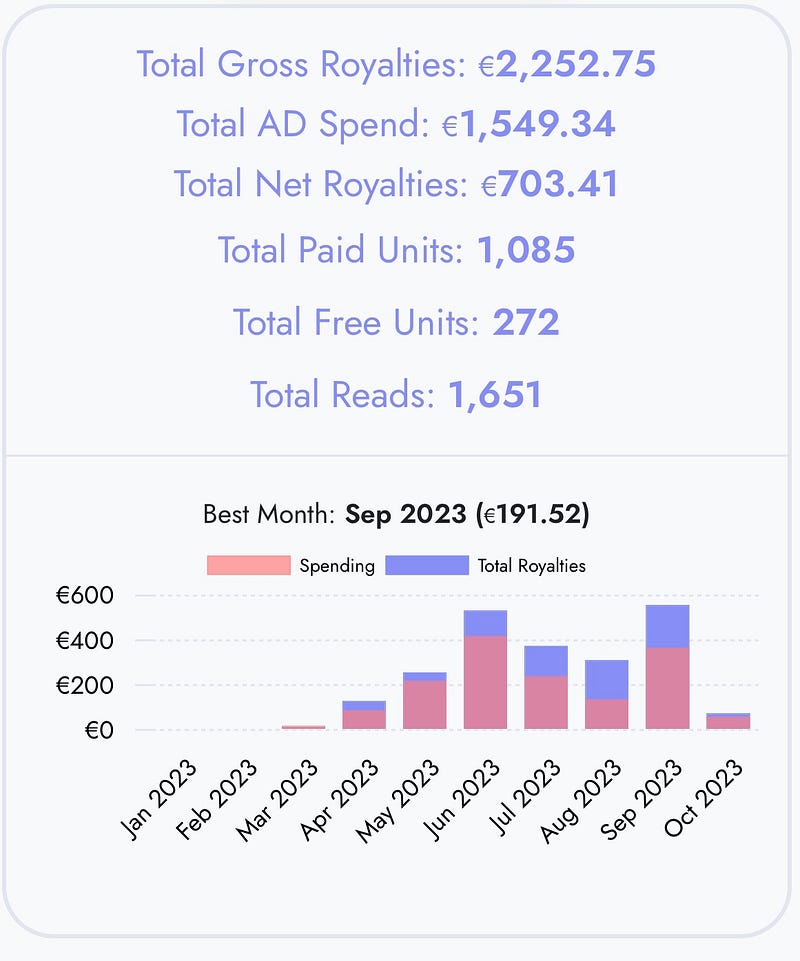
Screenshot by author showing Amazon KDP Royalties vs Ad spend

I learned a couple of things about myself through these experiments

  • I don’t want to deal with people. This is my retirement semi-passive business we’re talking about. I’ve already put in my time during my real career dealing with mediocre competence and people politics.
  • I want to be free to explore whatever curiosities I feel like. That means I don’t want to be locked into anything. Don’t want to be the face of the brand. Don’t want to be expected to churn out content daily or even weekly. I want to feel retired with some fun hobbies that make money.

Your own criteria for selecting an online business model most definitely varies from mine. Do me a solid and leave a comment to let me know how you’re doing on your own experiments. What have you learned about yourself?

Entrepreneurship
Retirement
Online Marketing
Personal Finance
Side Hustle
Recommended from ReadMedium