
Recipe
Easy Restaurant-Worthy Chicken Piccata
You can make this recipe at home.
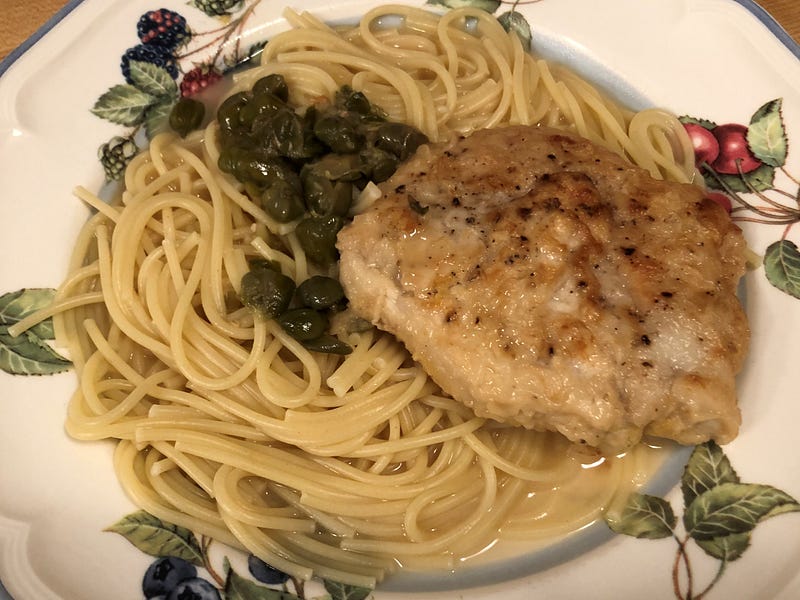
My family loves pasta, and going to our favorite Italian restaurant gave us a much-needed fix for our craving. When we went, I often chose Chicken Piccata. It came out perfectly seasoned with just the right amount of lemony sauce and capers. Since the pandemic, we haven’t been going out to eat.
One day, I craved this dish so much that I decided to figure out the recipe. I knew that this dish had lots of butter, but I wanted to reduce the cholesterol and bad fats, so I opted to use olive oil instead, along with white wine. After several tries, I finally came up with a recipe that we love.
Since I cook just for my husband and me, this recipe reflects that. However, it is easy to scale this up or down, according to how many you need to feed. Keep in mind that a normal serving of chicken is 4 to 6 ounces. I use one 10 to the 12-ounce chicken breast to feed two people.
Ingredients
1 chicken breast 2 tablespoons of olive oil (or butter) 2 servings of spaghetti noodles ⅛ teaspoon of garlic powder 1 ½ teaspoon of kosher salt ⅛ teaspoon of ground pepper 2 tablespoons of capers (optional) 1 lemon, zested and squeezed 2 tablespoons all-purpose flour 1 cup dry white wine or chicken stock
Before cooking — 5-minute prep
Pat one chicken breast dry with a paper towel, and place in a sturdy plastic bag such as a freezer bag. Use the flat side of a kitchen mallet to pound it flat, to about ½" to ¾" thickness. Try to make the thickness even across the whole chicken breast. This will help it cook evenly. Do this for each breast.
Cut the chicken breast into serving-sized pieces. Drizzle a small amount of olive oil onto one side of each piece(about ¼ teaspoon should be plenty). Using your hand, spread the oil on all surfaces of the chicken. This helps the flour mixture stick evenly to the surface. You can leave this out to reduce the fat of this dish.
Mix the flour, salt, pepper, and garlic powder in a small bowl. Lightly sprinkle the flour mixture on both sides of the chicken breast. Rub it around to make sure all surfaces are lightly dusted. This will help it brown evenly.
Let the chicken rest for 5 to 10 minutes while you get started on the rest of the meal, make your salad or sides, and prepare the lemon sauce mixture.
Prep your lemon sauce
In a measuring cup, add the zest and juice of one lemon. Usually, a lemon contains about 1 tablespoon of juice, depending upon the size of the lemon. You want the total liquid to equal one cup, so add enough white wine to make one cup total. This makes enough sauce for two servings.
Note: If you don’t have a zester or Microplane grater, lightly scrape a serrated knife over the surface of the lemon to remove the zest. Don’t scrape too deeply, or you will get the bitter white pith beneath it.
If you are making more than two servings, you can add more lemon juice and wine for each serving or add chicken stock. The alcohol in the wine cooks away and adds a nice flavor, but you can substitute chicken stock in place of the wine.
Let’s get cooking
Start the water for your spaghetti noodles to boiling. If you stir in 1 teaspoon of kosher or sea salt, it will flavor the noodles without adding too much additional salt. Once the water comes to a boil, cook the noodles according to the package instructions. It usually takes 8 to 12 minutes.
While the water is coming to a boil, add 2 tablespoons of olive oil to a 10-inch lidded skillet and turn on the stovetop burner to medium heat. Heat the oil until there is a slight shimmer. Once it begins to shimmer, add your chicken breast. Let it cook on each side for 3 to 4 minutes.
When you flip the breast, it should be lightly golden brown. After cooking it on the second side, flip the breast again. Slowly add the lemon sauce mixture and allow it to reach a light boil. Reduce the heat to low and cover the pan with your lid.
Allow the dish to continue cooking for an additional 5–7 minutes. Add the capers in the last two minutes of cooking. This will warm them without making them soggy. Capers add a tanginess to the dish, but they can be left out, especially if you need to reduce your salt intake.
Testing the pasta for doneness
While the chicken finishes cooking, check the doneness of your pasta. It is best if it is slightly undercooked (called al dente). The outside of the noodles will be soft, but there will be a slight stiffness to the center. When it reaches this point, remove it from the heat, but do not drain the water.
You will need to use some of the pasta water to thicken or thin the sauce to your preferred consistency. If the sauce is too thin, add a ½ cup of the pasta water to the sauce and let it continue to cook without the lid until the sauce reduces and thickens. If the sauce is too thick, stir in the pasta water and remove from heat. Add the capers when you add the pasta water.
Serving your dish
I find that this dish is best plated in the kitchen and then each plate carried to the table. You can even serve this dish buffet style. First, spread a serving of noodles onto the plate—Lay one serving of chicken breast on top. Spoon the lemon sauce over the chicken and pasta.
Since you are plating in the kitchen, clearing the table is quick. Each person just carries their own dishes to the dishwasher and loads them in. Because you only had the pan you cooked the noodles and the pan you cooked the chicken in, you will only have those two things to wash by hand.
You will eat it again and again.
This dish is great with French bread, a salad, and a nice glass of that white wine. It is ready in less than 30 minutes, and cleanup is quick and easy. In addition, you can control the salt and fat in this dish, making it healthier than the restaurant version without sacrificing taste.
Better yet, it saves money. When we went to the restaurant to eat, I spent at least $10 on this meal for just me. I can make it for four people for about the same cost. As we go into the holidays, I’m going to try making this dish using left-over turkey breast. Yummy!
Bon Appetit!
Stay in touch. Let me know how you liked this recipe.
Pat Davis, a retired teacher and editor of Simply Living and Living Simply, lives with her husband and neurotic cat, Neko. She loves to read, write, travel, bake, garden, sew, and craft.


