
Restaurant Work and the Culture of Sexual Harassment
People need to report it
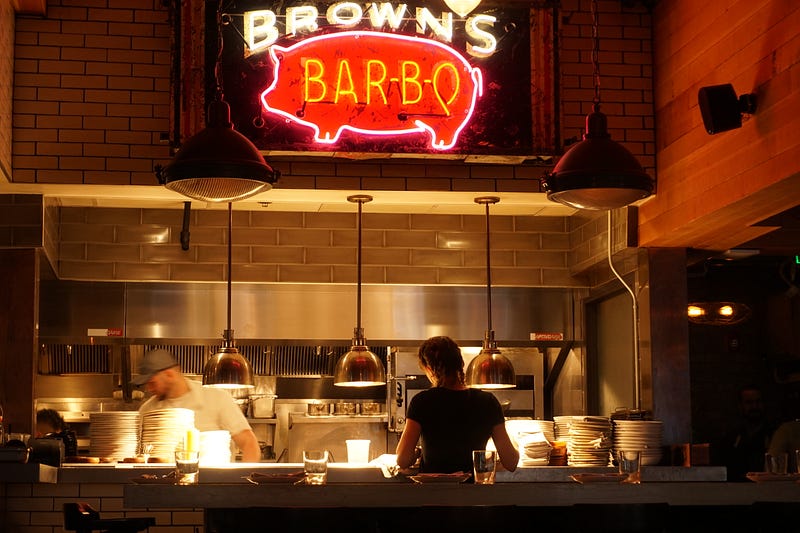
I am pretty sure I am not alone in saying that working in a restaurant can often lead to many moments of sexual harassment. There seems to be a boundary-less intimacy that breeds easily among staff members. Especially during the dinner shift. Especially if the restaurant has a bar. Having worked in the restaurant industry for over 13 years, I experienced my fair share of unwanted advances. But why did it always seem acceptable? Why was this “part of the job?” Is it even possible to change the culture of working in a restaurant?
An Unacceptable, but Accepted Culture
At one restaurant where I worked, every time I dropped dishes at the dishwashing station, my co-worker called me “chichis” and looked at his friend who joined in. For those of you who are not familiar, the word chichis is Spanish slang for breasts. At the same restaurant, famous for its margaritas, I was often spanked by customers and other waiters as I walked by with a tray of drinks.
According to this article in the Harvard Business Review,
More sexual harassment claims in the U.S. are filed in the restaurant industry than in any other, where as many as 90% of women and 70% of men reportedly experience some form of sexual harassment.
Sexual innuendos were everywhere at work. The flirtatious and sexual comments between servers and cooks were vernacular. Yes, I experienced “catcalling” outside of work, but the blatant advances were so pervasive at work, it seemed just accepted, and I admit to joining in.
One of the messages I received at work was that my worth (amount of tips) was directly tied to my looks. At one place I worked, my coworker teased me all the time about what I wore and how I needed to pluck my eyebrows. At another place, I learned that it was OK to say to me, “We’ll fuck someday.” I also learned that it was funny to rub up against someone at the wait station.
But I never reported any of it.
As we all know from the #MeToo movement, and many of us from personal experience, most sexual harassment claims are made light of, disbelieved, or dismissed. When I asked some friends about their experiences, all of their (anonymous) answers were very similar:
“Yeah, it was traumatizing actually.”
“All kitchens are harassment-central.”
“It was so incestuous. And everyone did drugs.”
And this last one really got to me:
“It was a manager who decided that my nickname was ‘slut’ — mind you, I was dating [current husband] at the time. And one night [the manager] mooned me. I saw his balls too. He was a complete asshole. And I might have said something to a different manager, and it could’ve been why I was fired.”
Dangers and Consequences
This cultural norm persists because most people don’t report it. And why would they? Often it’s the manager doing the harassing. After a qualitative study, Stefanie K. Johnson and Juan M. Madera found:
Despite feeling uncomfortable and threatened, servers saw it as part of the job and rarely complained to their managers. Many mentioned failing to complain or report the harassment because of fear of retaliation. In fact, the more sexual harassment they experienced, the more they reported fear of retaliation.
Another issue is that serious relationships sometimes develop out of flirtatious coworkers. I do know a lot of people who are still in happy relationships with people they met within their restaurant circle of friends. But it can cause really painful experiences when the relationships don’t work out. You still have to work with them. I should know. I have unfortunately been there, twice.
I even survived being drugged by a bartender, which I wrote about here. Granted, I was not working at the bar at the time, but the idea that this very popular bartender felt emboldened to do such a thing is really, really scary.
Unfortunately, even with some high-profile people getting consequences for their sexual misconduct and assault, the culture remains. It is hard to reconcile with the fact that we had a sexist, misogynistic president in the White House for four years. That his “grab ‘em by the pussy” comment was brushed aside as “locker room talk” is evidence that our society has a long way to go. Just Google how many times Trump has said something sexist. There are over 20 million hits.
How can we change a culture that has leaders who insist on keeping things exactly as they are?
It’s Hard to Change the Culture
It is really easy to find a job in the restaurant industry, especially when you are young. You can earn quick money and often gain a group of friends to hang out with. Restaurants provide a place for people to be after hours, and it is easy to see how it could easily become a family-like community. Add alcohol to the mix, and it easily becomes a dysfunctional family. But it is not so easy to change the culture of sexual harassment.
To further complicate things, in a recent survey about working in the restaurant industry during the pandemic,
“41 percent reported a noticeable change in the frequency of sexually harassing comments from customers.”
In this article, a waitress reported that her customers don’t tip as they did before the pandemic. She was told by a male customer that he wanted to see her face under the mask. This is quite revealing of how demeaning people can be to restaurant workers.
Recently, some policy changes are trying to reduce the risk of sexual harassment. After being caught up in a recent sexual harassment scandal at one of her restaurants, James Beard Award-winning chef, Ashley Christensen has moved to a more recent trend to remove the “shift drink” offered to staff after their shift ends. But is it just alcohol that makes people feel like a restaurant is a perfect place to behave without consequence?
People need to feel comfortable reporting unwanted behaviors. Anyone going into this line of work needs to feel empowered to do the right thing. Part of the initial training should include restaurant policies on sexual harassment and avenues for solving problems.
Restaurant owners and managers should prioritize their workers' safety, both physical and emotional. They should never allow customers to harass the staff, no matter how much money they spend. And there should be consequences for sexual harassment no matter where you work.
Final Thoughts
Although sexual harassment, unfortunately, happens in all workplaces, it is pervasive in the restaurant business. With awareness around the problem, we can hopefully make further progress with changing the culture. Please remember this whether you manage the shift, wait tables, prep food, wash dishes, or dine in a restaurant.
We must continue to tell our stories, speak out, speak up, and insist on change until it happens.