
Politics | Identity | LGBTQ+ | Racism
Respectability Politics: Who Defines What Normal Is?
There is no ‘default’ human being
We all feel a need for approval and validation from those around us.
Did that sentance put your hackles up? Did it make you uncomfortable, angry, defiant or sad? I know how that feels. I spent a lot of my youth absolutely rebelling against the idea that I should care what anyone thought about me.
In my case, I rebelled so hard because I felt the lack of acceptance from my peers so keenly.
I was an undiagnosed autistic girl, unknowingly asexual, and I had no idea why people treated me so differently. I had no idea what it was about me that set me apart.
I struggled to read and follow the typical norms of social interaction. I had no concept of what a crush was, let alone why all of my friends kept badgering me to share mine or calling me a prude when I said I didn’t have any.
At first I tried to hide my differences by just following their lead. I mimicked my friends’ behavior, taking on their mannerisms and trying to dress like they did. I pretended to have a celebrity crush just so I had something to say when the subject came up.
When all of that failed to make me ‘normal’, when I found myself miserable and still pushed to the outskirts, I gave up. I accepted that I was different, and that there was something wrong with me. I resolved to no longer care what people thought.
I stopped seeking community. There was no more point in trying to fit in.
Imagine what would’ve happened if I’d just been accepted for who I was instead.
A lot of us have gone through something like that. It’s the typical teenage experience. But when you belong to a marginalized community, it’s a thousand times worse.
The pressure to fit in, to present a ‘normal’ face to the world, is overwhelming.
If you’re queer, you’re not supposed to act queer. Don’t kiss your partner in public, that’s gross. Don’t dress loud, don’t wear such bright clothing and don’t try to stand out. The message is clear: you wouldn’t be treated so badly if you weren’t so in-your-face about it!
If you’re not white, you don’t need to be so out there with it. Be more professional, speak proper English and don’t use slang. Slang isn’t classy. Style your hair the right way. You wouldn’t be treated so badly if you just tried to fit in better!
If you have a disability, don’t make it everyone else’s problem. It’s your responsibility to not make other people uncomfortable. Don’t be needy, don’t inconvenience other people by needing help with your wheelchair or your sensory issues or whatever. Just act normal!
That’s just a few examples, but you get the idea.
Don’t take up space with your difference. Make your difference invisible so that it can be safely ignored. We call this ‘Respectability Politics’. And let me tell you — the concept deserves to die out.
Respectability politics assumes that there is a ‘default’ way to present and behave. Typically, the ‘default’ just so happens to line up perfectly with the stereptypical form of the dominant group or culture.
Here in North America, that’s the heterosexual neurotypical able-bodied white Christian.
Step too far outside of the lines allowed by that culture, and you’ll be regarded as abnormal. You’re expected to conform to the dominant culture as a way of proving that you deserve respect. That you are, in effect, one of ‘the good ones’.
If you behave properly, you’ll be rewarded by being treated nicely. If you don’t, you deserve what’s coming to you for being difficult.
If your difference is too visible, you’re on the outs. Sucks to be you.
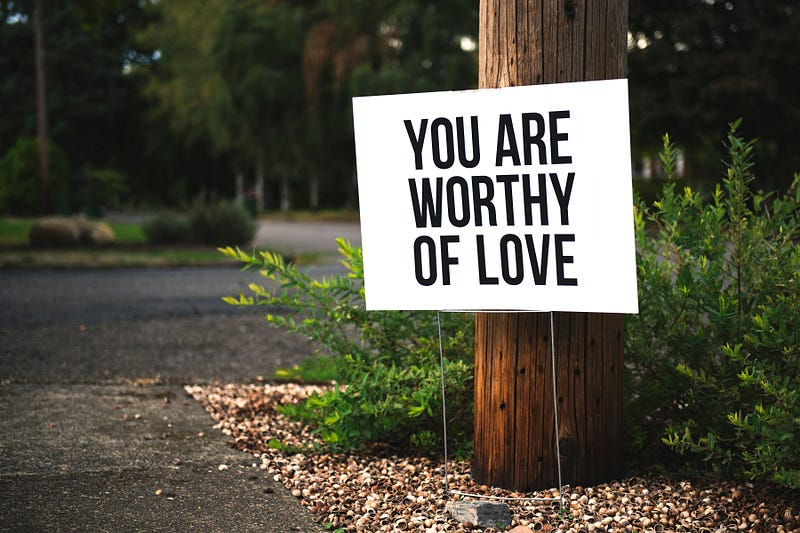
When you’re marked out as abnormal, you catch a lot of flak. You’ll find plenty of acceptance amongst your fellow outcasts, just like I did…but you’ll also find more than your fair share of alienation and ignorance.
The idea of one group being ‘normal’ and other groups being less so is nothing new. Humans have been dividing ourselves up like this since the dawn of recorded history.
It’s why colonial powers have worked so hard to eradicate the cultural expression of the peoples they conquered. Historically, this was often carried out via something called ‘Assimilation Policy’, or similar policies around the globe.
As an example, look at the wide ranging and long-standing tradition of forcing people to change their hair, among other beauty standards.
Indigenous peoples of the Americas were forced to cut their hair short when they were colonized, and oppressed and enslaved Black people were taught that their natural hair texture looks unkempt and primitive.
Everywhere that colonial forces settled, they enforced beauty standards to make local people conform to what they considered ‘normal’. They intentionally painted the cultural norms, traditional garb and presentation of the oppressed peoples as undesirable and inferior.
That’s just one example, but you get the point.
To follow the norms of the dominant culture is to be sophisticated and respectable. People have always been punished for standing outside of what society defines as ‘correct’.
But it doesn’t need to be this way.
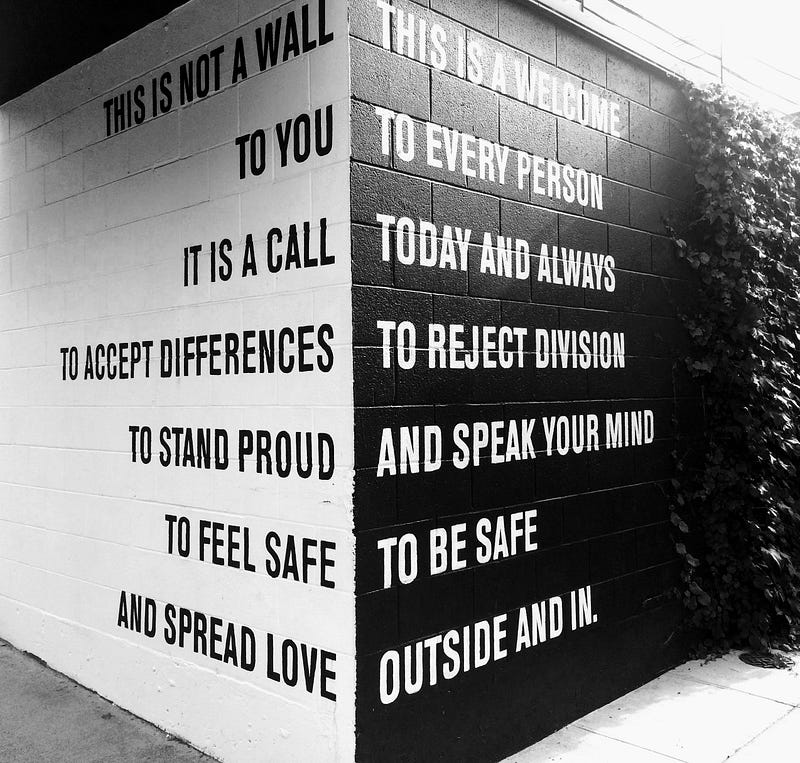
Respectability politics get us absolutely nowhere.
There will always be people who call for marginalized people to just put our heads down and pretend, to avoid harm and to not rock the boat. To just try and fit in so we don’t get kicked down.
Here’s the thing: We’ve tried that, and it has never worked.
The only thing accomplished by shutting up and shutting down is that we are shut up and shut down. We lose our voices, and we get cut out of the conversation. Further, by conforming to the standards of the dominant culture, we reaffirm the idea that it holds power over us.
We act like they’re right. That our own feelings, identities and self-expression are inferior to theirs. Screw that.
I stopped caring what people thought about me because it was my only defense mechanism. To be myself, unapologetically and without reservation. That’s how I coped. So what if people hated me? No skin off my back.
You know what happened? I learned to roll with the punches and keep showing up anyway. In time, I found out who I was. I learned I was autistic, and eventually, I learned about asexuality.
And then I started to meet people.
I found acceptance in a community of people who were just like me.
Suddenly I didn’t need to pretend to fit in; I just did. I wasn’t so different anymore, I was just unique as an individual woman just living my life. I no longer felt the need to beat myself down and force myself to fake a smile, an attitude and a set of feelings that I didn’t genuinely have.
I learned to accept myself, and that makes all the difference.
The way to put an end to bigotry and hatred is not to assimilate and keep our heads down, it’s to normalize difference until it’s no longer remarkable.
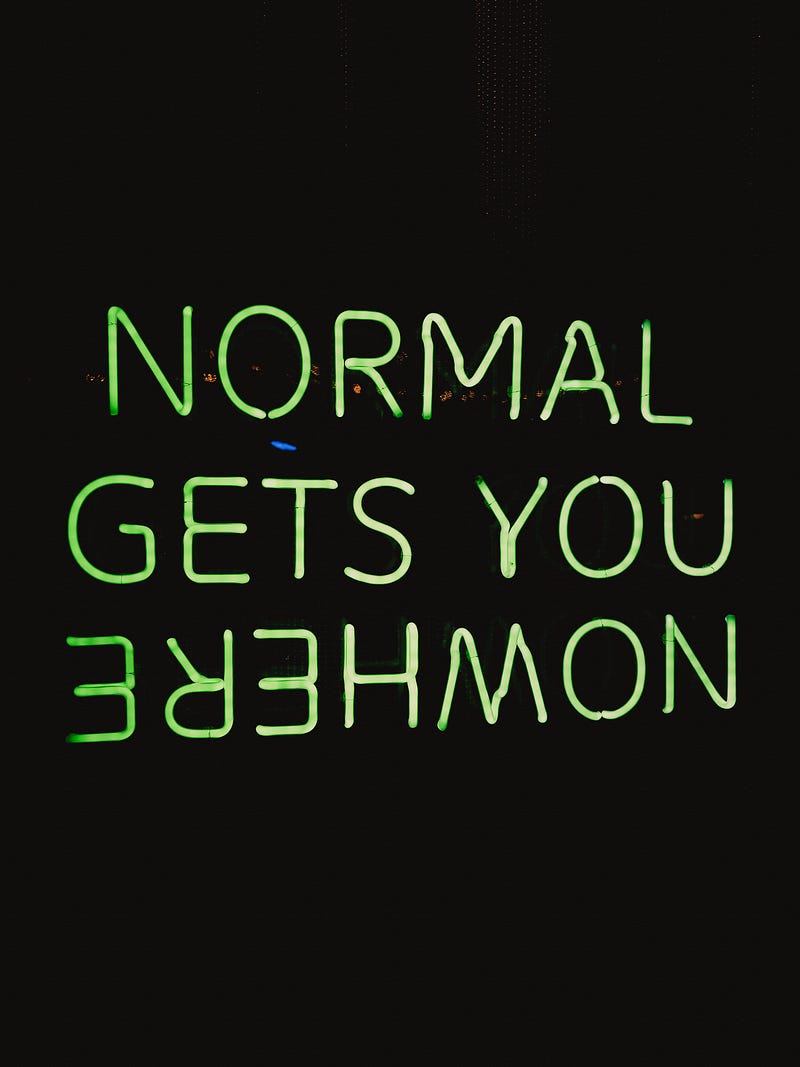
Who defines what ‘normal’ is? Why does there need to be a ‘normal’?
Human beings are complex and varied critters. Every single one of us is an individual, and no two individuals are the same. The idea that we all need to think, present and feel the same way is just silly!
It’s not healthy for society to demand rigid conformity to a single ideal stereotype.
Diversity is a strength. Differences and nuances add depth and texture to our lives; they allow us to encounter experiences and perspectives that we might never get to have on our own. Accepting difference means we can be authentic and honest about who we are.
Why would you ever want to erase that?
If you truly never had to worry about what other people thought of you, who would you be?
There is no such thing as normal, so don’t worry about it. Be different. Be abnormal. Be weird; I promise it’s okay! Be unapologetically yourself, and let everyone else learn to live with it.
Instead of trying to force ourselves to fit a mold that someone else is dictating to us, it’s better to forge our own path. It’s okay to take up space.
We don’t need to be invisible, unseen and unheard. Be loud. Be an inconvenience. Be eye-catching and scandalous and don’t be ashamed. Never, ever be ashamed of who you are.
There is no default setting for human beings. We need to stop pretending there is.
Solidarity wins.
If you enjoyed this article, consider subscribing to my newsletter at World-Weary to read more of my writing on the subject of human rights, justice, and activism.
Paid subscribers also gain access to my new podcast, Unfiltered. Their support makes my work possible and helps me keep doing what I love.