avatarKalyan Keesara

Free AI web copilot to create summaries, insights and extended knowledge, download it at here

1974

Abstract

eases all efforts made in this direction. A promoter by definition is an entity that enables or supports a specific idea in some form or the other.</p><p id="1aa6">Here’s how a typical resistance spectrum looks like when new projects are proposed.</p><figure id="b7a6"><img src="https://cdn-images-1.readmedium.com/v2/resize:fit:800/0*Jr4W1778zXb5cI7u"><figcaption>Resistance Spectrum</figcaption></figure><p id="ce2a">Inevitably, visionaries and active believers shoulder the sole responsibility of getting all the unwilling entities(eg. colleagues, suppliers, customers, etc) on board by taking the roles of promoters.</p><ul><li><b><i>Expert Promoter:</i></b> Subject matter experts capable of the technical know-how. The ones that convince reluctant colleagues about the feasibility and novelty of the project.</li><li><b><i>Power Promoter:</i></b> Top leaders that can use their power to allocate resources to facilitate expert promoters. The ones that buy the ticket to a new destination as a strategic move in the organization’s game plan.</li></ul><p id="2fe5">A majority of the organizations have these two types functioning successfully in their structure. But once everyone gets on board is when a hidden resistance among the promoters ignites. This latent resistance has more to do with the motivation behind each promoter’s willingness to contribute.</p><p id="726e">Typically, innovation teams have cross-functional capabilities and every unit seeks a different incentive in return for its contribution. Understanding the stimuli of these promoters is key to keep the processes efficient without conflicts.</p><p id="afae">For instance, expert promoters across teams with an intention to push for patent credits on the project would aggressively defend their versions of how the project should be implemented. In such cases, it isn’t uncommon to come across conflicts in information transparency and power struggles that eventually delay the project until it’

Options

s terminated.</p><p id="a3e9">A quick fix for this is to identify a suitable process promoter.</p><ul><li><b><i>Process Promoter:</i></b> Middle managers with organizational know-how. The ones that are great at networking and possess superior social intelligence to help promoters reach their potential while fueling their motivation with the right balance of incentives. Also, to overcome the potential barriers of poor communication and accountability across interdisciplinary teams.</li></ul><figure id="eead"><img src="https://cdn-images-1.readmedium.com/v2/resize:fit:800/0*FiCVRA-JLsuTHRdT"><figcaption>Hauschildt, J. and Kirchmann, E. (2001), Teamwork for innovation — the ‘troika’ of promotors. R&D Management, 31: 41–49. doi:<a href="https://doi.org/10.1111/1467-9310.00195">10.1111/1467–9310.00195</a></figcaption></figure><p id="164b">In my experience, most projects fail to create the desired impact when the process promoters stay disconnected from the chain or when the process promoters aren’t empowered enough to get involved completely.</p><p id="e0c8">If you identify yourself as a promotor, make sure you are connected to the remaining two. If not, do everything within your capacity to set up the promoter framework.</p><p id="f3bf"><i>Does your organization have the right promoters set up? Which promotor category do you fall into?</i></p><p id="4940">Cheers!</p><p id="edb0"><a href="undefined">Kalyan Keesara</a></p><h1 id="e51a">Sources:</h1><p id="ddfd">If this has piqued your interest, I would recommend reading my sources for this article :</p><p id="76c5">Hauschildt, J. and Kirchmann, E. (2001), Teamwork for innovation — the ‘troika’ of promotors. R&D Management, 31: 41–49. doi:<a href="https://doi.org/10.1111/1467-9310.00195">10.1111/1467–9310.00195</a></p><p id="71cc">Goduscheit, René. (2014). Innovation promoters — A multiple case study. Industrial Marketing Management. 43. 10.1016/j.indmarman.2013.12.020.</p></article></body>

Resistance to Innovation: Too many roadblocks to implementing your ideas? Identify the right promoters

What’s hindering you(or your team) from realizing your ideas into reality, in spite of receiving adequate support from the top management?

Photo by Johannes Plenio on Unsplash

Resistance to change is a basic human trait and often becomes an obstacle when it comes to innovation. It’s not just enough to have the right ideas but it’s necessary to have the skills to get everyone on the same page about it.

“Your success in life isn’t based on your ability to simply change. It is based on your ability to change faster than your competition, customers and business.”

— Mark Sanborn

In my 4+ years of experience in the automobile industry, I had worked in multiple tech teams that boasted great track records of delivering novel solutions; teams that the top management was always eager in investing more but yet, things were never smooth in terms of executing an idea to the end.

Although the roadblocks in such scenarios are fairly intuitive to spot, the ‘promoter theory’ helps put them in the right perspective.

Building an environment conducive for healthy innovation is a major challenge and identifying the right promoters eases all efforts made in this direction. A promoter by definition is an entity that enables or supports a specific idea in some form or the other.

Here’s how a typical resistance spectrum looks like when new projects are proposed.
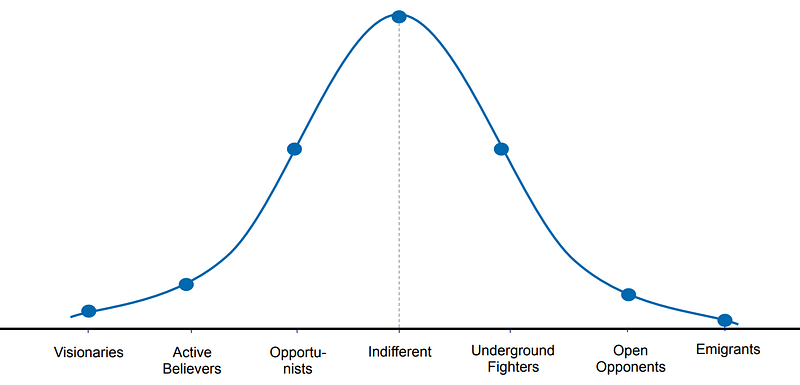
Resistance Spectrum

Inevitably, visionaries and active believers shoulder the sole responsibility of getting all the unwilling entities(eg. colleagues, suppliers, customers, etc) on board by taking the roles of promoters.

  • Expert Promoter: Subject matter experts capable of the technical know-how. The ones that convince reluctant colleagues about the feasibility and novelty of the project.
  • Power Promoter: Top leaders that can use their power to allocate resources to facilitate expert promoters. The ones that buy the ticket to a new destination as a strategic move in the organization’s game plan.

A majority of the organizations have these two types functioning successfully in their structure. But once everyone gets on board is when a hidden resistance among the promoters ignites. This latent resistance has more to do with the motivation behind each promoter’s willingness to contribute.

Typically, innovation teams have cross-functional capabilities and every unit seeks a different incentive in return for its contribution. Understanding the stimuli of these promoters is key to keep the processes efficient without conflicts.

For instance, expert promoters across teams with an intention to push for patent credits on the project would aggressively defend their versions of how the project should be implemented. In such cases, it isn’t uncommon to come across conflicts in information transparency and power struggles that eventually delay the project until it’s terminated.

A quick fix for this is to identify a suitable process promoter.

  • Process Promoter: Middle managers with organizational know-how. The ones that are great at networking and possess superior social intelligence to help promoters reach their potential while fueling their motivation with the right balance of incentives. Also, to overcome the potential barriers of poor communication and accountability across interdisciplinary teams.
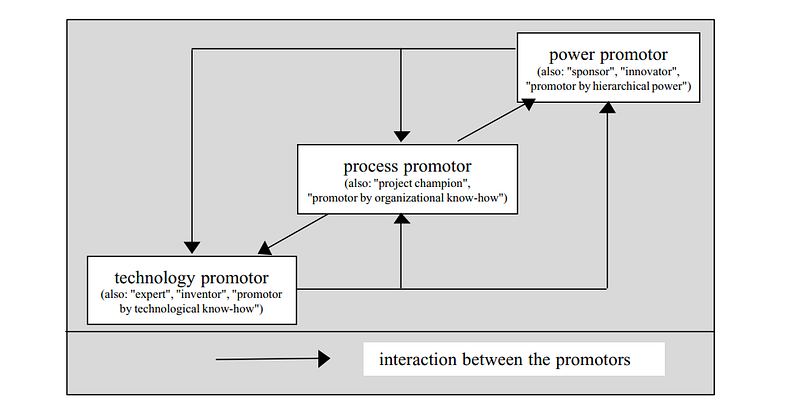
Hauschildt, J. and Kirchmann, E. (2001), Teamwork for innovation — the ‘troika’ of promotors. R&D Management, 31: 41–49. doi:10.1111/1467–9310.00195

In my experience, most projects fail to create the desired impact when the process promoters stay disconnected from the chain or when the process promoters aren’t empowered enough to get involved completely.

If you identify yourself as a promotor, make sure you are connected to the remaining two. If not, do everything within your capacity to set up the promoter framework.

Does your organization have the right promoters set up? Which promotor category do you fall into?

Cheers!

Kalyan Keesara

Sources:

If this has piqued your interest, I would recommend reading my sources for this article :

Hauschildt, J. and Kirchmann, E. (2001), Teamwork for innovation — the ‘troika’ of promotors. R&D Management, 31: 41–49. doi:10.1111/1467–9310.00195

Goduscheit, René. (2014). Innovation promoters — A multiple case study. Industrial Marketing Management. 43. 10.1016/j.indmarman.2013.12.020.

Innovation
Innovation Management
Project Management
Technology Management
Business
Recommended from ReadMedium