avatarStephenie Magister ✨

Summary

The article emphasizes the importance of representation in storytelling, arguing that diverse and authentic portrayals of marginalized identities are crucial for expanding societal consciousness and normalizing diverse experiences.

Abstract

The article "Does Representation Matter More Than Whether A Story Is Good?" delves into the significance of representation in literature, asserting that the inclusion of trans characters and other marginalized identities should not be contingent upon their service to the plot. It posits that widespread representation, even when imperfect, plays a pivotal role in shaping our understanding of reality and ourselves. The author advocates for the proliferation of stories featuring underrepresented groups, suggesting that such narratives should become so prevalent that their absence feels amiss. This ubiquity is seen as a means to shift societal perceptions, allowing readers to connect with diverse experiences and prompting a transformation in how they view the world and themselves. The article is a call to action for writers, editors, and agents to prioritize the publication of these stories, thereby fostering a literary landscape where diverse voices are the norm rather than the exception.

Opinions

  • The author believes that representation matters intrinsically and should not be secondary to the story's plot.
  • Representation is seen as a tool for expanding consciousness, perception, and the experience of reality.
  • Authentic representation is crucial for giving marginalized groups the opportunity to see themselves in narratives and to believe their stories are worth telling.
  • The author argues that the prevalence of diverse stories can change the industry standard, making the absence of such narratives feel incorrect.
  • There is a need for diverse stories to become so common that they influence readers' self-perception and engagement with existence.
  • The article suggests that the familiarity of diverse stories can lead to a broader acceptance and understanding of marginalized experiences.
  • The author encourages writers from marginalized communities to share their stories, emphasizing that their voices are necessary and valuable.
  • The piece calls on publishing professionals to support and elevate underrepresented stories to facilitate societal progression.

Does Representation Matter More Than Whether A Story Is Good?
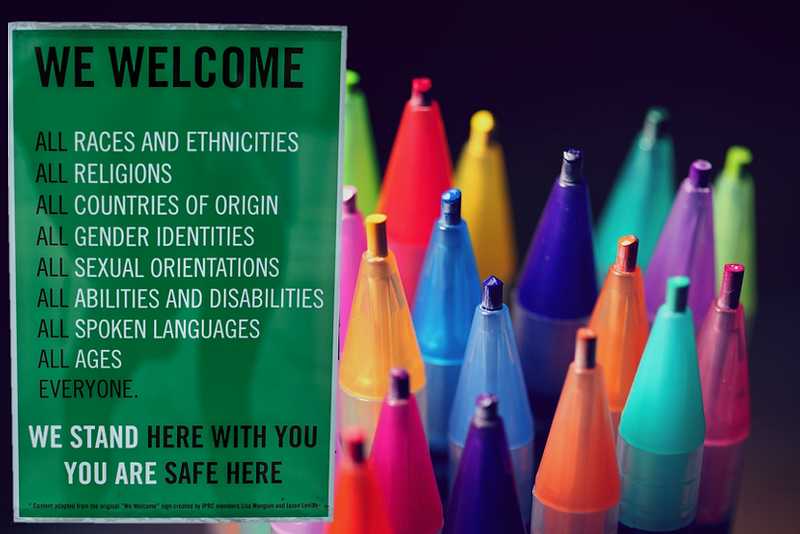
Elements from photos by Alexander Grey and Brittani Burns on Unsplash

But think of the story!

If someone says:

“Diversity and representation are fine, but think of the story!”

That person is telling a different story than an author who sees the power of representation for its own sake.

When someone says you should only put a trans character (or more than one!) into the story if it serves the story, they are missing why representation matters.

Ubiquitous representation of marginalized identities — including terrible representation — is how we expand our consciousness, our perception, our very experience of reality.

Ubiquitous representation is how expand our default to include those people who already exist but feel so unfamiliar — including how unfamiliar we may feel to ourselves.

Ubiquitous representation is how we give the previously underrepresented the space to see themselves and fill out stories they never believed were possible to tell.

Ubiquitous representation of marginalized identities is how we shift our consciousness so that agents and editors no longer read a marginalized story and pass because they don’t connect to it.

Ubiquitous representation is how we evolve our perception so that a rarely authentic story no longer feels false because it feels too unfamiliar.

Ubiquitous representation is how we convert those readers who say they want diversity but don’t feel drawn to BUY it.

This is a plea to my fellow writers as much as it is to my fellow editors, agents, and other publishing professionals:

Make the uncommon story common. Make it so excessively familiar that readers learn the formula backwards and forwards. That they learn what they love. What they hate. That they discover unseen aspects of themselves. Their perceptions of themselves and thus the very manner in which they engage with existence begins to shift, to progress, to transition.

If you are writing with or about marginalized or underrepresented identities and experiences —

We need your story.

We need your voice.

We need stories like yours to be so common that it feels wrong NOT to have it.

The end (of the article)
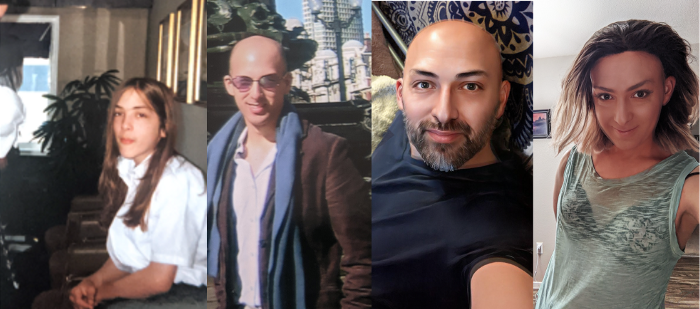
Graphic from selfies in “From 5 to 40: My Life In Photos”

If you like my work and want to support it, buy me a cup of coffee! To join the Translation Team, subscribe to my Substack newsletter: Translating Everything

LGBTQ
Transgender
Writing
Diversity
Culture
Recommended from ReadMedium