
Reports of the Skywalker Saga’s Demise are Greatly Exaggerated
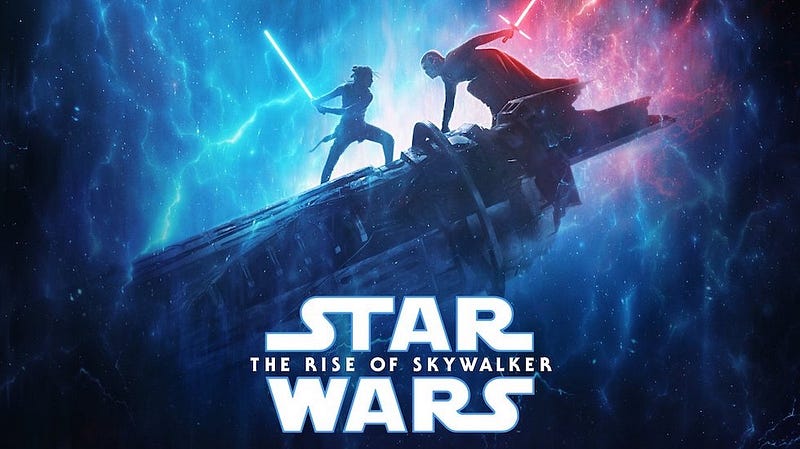
Star Wars Episode IX: The Rise of Skywalker was released this week to decidedly mixed reviews, with some outraged critics eviscerating it. After seeing it myself on opening night, I am happy to report that although it is certainly a flawed film in many regards it is far from a disaster and in many ways a very satisfying conclusion to the saga that has spanned nine films and five decades. The movie had my heart filled with joy, my eyes filled with tears, and goosebumps all over my skin — and shouldn’t that be (more than) enough?
[Author’s Note: The following review does not reveal the major plot revelations nor the ending of the film. However, I highly recommend that you do not read this review until after you have seen the film — or have decided you will not.]
A super brief history of Star Wars
The original Star Wars trilogy — confusingly consisting of the fourth, fifth, and sixth chapters in the saga — was released between 1977 and 1983. Despite having no bankable stars or characters, the first Star Wars (1977) became a huge commercial and critical success. It quickly became the highest grossing film of all time and was nominated for ten Academy Awards, of which it won six. The first sequel, The Empire Strikes Back (1980), was also a huge commercial hit and in retrospect is hailed as the greatest of the Star Wars films by many film critics and fans. The trilogy-ender The Return of the Jedi (1983) was less warmly received by critics, but still beloved by fans and hugely commercially successful.
A decade and a half after the original trilogy finished, George Lucas — the mastermind behind the Star Wars saga — decided to finally film the first, second, and third chapters as a new prequel trilogy. Buzz was deafening and the box office results were more than satisfactory. However, the films were largely derided by critics and disappointed many fans of the original trilogy. Some good will was restored by the fact that the three films gradually increased in quality with the finale The Revenge of the Sith (2005) actually getting some strong reviews.
In 2012, Lucas sold Star Wars and all of Lucasflim to Disney for $4 billion. Disney quickly went into high gear expanding the Star Wars universe creatively and commercially in ways that Lucas had never fully pursued. The primary focus was on creating a follow-up trilogy that would cover the seventh, eighth, and ninth chapters of the saga. It promised to reunite viewers with the original characters and set up new storylines, characters, and worlds. And indeed it did. The seventh chapter, The Force Awakens, was helmed by J.J. Abrams (best known for television’s Lost and Alias) and released in 2015 to audience relief, critical acclaim, and unprecedented box office. Within a couple of months, it became the highest grossing film of all time in the U.S. (unadjusted for inflation). Disney then released Rogue One, the first standalone theatrical Star Wars film, to more stunning box office and mostly warm reviews. But then came 2017’s The Last Jedi…
Why Episode IX was bound to breed divisiveness and disappointment
The fallout from the eighth chapter of the Star Wars saga is one of the most fascinating and infuriating pop culture stories of the past decade. Critics were enamored with The Last Jedi and it received the best reviews since the original trilogy (it has a 91% fresh rating on Rotten Tomatoes and 85/100 Metacritic score). However, a subset of die hard Star Wars fans were enraged by the film, which was written and directed by Rian Johnson.
What did these fans hate about The Last Jedi? They hated the deviations in tone and structure from previous Star Wars movies. They hated the fact that key questions set up by the prior chapter either weren’t answered or weren’t answered in a way that they liked. They hated that Luke became an angry recluse (even though this is completely consistent with his character arc and the plot of the prior film). They hated the new characters, particularly the women. (Vehemently angry online trolls almost always have a heavy dose of misogyny in their rants.)
In a very questionable marketing move, Disney released the second standalone Star Wars film less than six month after the release of the very divisive Last Jedi. Solo was a prequel focused on the back story of Han Solo (the smuggler made famous by Harrison Ford in Episodes IV-VII). The film had a contentious production (the original directors were ousted midway and Ron Howard came in and finished it up). The mix of the bad press the production received, the loss of good will among some Star Wars fans from The Last Jedi, general Star Wars fatigue from releasing three movies in three years, and the riskiness of the premise (taking one of the saga’s most iconic characters and replacing them with another actor) contributed to Solo underperforming critically and commercially.
Now, 18 months later, it is time for Episode IX to be unleashed on the masses. This film had a rocky production of its own. Initial writer/director Colin Trevorrow was ousted in favor of bringing back J.J. Abrams to finish the saga. Furthermore, the unexpected death of Carrie Fisher, who plays the central character of Leia Organa in the franchise, caused rewrites. The filmmakers were put in a seemingly impossible position. If they catered to the online trolls and retconned aspects of The Last Jedi, it would cause outcry among critics, industry insiders, and many fans. If they didn’t, the same vicious social media war would play out again and risk further dividing the fan base. Oh, and that’s on top of the ultimately impossible task of coming up with a satisfying end to what is arguably the most beloved saga in the history of American film.
And initial reactions for the film indicate that many are disappointed. The critical reception is far from glowing, with its Rotten Tomatoes score standing at 58% and its MetaCritic score at 54/100. But of course, I had to see it for myself. I am happy to report that despite some devastatingly harsh reviews I caught a brief glimpses of, Episode IX is not a disastrous end to the franchise nor it is a bad film. It is far from perfect and overall the weakest of the new trilogy, but there is a great deal to admire.
What works in Episode IX
- The continuation. Contrary to what many have said and will say, this film does not retcon The Last Jedi. It thoughtfully continues character arcs from the prior film and expands upon themes and revelations from that film in meaningful ways. In fact, the biggest contribution of The Last Jedi to the new trilogy — the elaboration of the fascinating psychological and metaphysical bond between good and evil personified by Rey and Kylo Ren — is central to the film.
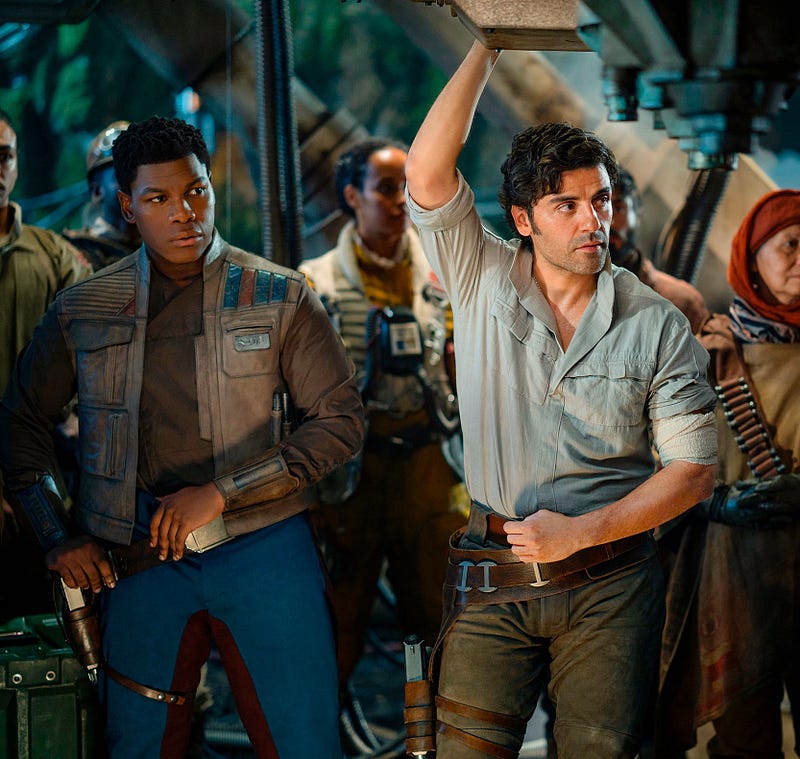
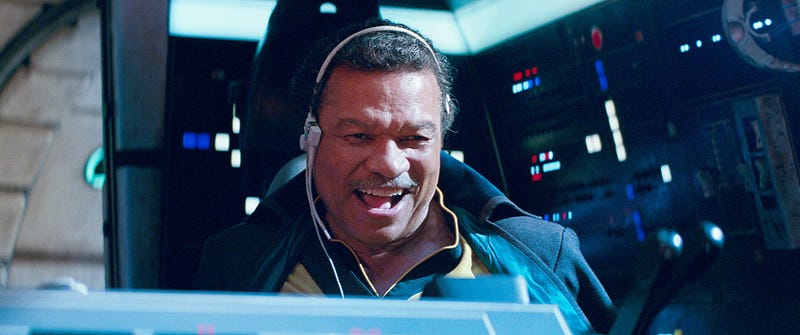
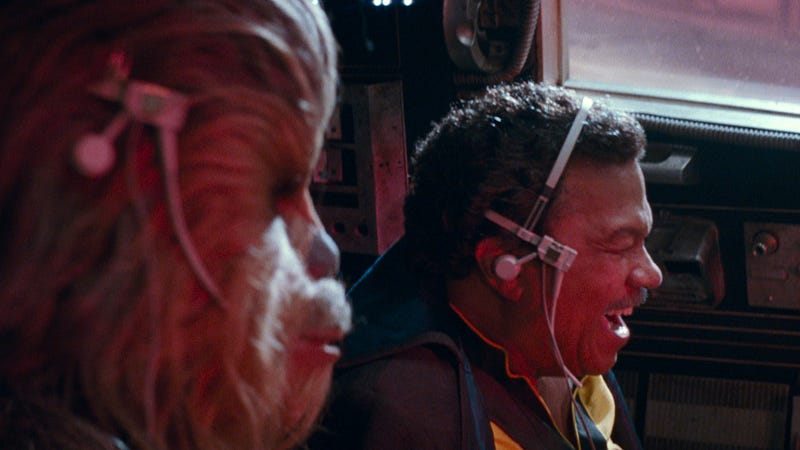
- The acting. The acting in Rise of Skywalker continues to vastly exceed much of that from the prequel and even the original trilogy. Daisy Ridley and Adam Driver are spellbinding and completely convincing as Rey and Kylo. John Boyega and especially Oscar Isaac dig into their roles deeply. Billy Dee Williams effortlessly slides back into his iconic role as Lando Calrissian (a character who has not been seen on screen since 1983’s The Return of the Jedi). And even the very small supporting roles are performed more than competently.
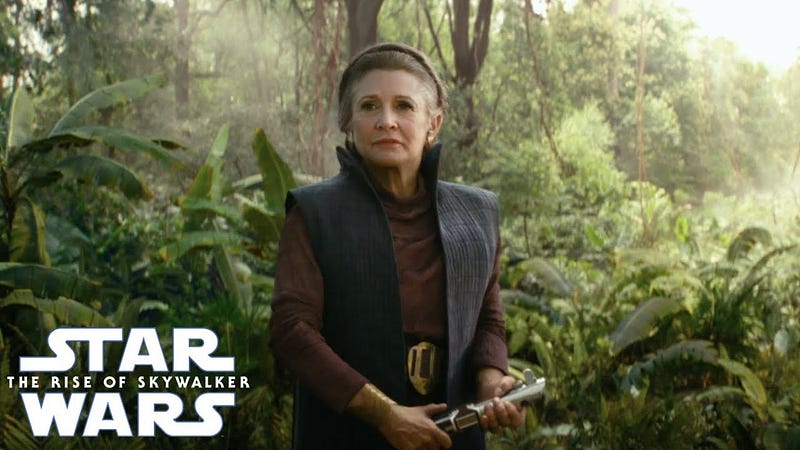
- General Leia Organa. One of the biggest question marks of the film was how they were going to resolve General Leia Organa’s arc given that her portrayer, Carrie Fisher, died before the film began production. Abrams ruled out recasting the character or recreating her via CGI and instead decided to repurpose cut footage from The Force Awakens to use in this film to cap her storyline. The result works far better than I expected. She is a presence through much of the film, the editing and effects are never distracting, and she has an end fitting to one of the most iconic characters in cinematic history.
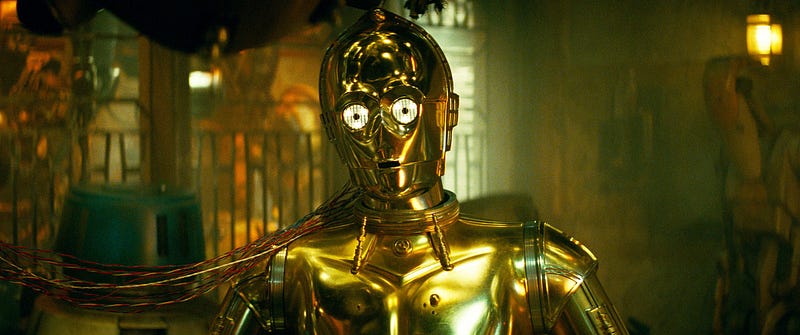
- The humor. Those who complained that The Last Jedi’s reliance on snarky humor didn’t quite fit in the Star Wars universe will be pleased by the return of a more subtle undercurrent of humor typical to the older films. The real MVP here is undoubtedly C3PO, the anxious protocol droid who has been portrayed by Anthony Daniels in all nine chapters. His character has never been better.
- The heart. There are numerous truly moving moments throughout the film that do not feel sappy or forced. For the sake of spoilers, I will not elaborate further.
- The visuals. The visual effects, sound design, art direction, and costumes are truly stellar. And that score by the legendary John Williams is as stirring as ever.
- The cameos. In addition to the return of Lando and Palpatine, both of which were revealed by Disney prior to the film’s release, there are several other minor characters from the prior films that pop up briefly. Some will roll their eyes at this device as mere fan service, but I thought it was handled cleverly and tastefully and was a definite highlight for me.
- The running time. I commend J.J. Abrams for resisting the urge of most other franchises to either break its final chapter into multiple parts (e.g., Harry Potter, Twilight) or make its final chapter breathtakingly long (e.g., Avengers: Endgame, Lord of the Rings: Return of the King). At a relatively crisp 2 hours and 20 minutes, the film doesn’t feel like a slog. However, the condensed run time does contribute substantially to some of the things that don’t work about the film.
- The wrap-up. Due to the risk of providing spoilers, I will not expound on this much. But suffice it to say that I had no major problems with how any of the plot threads, relationships, or character arcs wrapped up. I found them all to be fairly satisfying and true to the characters.
What doesn’t work in Episode IX
- The opening. The frenetically paced, jarringly edited opening act of the film is in sharp contrast with the subtler and more nuanced prologues of much of the rest of the films in the franchise. It sets a chaotic pace and confusing tone.
- The poorly explained return of Emperor Palpatine. As part of the above chaos, we are simply expected to just accept that Emperor Palpatine, who was memorably and decisively killed by Darth Vader at the climax of the original trilogy, was revived and has been pulling the strings ever since. No explanation is given beyond some sort of “unnatural” forces and “dark” magic resulting in his resurrection. I am all for suspension of disbelief in films such as this, but this is just lazy screenwriting.
- The overly convoluted plot twists. The unexplained return of Palpatine is not the only convoluted plot twist. There are numerous unlikely coincidences, curious plot holes, and overly convenient twists littered throughout the film. Although a solid argument can be made that too much exposition can bog down the narrative, the pendulum swung a bit too far in the other direction here.
- The lack of breathing room. With nearly a dozen central characters to provide satisfying ends for in addition to resolving the central conflict between the resistance and the empire, only a handful of scenes get to truly play out as thoroughly as they should. Several of the rest feel a bit truncated or cursory.
- The expanding Jedi powers. In nearly all science fiction, fantasy, and supernatural horror films there is the issue of how much to explain versus leave unexplained about the laws that govern the magic, advanced science, and mystical forces on display. Too much explanation and you reduce wonder and surprise, but too little explanation leads to confusion and disengagement. There are times when Rise of Skywalker faces the latter problem. The enhanced use of force projections (which became a central plot point in The Last Jedi) and the new ability to use the force to heal near-fatal wounds make the violent conflicts more confusing and lower-stakes — as does the apparent ability to use “unnatural” forces to revive the dead.
Summary: The minority who vehemently entered the debate over The Last Jedi (either pro- or anti-) are unlikely to be deeply satisfied by the film. Similarly, those critics and film enthusiasts looking for a structurally and narratively flawless film are unlikely to be won over. But for the more casual Star Wars fans and the more open-minded, even-handed filmgoers, the film provides a heartfelt, humorous, thrilling, and mostly satisfying conclusion to what is arguably the major American cinematic saga of the past century. And it does so against tremendous odds.
So, don’t get discouraged by the reviews. Go see it for yourself.
Rating for Star Wars Episode IX: The Rise of Skywalker: 4/5 stars
Follow the author on Medium and Twitter.
Click here to read my review of the new Star Wars attractions at Disneyland.


