Report: Brazil’s & Russia’s Fertilizer Diplomacy Is A Critical Shift For Emerging Markets & Geopolitical Trends
The ongoing effects from the Black Sea Grain Initiative in international politics have raised the issues on global food security throughout the developing world. The issues of concern here have been thoroughly analyzed and covered due to the devestating impacts to food security brought on by Russia’s invasion of Ukraine.
Ukraine is an important agricultural producer and exporter of grain and wheat to countries throughout Africa and the Middle East regions. Russia, on the other hand, is a very important fertilzer producer and exporter for which it has been using as political leverage over the Black Sea Grain Deal. This has given birth to a new concept in international affairs called “fertilizer diplomacy.”
I think Defensive Realism theory as a case study of Middle Eastern diplomacy has been analyzed very well, and so I wanted to relate my own report about the theory to an important global commodity in contemporary international affairs: fertilizer.
Introduction to Fertilizer Diplomacy Concept
On May 3, 2022, Brazil announced that the government was taking a trip to North Africa for the purpose of engaging Jordan, Egypt and Morocco for “Fertilizer Diplomacy.”
This diplomatic engagement underscores the issues that Brazil is facing in securing fertilizer imports in the aftermath of Russia’s invasion of Ukraine.
Moreover, because Russia is one of the world’s largest fertilizer exporters, Brazil has doubled down on its efforts to implement a new fertilizer strategy, which was unveiled by President Bolsarno in early 2022.
Brazil’s National Fertilizer Plan even proposes to mine potash from underground reserves in the Amazon Rainforest which has caused an uproar from the environmetal protection advocates and indigenous communities there.
This concept has reshaped the whole narrative of the global fertilizer industry. It implies that the fertilizer markets have become susceptible to geopolitical trends. Perhaps because the world is facing an unprecendented food crisis, but mainly because of renewed conflict over geo-politics and military strategy, as evidenced by Russia and Belarus — Belarus is one of the world’s largest potash producers — and how the countries have used their influence over fertilizer supply to increase political leverage.
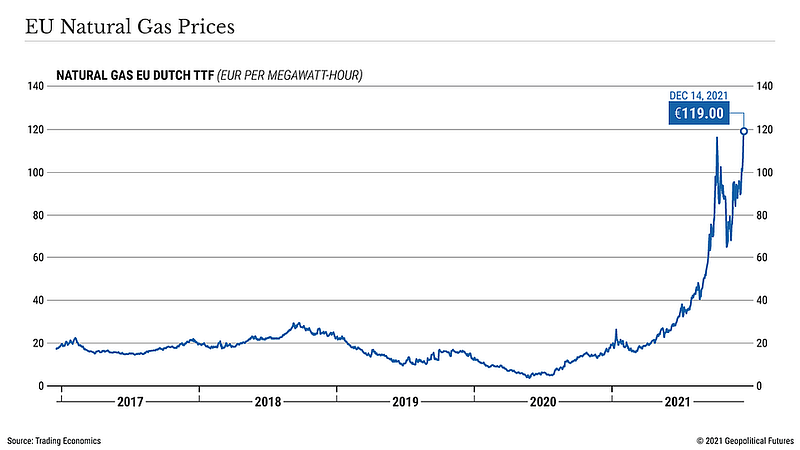
In fact, the concept of fertilizer diplomacy originated around the time that Russia began initiating countermeasures against Europe for the Nord Stream 2 pipeline. This occurred under the backdrop of extremely high natural gas prices due to the Covid-19 pandemic, hitting the European Union (EU) market extremely hard.
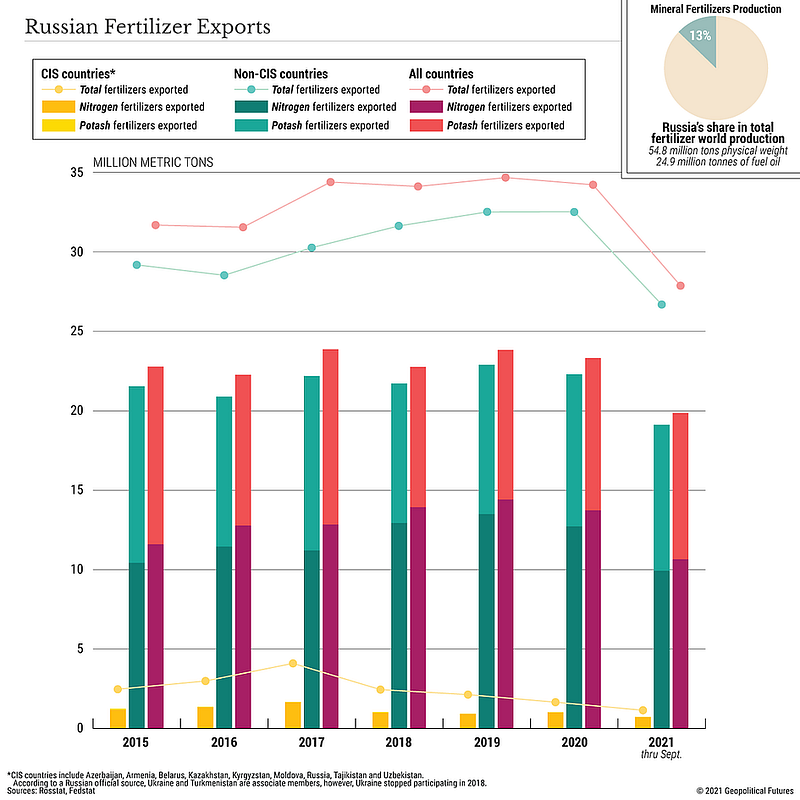
But in 2020, analysts claim that Russia’s fertilizer production of mineral fertilizers grew at a rate of 5% hitting approximately 54.8 million tons. By comparison, the world average grew at arond 2% in 2020.
The truth is that this fertilizer diplomacy seems to be unraveling during the worst times of this century — global pandemic, food crisis, inflation — while also the Russia’s invasion of Ukraine has caused severe changes to commodities markets and other aspects of the global economy.
No wonder the governments of the world are already conceptualizing critical global commodities as way to engage in diplomacy. This adds a geopolitical risk factor to any country’s supply and production targets. As the dimensions of political leverage grow in a country’s favor, they would continue to use fertilizer as a way to influence important political decisions.
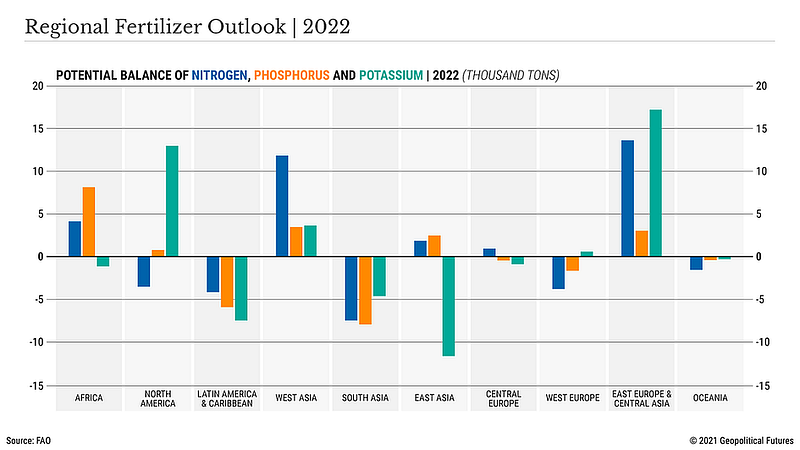
On the other hand, when fertilizer prices subside, fertilizer diplomacy could contribute to the health of global economic recovery and help alleviate the global food crisis. A case in point is North and Sub-Saharan Africa. Morocco, one of the world’s leading producers and suppliers of phosphate fertilizers, seeks to lead the way in combatting food insecurity as Africa’s main fertilizer supplier to increase agricultural productivity. If realized, this would be a major boon to Africa’s growth and development.
How Defensive Realism Relates to Brazil and Russia
Defensive Realism is a theory of International Relations (IR) that belongs to the school of Neorealism, or Structural Realism, which says that the structural principles of the international system consist of an international order of anarchy, and thereby countries must seek to maintain their overall security while expanding on the distribution of capabilities vis-a-vis other countries in the international system. (See link in paragraph).
According to this theory, Steven E. Lobell explains that countries in the international system must seek to attain security by means of moderate and and reserved policies in order to avoid resorting to means of domination and hegemony to attain security.
Factors such as geography and rivalries (sometimes historical ones) tend to play a bigger role in this school of thought.
That’s why I believe it is the perfect way to understand Brazil’s fertilizer diplomacy. The act of touring through the Middle East and North Africa (MENA) is based around the whole geographical region; on the other hand, by ensuring fertilizer supply from many countries in MENA, this ensures Brazil that it will be dealing with similiar cultures and geographical constraints when working with producers and suppliers.
These are going to be key elements for judging the effectiveness of fertilizer production and supply. Therefore, using the IR theory of Defensive Realism allows for a framework when at looking at global commodities: in this case, Brazil, and the country’s fertilizer strategy.
FShow is a Shanghai-based source for the global fertilizer industry, with their publication Fertilizer View, for which the organization has studied the impact of Brazil’s record-breaking planting season from 2021–22. The projections have estimated that Brazil’s production of soybeans, corn, cotton, rice and beans — amounting to approximately 289.6 million tons — would account for 95% of its overall grain production from 2021–22.
This means that despite the global fertilizer supply shock due to higher commodity prices and fertilizer shortages, Brazil will continue to rely on imports of fertilizer from sources around the world. It is therefore a classic example of defensive realism, and why Brazil must maintain friendly relations (i.e. moderate and reserved policies) with Russia, even as the United States and European Union, including others, intend to ostracize Vladimir Putin’s regime for Russia’s invasion of Ukraine.
Russia Will Continue To Push Fertilizer Diplomacy on Emerging Markets
In July 2022, Russian Foreign Minister Sergei Lavrov began the African Tour. This tour coincided with visits from French President Emmanuel Macron and U.S. Special Envoy for the Horn of Africa Mike Hammer to the MENA region.
This event is relevant to this analysis about Brazil’s fertilizer diplomacy in MENA, as many analysts claim that the main purpose of Lavrov’s tour this year revolve around Russia’s security guarantees of food and fertilizer supplies to MENA. But it was also a way for Russia to raise support from those countries in light of increased sanctions from the United States and European Union. For instance, Lavrov ended the tour in Ethiopia where he defended the host country’s handling of the Tigray conflict since November 2020.
Lavrov even made a statement on the current situation in world affairs to insult the United States’ and European Union’s efforts in MENA:
“I am sure the overwhelming majority of world countries do not want to live as if the colonial times [have] come back.”
The votes in the United Nations General Assembly (UNDA) resolution on the war in Ukraine reflected this setiment, as half of all abstentions on the resolution came from African countries. However, BBC points out that while the United States and France have each offered their own aid packages to combat food security in Africa, Russia has offered nothing to those countries in support of alleviating food insecurity issues in the region.
The volatility in global commodities markets and fertilizer diplomacy will surely exacerbate the situation between Russia and Ukraine — witness the Black Sea Grain Initiative — as the world is likely to deepen its dependence on the two countries for grain and fertilizers in the future.
Final Thoughts
In conclusion, it is clear from these most recent events that the MENA region is becoming a diplomatic showdown area between the United States and European Union on one side, and Russia on the other side.
Defensive realism would point out that the 17 absentee votes on the UNGA resolution from African countries signaled an opportunity for those countries to ensure secure supplies of Russian commodities while also benefiting from the aid packages offered by the United States and France.
These are the kind of moderate and reserved policies these countries must maintain to attain security and facilitate economic trade to their benefit. They also cannot ignore the reality that Russia’s invasion of Ukraine is a way for Russia to seek hegemony and domination in the international system, which they must avoid to attain their own security.
Here are my questions about the case going forward:
- Are African countries more likely to seek favorable relations with the United States or Russia in the future?
- What role will other state actors like the People’s Republic of China (PRC) play in Brazil’s fertilizer diplomacy?
I’m not going to pretend like I have the answers to these questions right now. But I will be pondering them. What do you think?
Have a specific topic or case about international affairs in mind? Private message me at Monroe 4PEACE and we can talk about covering it in the publication.
For more content on geopolitical trends and global commodities, follow the publication Areas & Producers.