
Replacing the Forest with Trees
We are the trees, and the forest is virtual
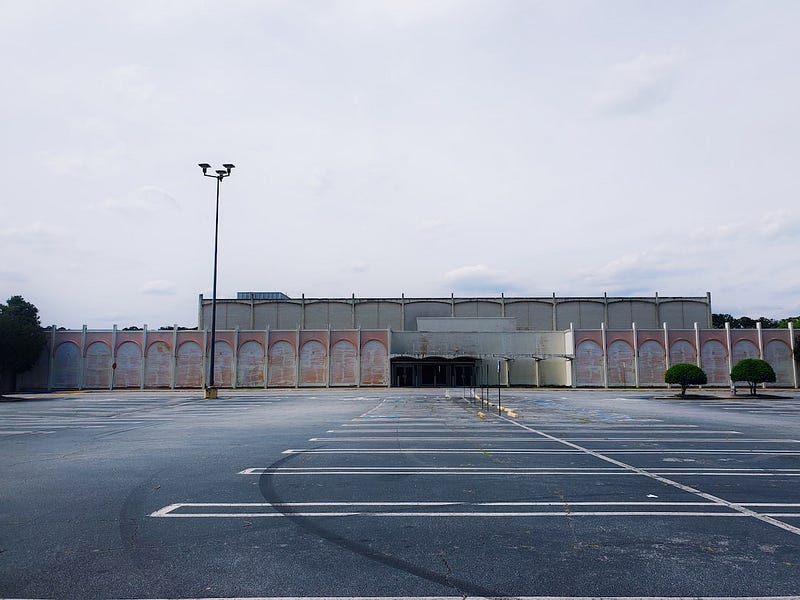
Listening to a discussion of events in 2023, it struck me that we are missing a fundamental change. It is something we deal with every day, usually as a concern.
We tend to deal with changes as individual objects, even when related to other changes. But even worse, we insist on thinking there is such a thing as normal that will, somehow, return.
Normal is more vital for some than others. For some, it is a deadly attractant that pulls people into self-destruction. This is the underlying force of what we identify as fascist movements from their 19th and 20th-century forms tied to racism/ethnocentrism, sexism, militarism, and corporatism.
Fascism is a pathological vision of society that is considered normal but lost. That loss is always due to others who can never be part of normal society. Because it must be recovered, authoritarian rule must be imposed and maintained to prevent any future changes not desired by the true population.
The logical failure of this pathology is that the true and normal society is not stable. It is always at risk of being lost, so rigid controls are essential. Change is constant, so this is a continuous threat to the various segments of society suffering status anxiety.
Fascism is an extreme case of a natural reaction to rapid or violent change that is accelerating. The most potent threats are population changes, social hierarchy shifts, and gender and sex role changes that are perceived as fundamental definers of society but are relatively superficial, affecting only a minority.
The problem with normal is that it does not exist, and change does not stop. That requires us to consider the implications and processes leading to broader changes. People do not do well with this, and that opens the door for opportunists who create wild threats to exploit those who are socially insecure.
Because of human simplicity and weaknesses in traditional education, many people have no idea how to consider complex societal changes.
We have difficulty dealing with geometric progression and multiple change layers. Without entering the tall grass of philosophy and linguistics, the third and fourth levels of change are not always initially apparent but have more significant long-term implications.
We are now hitting those deeper economic and social change levels, causing unanticipated disruption as we face converging disasters. This is also a significant factor in our population and institutional structures’ inability to recognize imminent collapse, although millions sense the sentinel tremors. Let’s look at one critical aspect of this.
This may be obvious already, but we have been steadily moving away from brick-and-mortar facilities to use the e-commerce term from early in the 21st century. That was the movement away from retail malls, many of which are now abandoned, to combined virtual and big box outlets.
That has reached the point that people must work to support local merchants. But this is an accelerating change transforming human society and will replace almost everything whether we like it or not.
This has been obvious from the end of the 20th century, but how it would happen was obscure. Having been involved in the development of e-commerce since 1995, I have struggled to anticipate and time the changes based on human reactions.
What was evident by 1998 was that it took twenty years to reach retail dominance today. Along with their more sophisticated Chinese versions, Amazon and Walmart now control retail.
Normal is very sticky for all people. We like normal and need clear reasons to make fundamental changes. Some of the implications of this change were hyped in the early years of e-commerce promotion, leading to the dot.com bust of 2000.
The capitalist boom-bust cycle tends to confuse longer-term evolution, leading people to thoughtlessly ride along with whatever happens. Change continues, but people stop thinking about it.
Pandemics are change catalysts, but unhappy ones that amplify the desire for a return to normal. Ignoring the deeper levels of structural change adds to the confusion we now see exacerbated by the climate disaster hyperobject.
The implications of virtual reality are very different from our human experience to date. While they allowed effective pandemic lockdowns with something like regular human activity in business, commerce, health, and education, they are different. We have begun to learn that reluctantly.
Human dyadic thinking has been too simple for human life for several centuries. The entanglement of hyperobject problems at a planetary level resulting from the unplanned attempts at infinite growth produced fantastic technology that has created a deadly reality beyond our ability to grasp.
There is a gap between those who recognize the reality of planetary overshoot and those who insist that we live in a world that is still recognizably ‘normal’ when it has already transformed into something we never anticipated. To use a popular analogy, we have fooled around and are finding out what that means.
Some examples of layered change that will disrupt many things in 2024:
Separating activity from physical facilities
We are sorting through our institutional services and discovering that many do not need physical facilities. This is not a choice but a new reality.
The complex transportation infrastructures killing us can best be described as an attitude problem, attempting to save antique hierarchies. Much of what we call management is supervising costly physical facilities that will disappear in coastal areas.

There will always be a need for common areas for group activities. The commons is how this must evolve. Retail has led the way, with empty stores used as pop-up seasonal retailing, professional service centers, and for education.
Common facilities fully integrated with virtual reality technology do not need to be owned by merchants or professional service providers. We need to stop thinking that way. These are simply examples of what is happening, but most people see this as marginal or temporary when it is a new reality.
Most of what we call work is virtual
This new reality will become essential rather than optional. Physical facilities need to be owned and maintained for regional populations as both those populations and their service needs change.
The confusion over ‘remote’ work results from failing to understand that communication procedures and transparency are more important in a virtual world than a herd of managers. This is an expensive lesson that must be learned quickly.
Maintaining the old hierarchical workforce will become more complex as climate disasters destroy physical infrastructure and populations become migratory. Digital infrastructure is much more resilient and easier to replace.
We already have workforce problems with the reduced working population in wealthier countries. This problem of an aging population will need to be used from wherever they are.
Another brutal reality is that the dying has already begun. A sustainable population is closer to three billion than eight billion.
Even accepting unrealistic optimism about our ability to mitigate this sixth great extinction means severely reducing and making more efficient those activities that will be maintained.
Education and entertainment are closely related
The expansion of virtual reality and AI has made both on-demand services. Both are also disconnecting from physical facilities.
We are already seeing the demise of movie theaters struggling to recover from the pandemic. Box office receipts are up, which is loudly promoted as a return to normal.
Looking carefully, you will see that the box office receipts are nothing like the old world of 2018.
Television was supposed to kill the movie theater in the early 1950s, but it took two levels of change and a pandemic to make this happen. We thought sound and giant screens were critical, but the reality is fully individualized entertainment.
People love large events, but those are increasingly dangerous for multiple reasons. Concerts are becoming massively digital in shared facilities. This will become more realistically virtual but, in person, more special.
Education has been challenging because all education was modeled on neighborhood schoolhouses. Current confusion has resulted from failing to distinguish childhood education from adult education, with the first turning into homeschooling. Early child care is a specialized need distinct from education and has nothing to do with adult education.
With Generative AI, adult education, starting with what are now middle school students, is becoming both virtual and fully personalized. This merges assessment with the educational process monitored by AI.
Group activities are already migrating to the same emptying malls with community colleges providing on-demand facilities as community commons.
All of the examples above are happening now, but they are being seen as either temporary or as ‘problems’ to be solved by a return to the old normal. I see this as an attitude problem.
We insist on seeing things through a historical lens as we attempt to duplicate what existed physically. The virtual world is much easier and will be critical as our current civilization disintegrates in the face of intermingled climate and institutional disasters.
We have only five or ten years, at the most, to correct this attitude problem and remove the barriers to the new reality. We must work with our reality and use it to save the things that need saving and abandon the things that will disappear anyway.
2024 is the year that needs to be the baseline for the new human reality.
Originally published at https://rlandok.substack.com.