
Reopening Schools Will Turn Our Children Into Lab Rats
Our kids will be the unwitting participants in the largest government study in US history.
Introduction
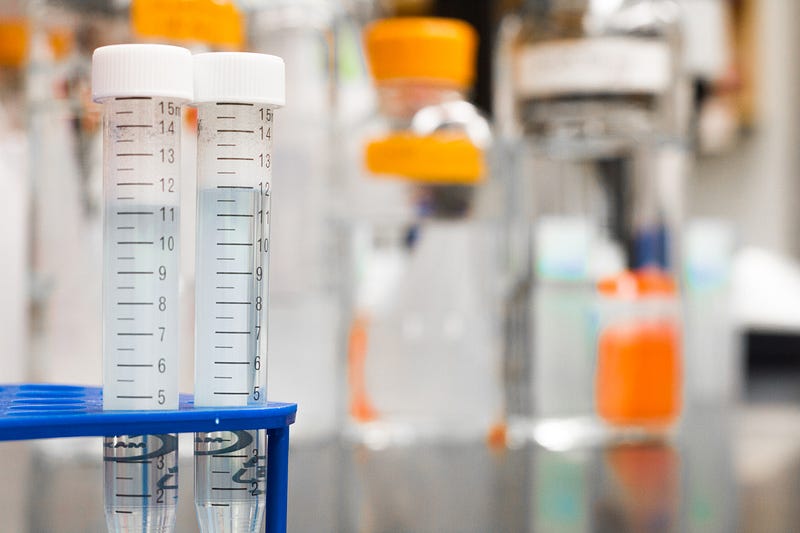
This fall, millions of school children across the country will be the unwitting, and probably unwilling, participants in the largest government health study in the history of the United States.
Over the past few weeks, the stories of how to reopen schools, if they even do open, has been dominating the headlines across all major media outlets.
And for good reason, too.
The total number of children in grades 1–12 is over 56 million, most of whom have been cooped up at home since the spring lockdown. And while states have been gradually reopening their economies over the summer with varying levels of success, apparently no one thought to plan ahead for the time when 17% of the entire US population will congregate on known locations at the same time.
What will be the impact on sending kids back to school?
No one knows.
It will take sending our kids back to school to actually find out.
Much of [the data] was generated at a time when children were caught up in the topsy-turvy world of Covid-19 transmission suppression, with schools closed and families cocooned, limiting their chances of catching or spreading the SARS-CoV-2 virus. In reality, it may take reopening schools and returning children to a closer-to-normal life for the picture to come into clearer focus. (emphasis added)
Well, the school year is fast approaching and parents can’t wait forever for answers.
While combing through the information (sparse and hidden as it is), my wife and I concluded that reopening schools for in-person classes will be a public health disaster.
There are three key areas that will define the impact of COVID on our kids once school starts.
- Infection Rate
- Severity of Infection
- Transmission Rate
Infection Rate
In what is probably the most advertised piece of information regarding the coronavirus, infection rates among children are much lower than adults. However, there are some problems with the data. From the CDC,
As of April 2, 2020, data on 149,760 laboratory-confirmed U.S. COVID-19 cases were available for analysis. Among 149,082 (99.6%) cases for which patient age was known, 2,572 (1.7%) occurred in children aged <18 years…
That seems straightforward, but is it? This widely touted stat is from way back in early April, immediately following the lost month of March. Incorrect information from the same timeframe included guidance that face masks were optional and only symptomatic people could spread the virus.
Plus, there was the almost laser focus on testing adults, as schools had started shutting down throughout March.
So, let’s look at some other data. From a recent article in Vox from an epidemiologist who is also a dad, we find this paragraph.
First, when we look at public health reporting, children under the age of 18 make up only 2 percent of cases in the US, even though they represent 22 percent of the total population.
Similar studies in Chicago and Massachusetts found that children make up fewer Covid-19 cases than expected, as have studies in Italy, South Korea, and Iceland. For me, that is a lot of similar results for this to be a fluke.
When one study in one location produces a finding, it is notable. When five studies from five different settings find the same thing, it is compelling.
Let’s break that down.
First, the “public health reporting” is the same CDC information I addressed above, along with the associated issues in the data.
Second, there are some issues with the studies cited.
Chicago
The initial testing showed that only 1% of COVID cases (64 out of 6,369) were children (0–17 years), with no deaths.
The issue is that the study used data from very early on: March 5 — April 8. Data as of July 14 shows that 5.1% of COVID cases (2,813 out of 55,567) were children, with 2 deaths.
While the death rate is still extremely low, the infection rate has climbed sharply.
Massachusetts
The data being used is from April 8, showing that 2.2% of COVID cases (363 out of 16,788) were children. Cumulative deaths by age group were not reported.
However, data as of July 14 shows that 5.5% of COVID cases (6,193 out of 111,858) were children, with 0 deaths.
Just like Chicago, the infection rate has sharply increased, with a fortunate lack of increase in the death rate.
South Korea
This study showed that South Korea only had a combined 6.2% infection rate in ages 0–19, with a 0% fatality rate.
There are a couple of key issues with using this data.
- Mass testing
South Korea introduced a testing rate per capita that was the envy of the world when the coronavirus hit.
“In mid-January, our health authorities quickly conferred with the research institutions here [to develop a test],” Kang said. “And then they shared that result with the pharmaceutical companies, who then produced the reagent [chemical] and the equipment needed for the testing.”
This is almost impossible in the United States for several reasons, one of which is that the reagent used for testing is critically low. The lack of federal leadership has robbed states of the ability to deploy similar testing procedures as Korea.
- Technology
Korea applied its technological expertise to its coronavirus response, and it was a resounding success. For example,
To stem the potential spread domestically, airport officials required all passengers arriving from overseas to download an app that tracks their whereabouts and keeps tabs on their health. The users get a text message at 10 a.m. every day for 14 days, with a reminder to input their health condition. The data is relayed to health officials who also call to check on the people.
I can’t imagine this happening in the Unites States, where even face mask mandates are seen as a violation of personal freedom.
Italy
This study showed absolutely no infections in children, even when closely exposed.
No infections were detected in…234 tested children ranging from 0 to 10 years, despite some of them living in the same household as infected people.
There are several problems with this study, most notably that this research did not take place in the entire country of Italy. It took place in the very small town of Vo’, Italy: population 3,416. It would be a stretch to extrapolate what happened in in this municipality to a population 100,000 times as large.
Vo’ also took advantage of an unprecedented lockdown.
…one of the most iron-clad sanitary cordons in Italy’s history was built around [Vo’]: no one could enter or leave the town, and goods (only medicines and food) could only reach Vo’ if authorised by the Prefetto (central government representative in Padua).
Finally, absolutely everyone in Vo’ was tested, leaving nothing to chance. Easy to do for less than 4,000 people. Hard to do for 328 million.
Iceland
…in the population screening, no child under 10 years of age had a positive result, as compared with 0.8% of those 10 years of age or older.
Similar to the issues with the South Korea study, Iceland is a small country that was implemented a wide range efforts to combat COVID, including barring almost all foreign travel, isolating returning travelers, sometimes daily phone calls from medical professionals, and massive testing.
None of these are in effect in the United States.
In short, the five studies cited all occurred either very early on, when testing was focused on adults, or in areas that executed extraordinary containment measures, well beyond what the United States is or has been going.
Severity of Infection
The other highly advertised number is that children get nowhere near as sick as adults, especially older adults.
From the same Vox article,
In one analysis of more than 550 confirmed cases among children under age 18 in China, Italy, and Spain, only nine people (1.6 percent) had severe or critical disease. In another study, approximately 5 percent (one out of 20) developed symptoms that required hospitalization, but only 0.6 percent required intensive care. In comparison, a recent Centers for Disease Control and Prevention report indicates that among those ages 60 to 69 who have the coronavirus, 22 percent require hospitalization and 4 percent require intensive care.
Let’s accept these number and do the math on this.
Assume 56 million children return to school, and 5% get infected (given the data from Chicago and Massachusetts, which is much better than my home state of Indiana’s 7.7% as of July 15).
That is 2,800,000 infected children.
Assume again that the hospitalization rate is 5% and 0.6% into intensive care, and you get 140,000 children admitted to the hospital, and 16,800 children in the ICU.
And school starts all at once. Millions of children will go from basically sheltering at home since March to filling the school hallways across the entire country over the course of four weeks in August/September. With the delay between initial infection and the onset of symptoms, that means these hospital admissions and ICU escalations will happen in a very short period starting in late September/early October.
Given that there are 3,480,000 confirmed cases in the United States (as of July 15), these are horrifying numbers.
The true disaster is that these children’s hospital admissions are estimated to occur right at the beginning of flu season and the second wave of COVID infections for the rest of the population.
Transmission Rate
This might be the biggest piece of data that we don’t have. There has been an almost complete lack of testing on US children for transmission, both to more susceptible adults and other children.
All we have to go on are some studies from across world.
In one study from China,
Of the 31 household transmission clusters that were identified, 9.7% (3/31) were identified as having a pediatric index case.
That’s not horrible, but again, let’s do the math.
Using the assumed 2,800,000 infected children from above. For the sake of argument, let’s also assume that 20% of those children live in the same household, giving us 2,240,000 households with at least one infected child.
At a 9.7% index case rate, that gives us 217,280 households infected due to an infected child. Then the parents could infect others, and so on and so forth.
A Swiss study researched how households transmit the virus among family members. With households of 4 family members, “in only 8% (3/39) of households did the study child develop symptoms before any other [household member].”
But again, this was from March 10 through April 10, when schools were basically shut down.
Using some common sense, we realize that, while it is different, SARS-CoV-2 is still, at its heart, a respiratory virus.
“I do not see any strong biological or epidemiological reason to believe that children don’t get as infected,” says Gary Wong, a researcher in paediatric respiratory medicine at the Chinese University of Hong Kong. “As long as there is community transmission in the adult population, reopening of schools will likely facilitate transmission, as respiratory viruses are known to circulate in schools and day cares.”
On the opposite side of this is another study out of China of children hospitalized with COVID-19. While researchers found no transmissions from children to adults, the study size was only 34 patients.
“Family cluster transmission was found to be common in our pediatric patients. There have been few reports of the infection dynamics from pediatric patients to their caregivers, although transmission from adults to children has been identified with confirmed evidence,” the authors write. “However, no evidence was shown regarding the transmission route from pediatric patients to their caregivers and close-contact family members.”
And in another study, this time from France, a nine-year old attended three school and a skiing class, all the while being symptomatic. However, no one exposed to the child was infected.
It would be almost unheard of for an adult to be exposed to that many people and not infect anyone else.
Conclusion
Data that gives any sort of understandable information is scattered at best, and conclusive data is almost non-existent.
No one really knows if/how children get infected and transmit the virus.
But teasing out whether kids are as likely to catch the virus and spread it has been exceedingly difficult at a time when children are spending far less time mixing with others than they normally do.
“There is a huge puzzle over the dynamics in kids and what happens with kids,” said Nick Davies, an epidemiologist and mathematical modeler at the London School of Hygiene and Tropical Medicine.
“We don’t really have that one great database, piece of evidence, or experiment that has really settled this question,” he said.
And that is why schools are going to be huge laboratories for government scientists come the fall. Epidemiologists and other research scientists need the data, but at what cost?
In a recent NPR article, Dr. Aaron Carroll from Indiana University School of Medicine had this to say.
“Kids don’t seem to be super spreaders,”
“Schools will now be the experiment,” Carroll says. “We’re going to see a bunch of schools open with varying levels of control, and then we will see what happens.”
- How many students will get infected before the scientific community concludes that schools reopening is a bad idea?
- Once that happens, how much longer will it take for school boards to concur?
The risk is higher than is being advertised, and I fear that too many students will bear the brunt before a decision is made.
Related Articles
- The Impossible Decision Facing Parents When Schools Reopen
- Reopening Schools Might Actually Save Lives
I hope you liked the article. If you’re interested in staying up to date with the my latest stuff, click here to join my e-mail list.


