
Remembering Might Teach Us More Than Seeking
A romp through a mystically reflective afternoon with my bookcase
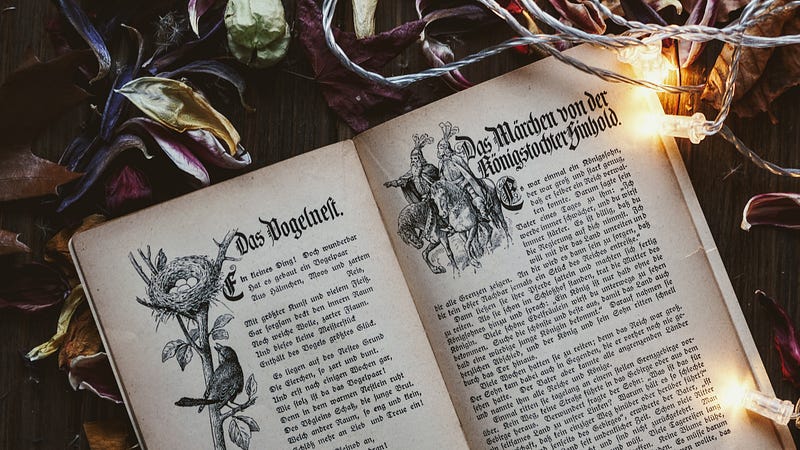
It’s an October afternoon as I gaze along my bookshelves. Sunbeams highlight the dust, but that’s okay. That’s why most books have dust jackets. We understand these jackets protect the books and aren’t the books themselves. I take the idea further, realizing that books aren’t valuable. It is their content that makes them worthwhile.
Musing as I often do, I consider myself like a book that wears a dust jacket. My persona is the cover, and my body is the book. My wisdom, then, lies somewhere within. It’s not seeable in a tangible sense. Yet, it exists all the same. How might I get to it, I ponder?
If you’re on a spiritual learning path like me, you probably have the impulse to grow. You want to learn more, and the urge to gobble up spiritual wisdom is significant. But what if the best way, or even the only way, to truly learn mystical understanding is by uncovering your sage-like self rather than gathering insights?
Gazing at the books, I think about the sum of the wisdom, the combined sage-like offering I’d glean if I put all of the gems from each volume into one mass of insights.
How interesting, I think. My idea may be likened to the notion that all consciousness stems from one primary source to which it returns when the body dies. Like a book, one day, my dust jacket will be of no use on the shelf anymore because the book part of me will crumble. So, where does the wisdom in the book go when I, as a physical being, stop living? Further, how can I tap into my innate wisdom while alive?
Spiritual seekers, by their nature, pursue new knowledge to increase their metaphorical girth. They might study philosophy, find suitable role models, and gather knowledge in other ways. Whether they attend classes on chakras, meditate, or chant, they wish to expand their spiritual breadth.
The knowledge I seek from books won’t come from owning them. They’ve sat in my bookcase, some plump, some skinny, and a few have imparted knowledge. Their size, the beauty of their covers, or the attractive typecase of words used does not influence whether I soak up insights from their pages.
Instead, some mystical process we take for granted has occasionally occurred whereby the knowledge in me has resonated with the knowledge inside the books. To glean wisdom, spiritual or otherwise, we must comprehend insights. If we don’t, they are only printed words on pages. Rather than spark ah-ha moments, lighting up our brains, they lay dormant.
The mystical book of Hermetic knowledge, “ The Kybalion,” reminds us, “The lips of wisdom are closed, except to the ears of understanding.” This message tells us that only the readers who are ready and capable of learning from knowledge can do so. The use of the word “understanding” implies a level of ability. My experience with such understanding stems from unearthing inner knowing ignited by outside information.
Could it be that, as spiritual explorers, we’re stripping back layers of forgetfulness until we reveal the wisdom we seek?
Running over book spines, my fingers pause on “The Man Who Mistook His Wife For A Hat” by Oliver Sacks. Then, they rest on “The Field” by Lynne McTaggart. The former deals with fantastic true tales regarding the persona and maladies of the brain, and the latter deals with how we understand the universe, endorsing the energy field that underlies every exchange, including healing and knowledge.
McTaggart can help us recognize that we are energy beings and spiritual by nature, residing in a web of energy. At the same time, Sacks reminds us that we also live in a world of matter and are resigned to the influence of the physical self.
It’s possible that spiritual lessons don’t stem from gathering wisdom. Rather, they arise from exploring triggers that help us remember what we already know. Books, classes, and teachers are tools we use to chip away at layers of forgetfulness until we uncover something sage-like within.
“Bridget. Dinner’s ready.” The smell of delicious food wafts upstairs, and I tell my husband, “I’ll be there in a tick.”
“Put those books down. Whatever you’re looking for will still be there after dinner.”
I sigh. And so it will. Most likely, somewhere inside, waiting for a spark of acknowledgment.