Remembering Gene Roddenberry’s Social Legacy on Star Trek Day
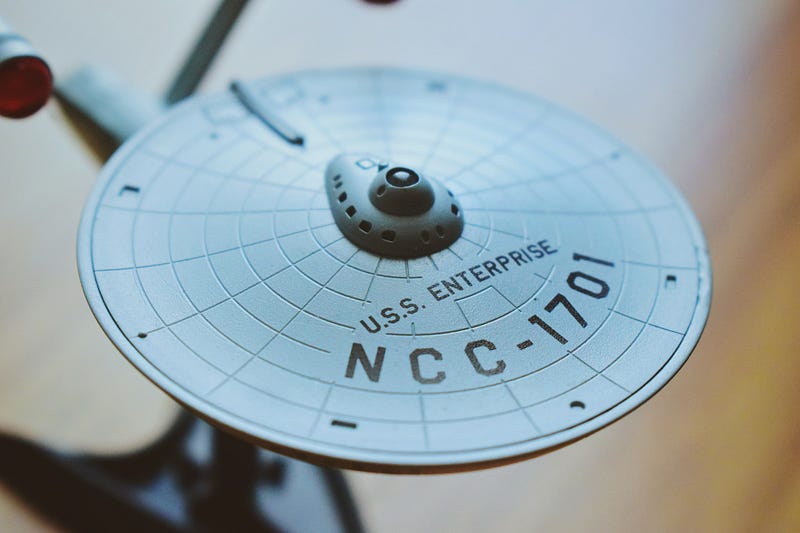
On September 8, 1966, Star Trek debuted on television. On this day, Gene Roddenberry introduced audiences to a world that stealthily championed diversity, tolerance, and hope while pushing a lot of flashy futuristic technology. It seems all we have really embraced is the technological advances postulated by the series. We have not really embraced the social advances Star Trek predicted.
Star Trek, the original series that ran for only three seasons, from 1966 to 1969 was groundbreaking despite its short run. Yet, it has had an undisputed impact on the modern American zeitgeist. Series creator Gene Roddenberry is one of the visionary thinkers of our time.
At the time the series was canceled, few could have guessed how broadly and deeply the series would penetrate our culture. It is one of the legacies of a time when we had ubiquitous visions being pumped into our living rooms by the Big Three television networks. Despite the original series’ short run, plenty of Star Trek has found its way into our technological world.
Without a doubt, engineers cite the show as inspiration for their ideas, celebrating its ability to show them what was possible. However, there was more in the television series that should have made it into America’s idea commons. The greater social legacy of the series is largely unfulfilled and ignored in the post-9/11 era.
There have been many books and TV episodes dedicated to tracking the origins of gadget after gadget to a particular Roddenberry-inspired device. The idea that a ready chess opponent could be so easily at hand seemed like a dream to a young chess player like me who had problems finding opponents. Today it is just a basic function of smartphones, themselves the descendants of Star Trek communicators. Touch interfaces and tablet computers were often present on the bridge of the Enterprise.
While there was a time it seemed almost unbelievable that a crew member could simply say, “Computer,” followed by a question, natural language interfaces are a reality with Siri, Alexa, and ChatGPT now part of mainstream life. Star Trek’s technological legacy has been documented in detail and significantly fulfilled. Many of the social messages have been forgotten or ignored, though.
Socially the series was just as far advanced as it was technically. Martin Luther King Jr. actually implored Nichelle Nichols to stay on the show when she told him that she was planning to abandon the Uhuru role. King convinced her of the import of a black woman playing a prominent character worthy of respect. He recognized the powerful statements being made by Star Trek.
A particularly poignant episode, “Let That Be Your Last Battlefield,” portrays the last two members of an alien race who are consumed by their hatred. Costuming each character half-black on one side and half-white on the other proved powerful. When they explain the difference between themselves is the color of their skin on the right side versus the left. The ignorance of racism seems so clear in that moment of dialogue.
Much of this social legacy is what is unfulfilled today, and yet that was what was so great about the series. The whiz-bang tech stuff was fantastic, but by setting things far in the future, Roddenberry could tackle difficult social issues from an objective distance, and he did so with a phaser-like focus. There was a Russian on the bridge of the Enterprise during the height of the Cold War. Would there be a Muslim there today, or are we just too full of negative emotions to include a follower of Islam on the bridge?
Star Trek imagined a future devolution of nationalism. A future united planet Earth was simply an outgrowth of peaceful social evolution. Indeed, what seemed more like fantasy was continued conflict, such as the escalating violence of world wars. The show even derided nuclear weapons, such as in the second season’s finale, “Assignment: Earth,” whose time-traveling plot to the 20th century involves preventing an accidental nuclear exchange between the superpowers.
Earth joining a United Federation of Planets, as it had on the show, was just a logical extension of the United Nations. A united planetary federation was where we thought in the 1960s that America was leading the globe and eventually the universe. In the 23rd-century setting of the original series, war had largely been abolished, save for the occasional interstellar skirmish. Peace reigned on Earth.
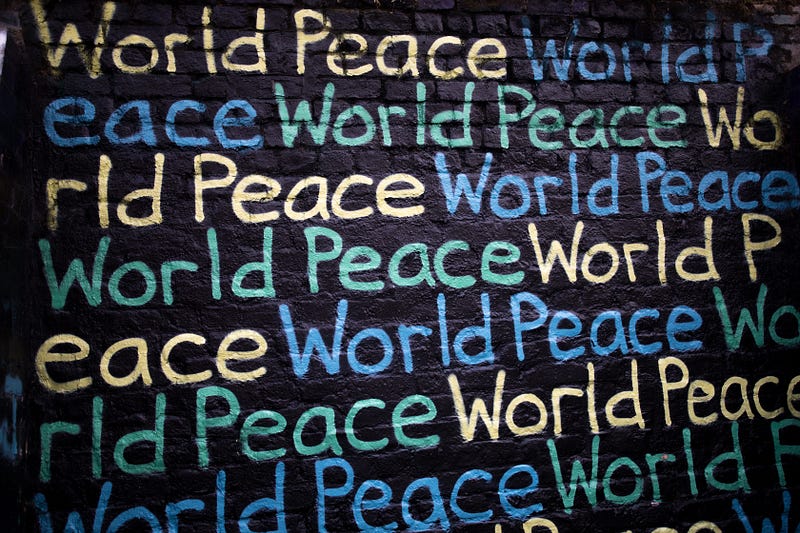
The all-powerful Federation was always forced to respect the dignity, not only of the common man but also of common sentient lifeform, no matter their technological acumen. Could the Prime Directive, a maxim prohibiting interference with alien civilization’s advancement, stand up to today’s torturous logic? Or would it be considered quaint like the Geneva Conventions?
Can you imagine what Dr. McCoy would have said if Spock had advised the captain to torture a captive to obtain information? (Torture is actually addressed in the episodes “The Empath” and “Dagger of the Mind” — both worth watching.) In episode after episode, these basic ideas about humanity and the value of the individual are there, loudly proclaimed.
James T. Kirk’s long speeches about our longing to be free rather than safe ring hollow in today’s society. The dignity of the common man and the desire to let 99 guilty men go free rather than imprison an innocent person would become time-honored beliefs. Star Trek prognosticated and taught us despite obstacles, freedom and individual liberty were the best way to go, even in the 23rd century.
Star Trek predicted liberty would withstand hundreds of years of technological advancement. Through it all, these guiding principles never dimmed, or so predicted Gene Roddenberry of our future. True fans of this series should embrace its deeper social messages: Shared humanity saves civilizations; inhumanity holds them back. We need those ideals today to improve our nation’s and planet’s trajectory.
More than anything else, I believe that a world motivated by optimism rather than fear and pessimism is what we have really lost. Science fiction today, even the reboot of the Star Trek movies, sets the future as dark, dangerous, and filled with evil. Somehow, we must find hope and stride into the future confidently the way we did when we were young. The fearmongers will say we have to let the government turn technology onto us to keep us safe. As long as we live in fear it is hard to push back. In Roddenberry’s vision are the words, the ideas, and the courage to push back.
This vision of freedom is the great legacy of Star Trek. It is what Roddenberry would most want to stand the test of time. Eventually, all the technological predictions will be far surpassed, and the interplay of the characters is all that is left. What Roddenberry was saying about the world, about the universe, was that no matter how the landscape changes, there are certain guiding principles of humanity that will help get us through and that will set us apart in the greater universe.
Please consider these ideas about the social evolution of humans on this Star Trek day. Gene Roddenberry would want us to do that. Live Long and Prosper.