
When Gay Bars Were Church, Trans Men and Lesbians Attended
Bright futures are better than flawed pasts
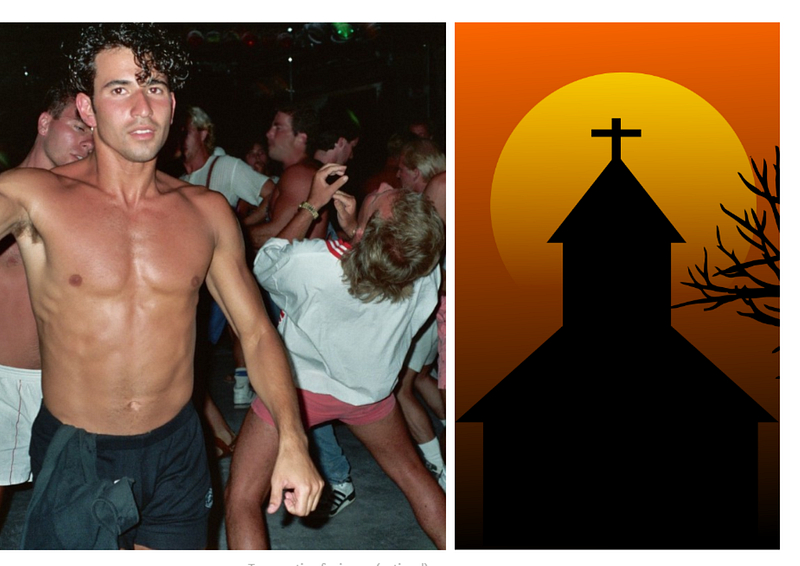
This morning, in a tweet I’d rather not link to, a controversial gay public figure pushed a transphobic trope, inaccurately implying lesbians and lesbian culture are disappearing. I’m not going to directly rebut his claim here. Data show clearly that lesbians are not going extinct.
I’m writing instead about queer culture, how it evolves and changes, and particularly about how gay spaces look nothing like they used to a generation or two ago. I’ll connect the dots at the end, but first …
Gay doesn’t mean what it used to mean
Once upon a time, in an era I experienced directly, queer culture was very different from what it is now. Gay didn’t mean what it means today, and gay bars were like church.
Does that sound absurd?
I mean church in its most positive sense — as a space for family, community, acceptance, and sanctuary. Have you read about the immigrants who are finally leaving church-granted sanctuary after years evading Trump’s ICE agents? The stories are really cool, and that’s the FEELING I’m talking about.
I’m not writing to reminisce, though that’s fun too, and I’ve done a bit of it — written feel-good stories about my first gay bar, the tacky-cool Question Mark Bar and Grill in fashionable (cough) downtown Des Moines of the late 70s and early 80s.
I experienced so many firsts there! First public kiss. First time dancing with another boy. First out gay friends. First real sex. First time being hit on by a suave, impossibly attractive older man. First time confronting dark rumors of a “gay cancer” killing people on the coasts and in Texas.
I’d love to show you a photo of the flamboyant pink punctuation mark that was the bar’s only sign, but all vestiges of my first “gay church” have disappeared. I never took pictures, and while I’ve heard from a handful of folks like Loren A Olson MD who knew the joint, not even Google has a record of it.
Gay churches don’t exist like they used to anyway
The reason I call the Question Mark a church is that it was one of only a couple places in Des Moines where a queer person could walk in and feel like family.
- Gay men? Sure!
- Lesbians? Check!
- Trans folks? Of course, though few of them would have used the word transgender, which wasn’t popular yet.
- Bisexual? That older man who hit on me was married to a woman, and she wasn’t a beard.
The drinking age was still 18 when I went to the Question Mark, and queer generations were well represented. Brave queer teens ducked into the cafe/diner in the back for dates over burgers and cokes. Middle-aged men and older sipped scotch at the bar.
Drag shows featured weekly, a lesbian club sponsored hiking and camping trips, and some people even took trips together to San Francisco’s Castro or NYC’s Greenwich Village.
Need a job? Ask around! Shoulder to cry on? Ditto. Advice on how to make it in a cold, homophobic world? Pull up a bar stool and soak up some wisdom with your booze, which you’re probably drinking too much of, a flaw in queer community then.
My gay church was flawed in important ways
This isn’t a nostalgia piece. Besides encouraging alcohol abuse, my personal “gay church” was flawed in another big, important way. I rarely saw Black people in the Question Mark, and while the Des Moines area didn’t have a large Black population, it was larger than you’d suppose by Black representation in the bar, which was virtually nil.
Additionally, as Ryan Thaxton opined in the Huffington Post after the Pulse Nightclub shooting, gay bars have historically been flawed by not offering safe or welcoming spaces for queer youth, who even today often lack the sort of “church” experience I’m writing about.
Has gay church seen its hay day?
It’s arguable that the queer experience I enjoyed as a young man is finished. While I was riding a wave of community that existed in bars like NYC’s Stonewall Inn, which welcomed members of gender and sexual minorities of all stripes, gay bar numbers have since declined precipitously.
Perhaps more importantly, the ones that remain are much more GAY than they used to be. I mean that in the sense of the word used today, gay as men attracted to men. The Stonewall Inn in 1969 and my own Question Mark Bar and Grill a decade and more later were diverse in important though flawed ways.
They were “gay church” when gay meant something like what queer means today, when you wouldn’t walk in the door without expecting to meet trans people, lesbians, and (dare I say) other gay men who were less than perfectly attractive.
The Question Mark didn’t look like the photo in my header image, and neither did the Stonewall. They weren’t enclaves of buff young men with Instagram-ready bodies. They were regular spaces filled with regular queer people — gender and sexual rebels of all ages, styles, and body types.
Sure, we had cliques of haughty young men high on the elixir of youth. But they were cliques, not the whole crowd.
Let’s not mourn spaces that have seen their day
I don’t want to go back to old “gay church” days, which brings me to the whole point of my story. There’s little purpose in mourning what’s gone. There’s little value in trying to rebuild something that suffered fundamental flaws in the first place.
Should queer community center around places to drink alcohol? I don’t think so, though that’s another story for another day.
Relatively inclusive gay bars as safe-ish community spaces have largely disappeared because people just don’t want them anymore. Queer people have other, arguably better ways to connect. We have social media, dating apps, meet-up apps. We have access at our fingertips to knowledge and wisdom about the queer experience.
No need to pull an actual stool up to a bar and drink actual whiskey.
Some of us even have actual church, either in an LGBTQ denomination like MCC or at any of a plethora of fully LGBTQ-affirming congregations.
Culture evolves, things change, and sometimes they get better
Gay bars may not be very inclusive anymore, but queer culture is. We understand gender and sexual diversity so much better than we used to. We understand bisexual people exist in huge numbers. We understand trans men exist in numbers we never imagined and that trans women are WOMEN who are nothing at all like drag queens, not that there’s anything wrong with drag queens.
We’re working towards a day when gender diversity and minority sexual orientations aren’t stigmatizing. And you know what? The work is hard, but we’re getting there. After four years of the Trump administration setting us back in the U.S., after years of political transphobia surging out of the U.K., we’re still taking more steps forward than backward.
Young queer people are making their own churches, and that’s not just OK, it’s wonderful. It’s how things should be.
I’m sorry lesbian bars are disappearing. I’m sorry my kind of gay bar is as rare as hen’s teeth. I miss my “gay church,” as flawed as it was. But I’ll celebrate progress and embrace my trans, bisexual, and queer family in ALL their diversity.
Looking ahead to a brighter future is so much more productive than mourning a flawed past.
James Finn is a former Air Force intelligence analyst, long-time LGBTQ activist, an alumnus of Queer Nation and Act Up NY, an essayist occasionally published in queer news outlets, and an “agented” novelist. Send questions, comments, and story ideas to [email protected].