avatarRobert W. Locke

Free AI web copilot to create summaries, insights and extended knowledge, download it at here

3106

Abstract

the enormous burden on healthcare systems and fail to provide adequate PPE gear for staff who are in the front line. One American doctor was <a href="https://edition.cnn.com/2020/04/24/perspectives/ppe-production-shortage/index.html">forced to buy</a> his own equipment at a cost of 17,000, which is a markup of 700% on the normal price.</li><li>Fail to take decisive action on testing and contact tracing which are essential to flattening the curve.</li><li>Play the <a href="https://www.ft.com/content/ffc6ac00-8de0-11ea-9e12-0d4655dbd44f">blame China</a> game instead of collaborating globally to fight the virus. The world has never been so divided and quarrelsome.</li></ul><blockquote id="38f1"><p>“We have a big hole to dig ourselves out of, which is why in addition to increasing testing, that needs to go hand in hand with contact tracing,” <a href="https://www.centerforhealthsecurity.org/our-people/cicero/">Anita Cicero,</a> deputy director of the Johns Hopkins Center for Health Security.</p></blockquote><h1 id="62cb">Real leadership helps save lives</h1><p id="be0f">We need effective leadership and fortunately, many female leaders have dealt with the pandemic more effectively and empathetically than their male counterparts.</p><p id="8aab">The Danish prime minister, <a href="https://www.forbes.com/profile/mette-frederiksen/#5e1b00271395">Mette Frederiksen</a> has approval ratings of 80% because she led her country by shutting borders early on March 13 and explained very clearly what she expected citizens to do to save their lives.</p><p id="9649">The Taiwan President was also quick off the mark. <a href="https://time.com/collection/finding-hope-coronavirus-pandemic/5820596/taiwan-coronavirus-lessons/">Tsai Ing-Wen</a> initiated up to 124 contact tracking and containment measures which avoided the country going into lockdown.</p><p id="8477">Other female leaders such as Angela Merkel (Germany), <a href="https://www.theguardian.com/world/jacinda-ardern">Jacinda Ardern</a> (New Zealand), and Sanna Marin (Finland) have gained praise for decisive and effective leadership. Their countries, so far, have been spared the worst.</p><p id="556c">We cannot read too much into this as women leaders are more likely to be elected in countries where its citizens have much greater trust in their governments.</p><h1 id="0fcc">Workers will be forced to return to work whatever the risk.</h1><p id="1d28" type="7">The world’s massive failure in dealing with this pandemic by simply testing, contact tracing, and social distancing means that workers are now facing a grim choice - return to work or stay at home and starve.</p><p id="eea4">Let us move to <a href="https://wwd.com/business-news/government-trade/bangladesh-factories-reopen-amid-coronavirus-chaos-1203630811/">Bangladesh</a>. The garment industry here employs 4 million people and is worth about 34 billion. This industry is reeling from canceled orders — a loss of $3.5 billion already. A few days ago, factories reopened after the lockdown but workers found that almost no safety precautions such as distancing and pr

Options

ovision of facemasks have been provided.</p><blockquote id="cf04"><p>“The majority of the reopened factories didn’t take adequate social distancing or other preventive measures. Only a handful of factories I’ve visited have disinfectant booths and proper temperature checks at gates and provided face shields, gloves, and frequent hand washing.” — Sarwer Hossain, a workers’ rights leader based in Dhaka.</p></blockquote><p id="17e1">In the UK the class divide of COVID-19 is grim. The lower-paid manual and care workers are at much <a href="https://www.ons.gov.uk/peoplepopulationandcommunity/healthandsocialcare/causesofdeath/bulletins/coronaviruscovid19relateddeathsbyoccupationenglandandwales/deathsregistereduptoandincluding20april2020">greater risk</a> and the death rate from COVID-19 illustrates this. The average is 21.4 deaths per 100,000 males. The highest risk category is security guards who have one of the highest rates at 45.7 per 100,000.</p><p id="bbbb">There is also a stark ethnic divide. BAME (Black, Asian and Minority Ethnic) people are <b><i>four times </i></b>as likely to die from COVID-19 than their white counterparts. In the NHS (National Health Service), <a href="https://news.sky.com/story/coronavirus-nhs-warns-ethnic-minority-workers-at-potentially-greater-risk-11980713">60% of deaths</a> among the staff are from BAME backgrounds.</p><p id="aabc">There are several reasons for this divide as these people generally live in overcrowded accommodation and also tend to have underlying health conditions. They are also working in essential roles such as drivers, shop keepers, and carers. They are therefore more exposed than other sectors of the population.</p><p id="eb92">In <a href="https://www.voanews.com/covid-19-pandemic/singapores-coronavirus-outbreak-sends-malaysia-scrambling-test-migrant-workers">Singapore</a>, migrant workers have been badly hit by the virus. They account for 85% of all cases although they are actually only 3% of the population. They are housed 10 to 20 people in one room with one bathroom. Their working conditions are appalling and they have to travel in crowded buses to work so there is no social distancing at all. The government is now urgently trying to test these workers to avoid other hotspots or clusters.</p><p id="560e">As if that wasn’t enough, the <a href="https://news.un.org/en/story/2020/04/1062272">WFP (World Food Programme)</a> is predicting famines in poorer countries worldwide. Their estimates run to about 265 million people facing starvation.</p><h2 id="4741">Final thoughts.</h2><p id="8c56"><a href="https://www.undp.org/content/undp/en/home/coronavirus.html">The UN</a> is committed to helping nations with financial and medical aid but they can only do so much.</p><p id="093d" type="7">We need real leadership and solidarity between nations.</p><blockquote id="5667"><p>“We must rebuild trust and cooperation, within and among nations, and between people and their governments. A global response now is an investment in our future.” UNDP (United Nations Development Programme.)</p></blockquote></article></body>

Health

Remember The Forgotten Millions Who Are Risking Their Lives

Lack of leadership and solidarity are making the virus more deadly
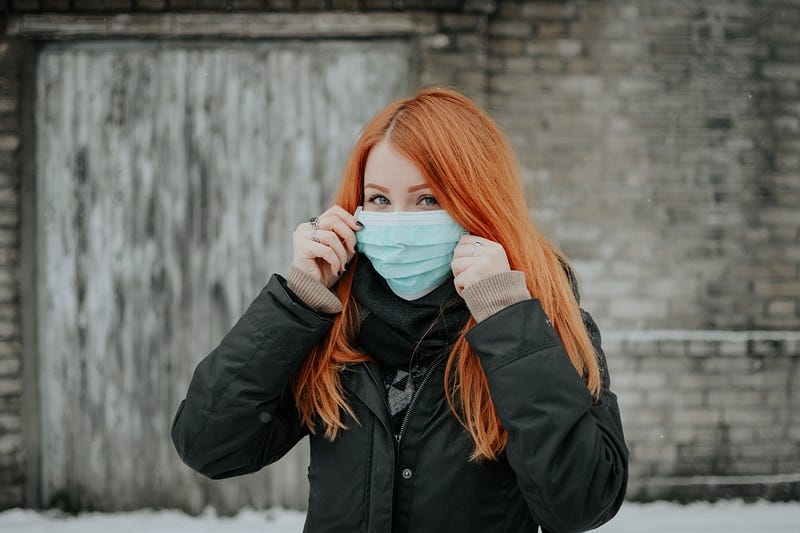
Photo by Pille-Riin Priske on Unsplash

Are you like me when you see those numbers with so many zeros that you lose count? Numbing numbers. Every day in our newsfeed, we see the devastating headlines and we tend to skip over them.

“A single death is a tragedy; a million deaths is a statistic.” — Joseph Stalin

Just 100 days ago, we would have have been shocked, we would have read them and shared and commented on them in social media. That was before the COVID-19 became a pandemic.

But now, we are becoming indifferent and callous. Maybe we are suffering from overexposure to bad news.

Toxic male leadership

Let me show you how toxic male leadership is failing millions of people as they face a risky future in returning to work. The message they are getting is we have to save the economy, not lives.

This seems to be the mantra of many world leaders now. We can include Boris Johnson, Donald Trump, and Jair Bolsanaro, just to name a few.

“It’s possible there will be some deaths because you won’t be locked into an apartment or house or whatever it is.” — President Donald Trump.

Have you noticed how they all repeat the same mantra?

  • Claim that testing is adequate. How can Donald Trump display a banner that ”America Leads The World In Testing”? This is just not true as it lags behind other nations. It only tests 26 per 1,000 while other nations such as Germany (33), Italy (42), and Denmark (55) are well ahead.
  • Scorn science, medicine, and research. Boris Johnson ignored basic advice about handshakes and scored a spectacular own goal in catching the illness and nearly dying. His government lost vital weeks as they toyed with the idea of “herd immunity.”
  • Ignore the enormous burden on healthcare systems and fail to provide adequate PPE gear for staff who are in the front line. One American doctor was forced to buy his own equipment at a cost of $17,000, which is a markup of 700% on the normal price.
  • Fail to take decisive action on testing and contact tracing which are essential to flattening the curve.
  • Play the blame China game instead of collaborating globally to fight the virus. The world has never been so divided and quarrelsome.

“We have a big hole to dig ourselves out of, which is why in addition to increasing testing, that needs to go hand in hand with contact tracing,” Anita Cicero, deputy director of the Johns Hopkins Center for Health Security.

Real leadership helps save lives

We need effective leadership and fortunately, many female leaders have dealt with the pandemic more effectively and empathetically than their male counterparts.

The Danish prime minister, Mette Frederiksen has approval ratings of 80% because she led her country by shutting borders early on March 13 and explained very clearly what she expected citizens to do to save their lives.

The Taiwan President was also quick off the mark. Tsai Ing-Wen initiated up to 124 contact tracking and containment measures which avoided the country going into lockdown.

Other female leaders such as Angela Merkel (Germany), Jacinda Ardern (New Zealand), and Sanna Marin (Finland) have gained praise for decisive and effective leadership. Their countries, so far, have been spared the worst.

We cannot read too much into this as women leaders are more likely to be elected in countries where its citizens have much greater trust in their governments.

Workers will be forced to return to work whatever the risk.

The world’s massive failure in dealing with this pandemic by simply testing, contact tracing, and social distancing means that workers are now facing a grim choice - return to work or stay at home and starve.

Let us move to Bangladesh. The garment industry here employs 4 million people and is worth about $34 billion. This industry is reeling from canceled orders — a loss of $3.5 billion already. A few days ago, factories reopened after the lockdown but workers found that almost no safety precautions such as distancing and provision of facemasks have been provided.

“The majority of the reopened factories didn’t take adequate social distancing or other preventive measures. Only a handful of factories I’ve visited have disinfectant booths and proper temperature checks at gates and provided face shields, gloves, and frequent hand washing.” — Sarwer Hossain, a workers’ rights leader based in Dhaka.

In the UK the class divide of COVID-19 is grim. The lower-paid manual and care workers are at much greater risk and the death rate from COVID-19 illustrates this. The average is 21.4 deaths per 100,000 males. The highest risk category is security guards who have one of the highest rates at 45.7 per 100,000.

There is also a stark ethnic divide. BAME (Black, Asian and Minority Ethnic) people are four times as likely to die from COVID-19 than their white counterparts. In the NHS (National Health Service), 60% of deaths among the staff are from BAME backgrounds.

There are several reasons for this divide as these people generally live in overcrowded accommodation and also tend to have underlying health conditions. They are also working in essential roles such as drivers, shop keepers, and carers. They are therefore more exposed than other sectors of the population.

In Singapore, migrant workers have been badly hit by the virus. They account for 85% of all cases although they are actually only 3% of the population. They are housed 10 to 20 people in one room with one bathroom. Their working conditions are appalling and they have to travel in crowded buses to work so there is no social distancing at all. The government is now urgently trying to test these workers to avoid other hotspots or clusters.

As if that wasn’t enough, the WFP (World Food Programme) is predicting famines in poorer countries worldwide. Their estimates run to about 265 million people facing starvation.

Final thoughts.

The UN is committed to helping nations with financial and medical aid but they can only do so much.

We need real leadership and solidarity between nations.

“We must rebuild trust and cooperation, within and among nations, and between people and their governments. A global response now is an investment in our future.” UNDP (United Nations Development Programme.)

Healthcare
Covid 19 Crisis
Work
Economy
Life
Recommended from ReadMedium