avatarCharlotte Zobeir Ali

Free AI web copilot to create summaries, insights and extended knowledge, download it at here

1047

Abstract

ck people to prove a point. There are too many illustrations from the 17th Century showing black people as enslaved individuals or mere props.</p><p id="bec6">Rembrandt was not an activist or fighting against slavery, in his paintings he chose to depicts black people as human.</p><p id="868e">They were just like any of his other portraits as the master loved asking people from his town to pose for him.</p><p id="ad77">In Jodenbreestraat, there were many immigrants from Portugal, Germany, Brazil, Spain, Scandinavia, Africa and the West Indies.</p><p id="d2c5">Even though the Netherlands took part in the slave trade, the country made slavery illegal in its territory.</p><p id="af3f">In Rembrandt’s town, most of the black people were sailors, soldiers or servants and the artist asked some to pose for him without thinking twice.</p><p id="6cb5">In “Two Africans”, one man seems to be giving a speech while the other lays on his shoulder. The attention to details and the thin layers make this painting heartwarming and intriguing.</p><figur

Options

e id="e12f"><img src="https://cdn-images-1.readmedium.com/v2/resize:fit:800/1*[email protected]"><figcaption>Two Africans (1661) from web gallery of art</figcaption></figure><p id="5b82">In “The Tronie of a Black Woman”, Rembrandt showed us an ordinary woman who seems confident and strong-willed. Some argued that she is not very “good-looking” but we will retort that beauty is in the the eye of the beholder.</p><figure id="421b"><img src="https://cdn-images-1.readmedium.com/v2/resize:fit:800/1*[email protected]"><figcaption>The Tronie of a Black Woman (1630) from Codart</figcaption></figure><h1 id="2a8e">To conclude</h1><p id="a888">According to historians, there are 20 to 30 paintings of Rembrandt with black people as models but they belonged to private collectors.</p><p id="e52e">One can only wish that one day, the world will be able to see those paintings and celebrate the artist who quietly promoted equality.</p><p id="317d">It is clear that for Rembrandt, all men are created equal.</p></article></body>

Rembrandt and His Art Depicting Black People

The artist was quietly on the side of equality and tolerance
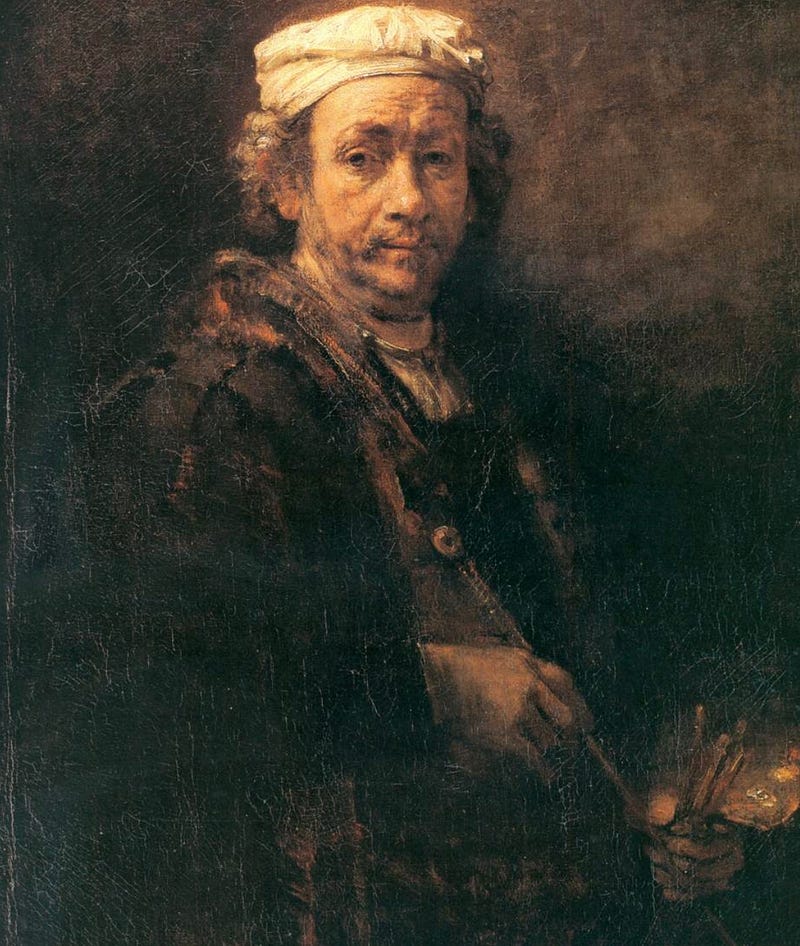
The Artist at his Easel (1660) from Le Musée du Louvre

Rembrandt was born in 1606 in the Netherlands and is considered one of the most important artist in the history of art.

His paintings were in direct contrast with the baroque style that dominated Europe.

His self portraits in particular attracted attention as they showed him without an ounce of vanity.

People were mesmerised by the humility and simplicity that shone through his art. The painting that illustrates this article emphasises this idea.

He is wearing an ordinary cap and simple clothes that make him look like a gentle wise man.

I chose to show two of his paintings depicting black people to prove a point. There are too many illustrations from the 17th Century showing black people as enslaved individuals or mere props.

Rembrandt was not an activist or fighting against slavery, in his paintings he chose to depicts black people as human.

They were just like any of his other portraits as the master loved asking people from his town to pose for him.

In Jodenbreestraat, there were many immigrants from Portugal, Germany, Brazil, Spain, Scandinavia, Africa and the West Indies.

Even though the Netherlands took part in the slave trade, the country made slavery illegal in its territory.

In Rembrandt’s town, most of the black people were sailors, soldiers or servants and the artist asked some to pose for him without thinking twice.

In “Two Africans”, one man seems to be giving a speech while the other lays on his shoulder. The attention to details and the thin layers make this painting heartwarming and intriguing.
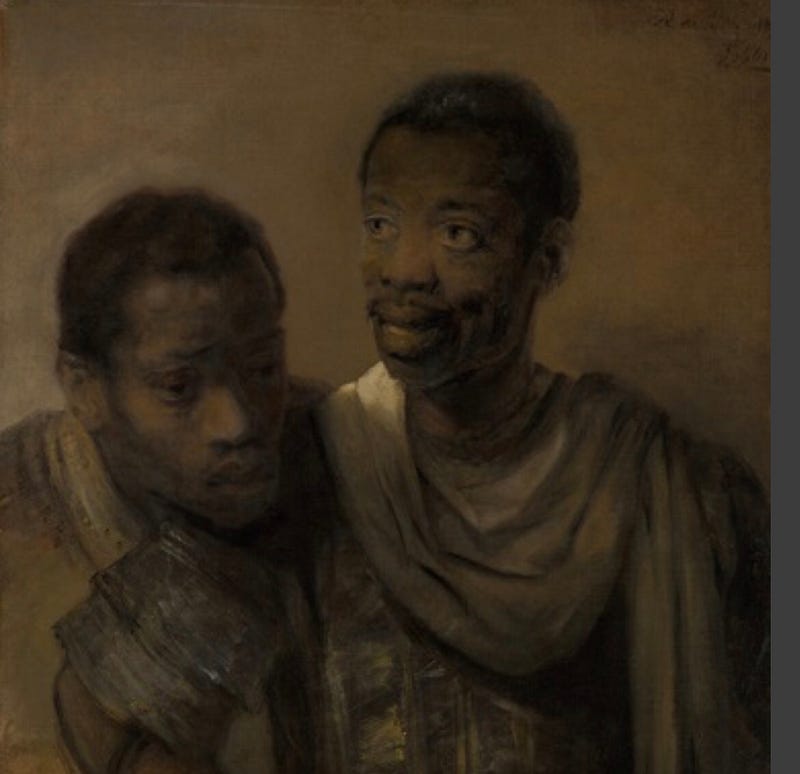
Two Africans (1661) from web gallery of art

In “The Tronie of a Black Woman”, Rembrandt showed us an ordinary woman who seems confident and strong-willed. Some argued that she is not very “good-looking” but we will retort that beauty is in the the eye of the beholder.
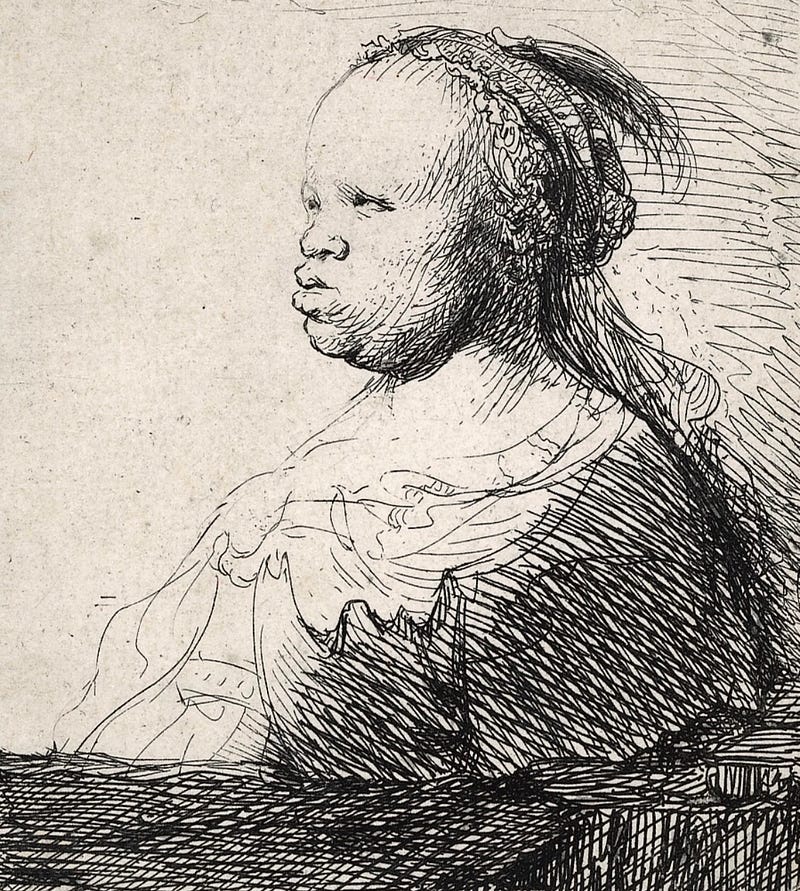
The Tronie of a Black Woman (1630) from Codart

To conclude

According to historians, there are 20 to 30 paintings of Rembrandt with black people as models but they belonged to private collectors.

One can only wish that one day, the world will be able to see those paintings and celebrate the artist who quietly promoted equality.

It is clear that for Rembrandt, all men are created equal.

History
Art
Rembrandt
Painting
BlackLivesMatter
Recommended from ReadMedium