
Remaining Hopeful
Becoming a powerful hope magnet in the path to persistence
I don’t write on self-improvement. It always seemed inauthentic for me — who am I to write about self-improvement? Aren’t we all work in progress? You might be wondering what finding hope has to do with self-improvement. Can we inspire without hope? Can we persist? This is part of my story.
A few years ago, my entire life flipped upside down. Everything changed. My focus, goals, career, marital status… you name it, it changed. And I’ve been on a roller coaster ride of my life since.
I lived a tailored life for over a decade, not realizing I’d lost touch with the true me. I’d allowed life, and a toxic relationship, to take me down a path away from all that I was passionate about — nature, photography, writing, research, exploration. And I was making things work — my life checked all the right societal boxes, I was seen and described as ultra-successful, having everything a person can want and more. Meanwhile, I felt like I was just dug deep into a pit I never fit into. I truly felt like a lie.
Life and the universe always cast their magic when you most need it.
Following the events that triggered all the changes, I fell in love with the ocean and nature and dedicated my life to creating a healthy Ocean and environment. Life wouldn’t be fun without its twists though, at first, it all became too dark. It was overwhelming.
I’ve received suggestions from multiple friends to share what keeps me going on this track, how I can keep a smile (most of the time) while being aware of environmental threats, issues, and the complexity of solutions, perhaps more than the average person.
My thinking is different, and I get it. I genuinely feel things (too) deeply, overthink options, and see the connections. Each plastic bottle I see pierces my heart, going back to what I witnessed on one of the most remote islands on the planet, Clipperton, in the middle of the Pacific Ocean.
When I got back from that island after seeing what I saw — I was “hope”less. I felt like there was no point. Even the most remote areas were destroyed by humanity, no further action necessary.
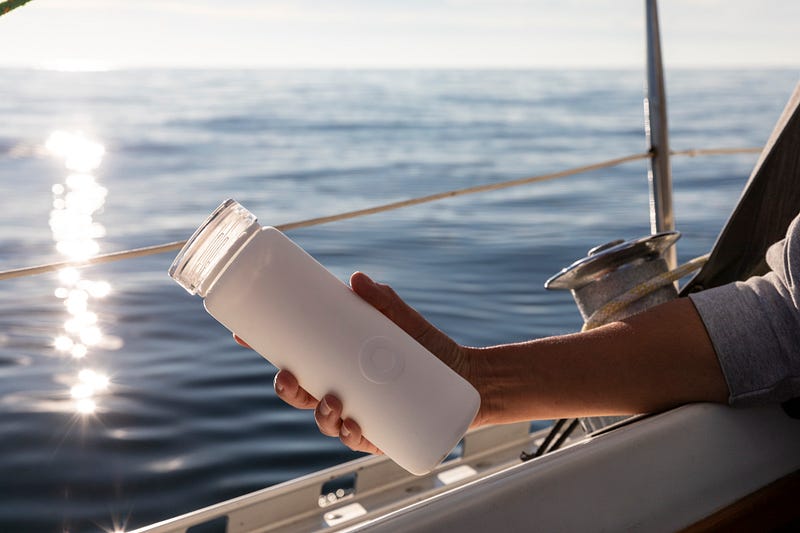
15 million people live in this metropolis I call home. Around here, life is different. Even my closest friends find it absurd to avoid straws, let alone plastic cups or bottles. I’m usually and quickly tagged with the best dismissive label they can come up with — tree-hugger, activist, radical, plain ol’ weird, etc. All mostly because since 2016, I’ve always had my own coffee cup, water bottle, and reusables with me to avoid single-use items as much as I can. I call them dismissive labels; they only serve them to dismiss my choices they deem unnecessary in their lives. Any reasoning I presented to their inquiries on why a reusable coffee cup — just fell on deaf ears or resulted in entitled choices — sending me spiraling down dark hopelessness, allowing me to give up trying.
It’s simple for me — not easy but simple — I’m aware, and I can’t pretend I don’t know. To continue to engage in activities that I know harm our planet, future generations, and all creatures we share this wonderful planet with is just not an option for me. And yet, trying to force, or guilt-trip, others into living how I believe the right way is also not an option for me. I grew up with guilt trips, and they’re in no way inspiring. My focus remains on how I live. And more often than I would imagine my choices, inspire the ones who are waiting to be inspired. When I hear somebody buying a reusable water bottle after witnessing my choices, I see the point and power.
Constantly being aware and in inquiry about our impact on the overall wellbeing of the planet can be very tough and challenging. Most people choose to avoid thinking of their impact. The default answer seems to be “it is what it is; just me changing X is not going to make a difference.” Many might see it as frustrating. It’s a limitation we place on ourselves. After all, what each of us does every day makes a difference. Though we do need systemic change — and that’s what societies, businesses, and solutions need to focus on — each of our choices makes a difference. Our choices are our power. This realization gives me hope daily. Knowledge is hopeful when we use it for our own resolve, not when we try to force others into doing something for a reason that doesn’t (yet) mean anything to them. A quick thought on this — in the last 5 years, reusables have spread practically like wildfire — it is now normal to see many people in coffee shops, even in NYC, with their own reusable cup. Well, maybe Covid changed that for a bit, but that’s another topic. Many who carry their cups today, 5 years ago, were likely wondering why I was carrying a reusable cup. Slowly but surely, our communities and societies are adapting to course correct on our environmental impact.
Every time I see a plastic cup or spoon, I find it hurtful. I see the beaches in Bonaire, in Manila, on Clipperton — I see the booby birds, dolphins, and whales. I imagine how it would feel having 9 large pizzas worth of plastics in my stomach and how these creatures must feel, how they have no other choice. How they have no option but to live where they live and eat what they eat. I then think of the people who must eat what they eat because it’s the only option where they live, on islands where there is a lack of funding, recycling, waste management facilities, and no modern technologies. I think of the island of Tuvalu; I think of little Sam I met in Manila, who at 7 was worried about the food her family would be fishing out of that water I had difficulty breathing next to. I think of the people in Fiji who burn plastics to cook their foods because it’s the only way to eliminate that waste.
I’ve been a firm believer that there is a reason why those who know do. We gained access to this information for a reason. Our role, and our responsibility, is to find and share with the next group of people — those who come into contact with us, those who inspire us to share with them.
Is there something wrong with putting our knowledge to practice and living authentically? Authenticity is not perfection. There are times that I find myself with a plastic bag. The power is in realizing when/how/why it happens and what I can do about it. Keeping the focus on doing what I can do, rather than giving up or taking a toll on myself because I’m not perfect.
Knowledge comes with the responsibility that gives us power and hope to tackle any situation and unwanted circumstance. Let’s resolve to accept our power rather than deeming ourselves powerless. We can all connect with our favorite companies in this day and age and get engaged in solutions and exciting projects.
I resolve to spread my knowledge now. To connect with those who are waiting to be inspired and those who inspire me on and off Medium. I’m tagging Desiree Driesenaar here since she inspires me on writing about sustainability and being open about my experiences.
Did you find this article helpful or inspiring? Let me know your thoughts in the comments! I’d love to hear from you!!


