
Religious Liberty and Religiously Based Homophobia
How religious exemptions threaten civil rights for all Americans

A child is talking to his mother. Questioning —
“Why are black people different from us?”
“God separated the races after Noah’s Flood, sweetheart. He doesn’t intend that they mix as equals. Black people are still his children, but in a different way.”
“What do you mean different, Mommy?”
“Well, they aren’t as smart as white people. They need guidance and help. As good Christians, we have to love them and even help them, but we have to always remember that God intends that we be separate from them.”
“Separate?”
“The Bible teaches us that it’s a sin to mix the races. Black people can’t live with or go to the same schools as white people. They can’t marry white people. That goes against God’s plans.”
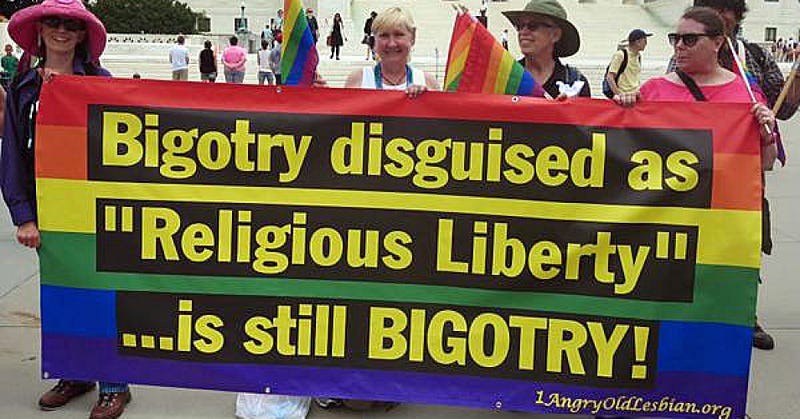
I intended for the above dialogue to be shocking.
I don’t believe that any of what that imaginary mother is saying is valid or morally good. But here’s the thing.
Until very recently in the United States and many other places around the world, beliefs and teachings like that were common and ordinary. They were expected.
I heard conversations like that with my own ears when I was a child. I often heard sermons like that delivered from pulpits in ordinary evangelical churches.
We LGBTQ people face similar sentiment from religious people every single day of our lives.
The biggest issue we face right now is that it is socially acceptable to express religiously based homophobia. If anyone today were to publicly mouth the racist nonsense I reproduced above, you can be sure that people would be shocked.
There would be consequences. Just about nobody would agree that the sentiment should be tolerated, much less used as bases for legal opinions and government policy.
The same can’t be said yet about religiously based homophobia. There are very few social consequences in many places for expressing the same sort of religious nonsense about us queer people.
We’re pelted with insults and aspersions every day:
- Hate the sin, love the sinner.
- God loves you but he calls you to be celibate.
- Homosexuality is condemned in the Bible.
- You need to ask God to change you.
- Same-sex marriage is offensive. I can’t sell flowers or cake to same-sex couples. My rights are being violated if I have to.
If you don’t find the above list shocking, then you’re inured to religiously based homophobia. It ought to shock you every bit as much as the religiously based racism I reproduced at the beginning of this essay.
But even if it doesn’t, your civil rights are at stake —
Let me explain.
The Civil Rights Act of 1964 shut down legal religious racism. Religious people can’t use their beliefs, no matter how sincere, to justify discriminating against Black people or other minorities in employment, housing, public accommodation, government services and contracts, etc.
Or can they?
For background, LGBTQ people aren’t protected by the Civil Rights Act, although the Equality Act being debated in Congress right now would amend the act to include LGBTQ people.
We Don’t Need the LGBT Equality Act
My Gay Friend Gerald and Log Cabin Republicans Say So
medium.com
But there’s a big problem —
According to the ACLU, even though some states have non-discrimination laws that protect LGBTQ people, religious people and institutions are increasingly claiming a right to discriminate — by refusing to provide services based on religious objections. Examples:
- Religiously affiliated schools firing women because they became pregnant while not married
- Business owners refusing to provide insurance coverage for contraception for their employees
- Graduate students, training to be social workers, refusing to counsel gay people
- Pharmacies turning away women seeking to fill birth control prescriptions
- Bridal salons, photo studios, and reception halls closing their doors to same-sex couples planning their weddings
- Religiously affiliated, taxpayer-funded adoption agencies refusing to place children with LGBTQ people
This isn’t new —
As the ACLU notes, individuals and institutions objected in the 1960s to Civil Rights Act requirements of integration in restaurants, citing sincerely held beliefs that God wanted the races to be separate. Religiously affiliated universities refused to admit students who engaged in interracial dating.
In those cases, courts recognized that requiring integration was not about violating religious liberty; it was about ensuring fairness. It should be no different today.
Religious freedom in America should mean that we all have a right to practice our religion (or to practice no religion) and to believe what we believe, so long as we don’t use religion to discriminate against others and impose beliefs on people who don’t share them.
Religious liberty claims are eroding our freedom —
It’s bad enough that courts have been accepting such arguments in cases involving LGBTQ people. As an LGBTQ writer, I often focus narrowly on that problem. But a broader liberty issue is at stake.
Civil rights law itself is under assault —
The same legal arguments that are being used to attack non-discrimination laws that protect LGBTQ people threaten civil rights protection in general. Equality for Black people, women, disabled people, and even (ironically) religious people is threatened. It’s already happening.
For example, NBC News reports that religious exemption claims increasingly allow child placement agencies to deny fostering or adopting to LGBTQ people. It’s bad enough that such denials exacerbate the current “child welfare crisis,” according to a report sponsored by the Center for American Progress (CAP) and other agencies.
What’s (arguably) more worrying is that the same legal arguments are now being used to justify discrimination against other classes of people.
In March of last year, South Carolina made headlines when the largest foster agency in the state turned away Beth Lesser and her husband for being Jewish.
The Trump Administration had the agency’s back —
At the annual Prayer Breakfast on February, 2018 President Trump told religious leaders his administration would support faith-based agencies that use religion as a criterion for denying prospective parents.
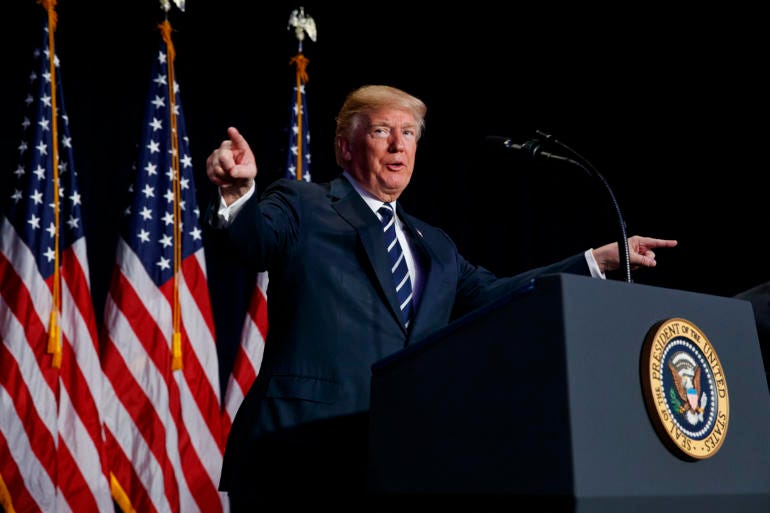
His words echoed a decision by the Department of Health and Human Services that exempted the South Carolina agency from federal non-discrimination laws.
The case is still being litigated, and other similar cases are making their way up the pipeline to Supreme Court, where the eventual outcome is far from certain.
This case ought to send chills up and down the spines of all people who value freedom and equality for minorities of all stripes. Yes, LGBTQ people have a lot to lose if religious exemptions to civil rights law become common and acceptable.
But if a state-funded agency can turn Jewish people away because they’re Jewish …
Then all Americans have a serious problem on our hands. The rights and freedoms President Lyndon Johnson signed into law on July 2, 1964 with the celebrated Civil Rights Act are in play again.
The scenario I began my essay with? The mother explaining to her child that Black people must not mingle with white people?
Turning a Jewish couple away from a state-funded adoption agency is justified by the exact legal arguments that could be used to turn any member of any minority away from any school, club, association, or agency.
That mother could get her wish — legally.
We all need to think about this again, even people who are uncomfortable with LGBTQ issues. The ACLU is up in arms, telling anyone willing to listen that our basic liberties are at stake.


