
Relationships: Love is the Answer for Both Humans and Dogs
Quantum love involves using the body’s energy to create the right relationships.
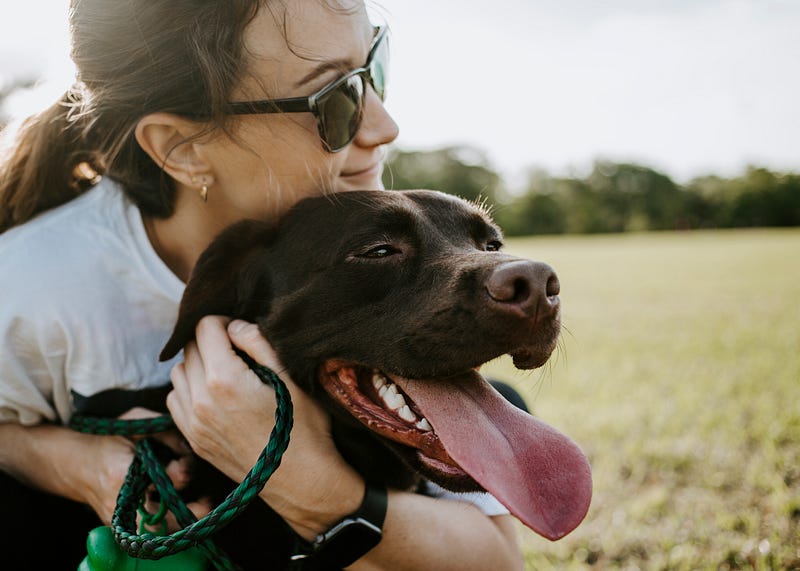
Love is the answer for everything when it comes to relationships. This premise is something that I’ve intuited, but it has been proven to me recently on two different occasions.
Every emotion and feeling has a different vibrational frequency. Quantum physics says that whatever frequency you send out, you attract more of the same to you. In her book “Quantum Love,” Laura Berman, Ph.D., describes how you can use your body’s atomic energy to create the relationships you desire.
Here are two examples that I’ve recently seen in my own life.
I am the biggest dog lover you can ever imagine. Sometimes, I feel like I love dogs more than humans.
My black Labrador, Bojangles, is now 9-years-old, so I thought it was time to get a puppy. Nearly two years ago, we got a chocolate Lab puppy named Branston. He was the cutest bundle of fur you could ever imagine, but from 8 weeks old, he had a mean streak and a temper.
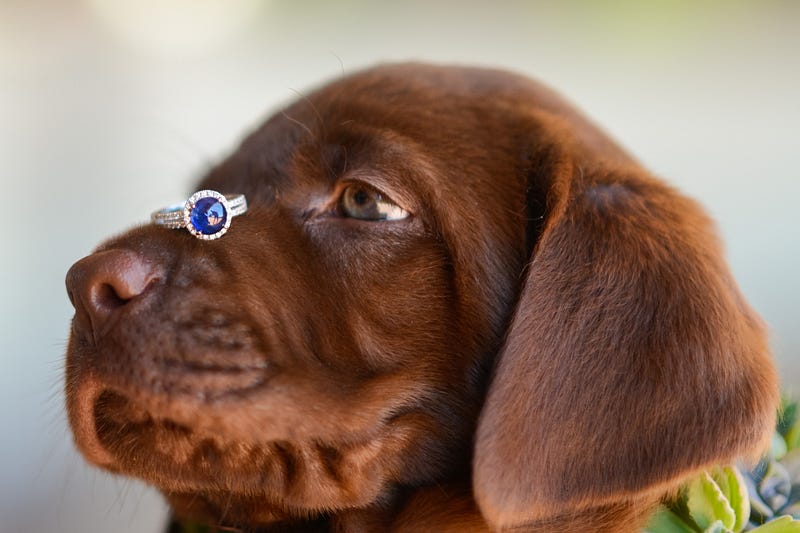
He didn’t like being restrained, didn’t like being on a leash, and didn’t like when I reprimanded him. The mere mention of the word “no” would send him into a frenzy that usually involved biting me. And he stole everything he could get his mouth on and destroyed it — air conditioning remotes, TV remotes, cell phones, tablets, my Apple pencil ( I could go on and on).
I took Branston to every training class I could find, and he had a personal trainer. He can now do every trick in the book, but that didn’t change his personality. He would revert to his old ways as soon as the class or training was over.
The purpose of this story is not to seek advice about dog training, even though I’m sure many readers would have a lot of suggestions. So bear with me.
I would say that I primarily used “correction training,” where I would punish Branston’s unwanted behavior. It wasn’t that I didn’t use “positive reinforcement” from time to time, too; it’s just that Branston rarely ever did anything that warranted positive reinforcement.
After nearly two years of having a puppy destroying our happy home, I was at the end of my rope. I decided that I would switch to positive reinforcement. I started to find any little good thing that I could reward Branston for while ignoring his bad behavior. I’m happy to say that his behavior improved by about 20%.
Then I took that idea one step further and decided to show him as much love as possible. I realized that I was usually punishing him or angry at him and that this poor dog had probably not experienced the amount of love that I would typically shower upon one of my pups.
His attitude slowly changed as I showed him love every day, refused to get angry at him, and rewarded him for good behavior. He quit biting me. He became more loving. He has even started to obey when I tell him to “leave” something.
Some of you might say that this is typical of a puppy growing out of those problematic puppy years. Others will say that it’s just a result of the positive reinforcement training. But my intuition tells me that it was the feeling of love. When I approach him now, I feel nothing but love for him, and he knows that and can sense it. That feeling has won his respect.
The last two years with Branston have also put an enormous strain on my relationship with my husband. We couldn’t leave Branston unattended for even one second, which made it impossible for us to go about our daily tasks and chores. It was very stressful at times, and we began to take that out on each other.
In any relationship that encounters a rocky road, the tendency might be to talk about it. Nothing sends the fear into someone more than when their spouse says, “We need to talk.” You immediately know that it’s not good news.
The outcome of talking is that you typically say what you don’t like about the relationship or what you don’t like about the other person’s behavior. In my experience, those types of conversations never end well because both parties can become defensive and accusatory.
So instead of telling my husband that we needed to talk, I suggested that we both make an effort to treat each other more lovingly. Of course, he was all for the idea!
I suggested that we have a codeword if either of us thought the other wasn’t treating them well. So we came up with the code word “sausages.” We had house guests coming to stay with us — another stressful situation — so we wanted a word that we could say in front of our guests if need be, without them understanding.
Two weeks have now elapsed, and neither of us has had to use the codeword. Our relationship is back on track, and Branston’s behavior makes that much easier.
For me, the moral of the story is that love truly is the answer. If you want to improve your relationship with anyone (human or animal), just do it with love.
If you enjoy reading stories like these and want to support me as a writer, consider signing up to become a Medium member. It’s $5 a month, giving you unlimited access to stories on Medium. If you sign up using my link, I’ll earn a small commission.