
Relapse Prevention Strategies Simply Do Not Work for Chronic Relapsers
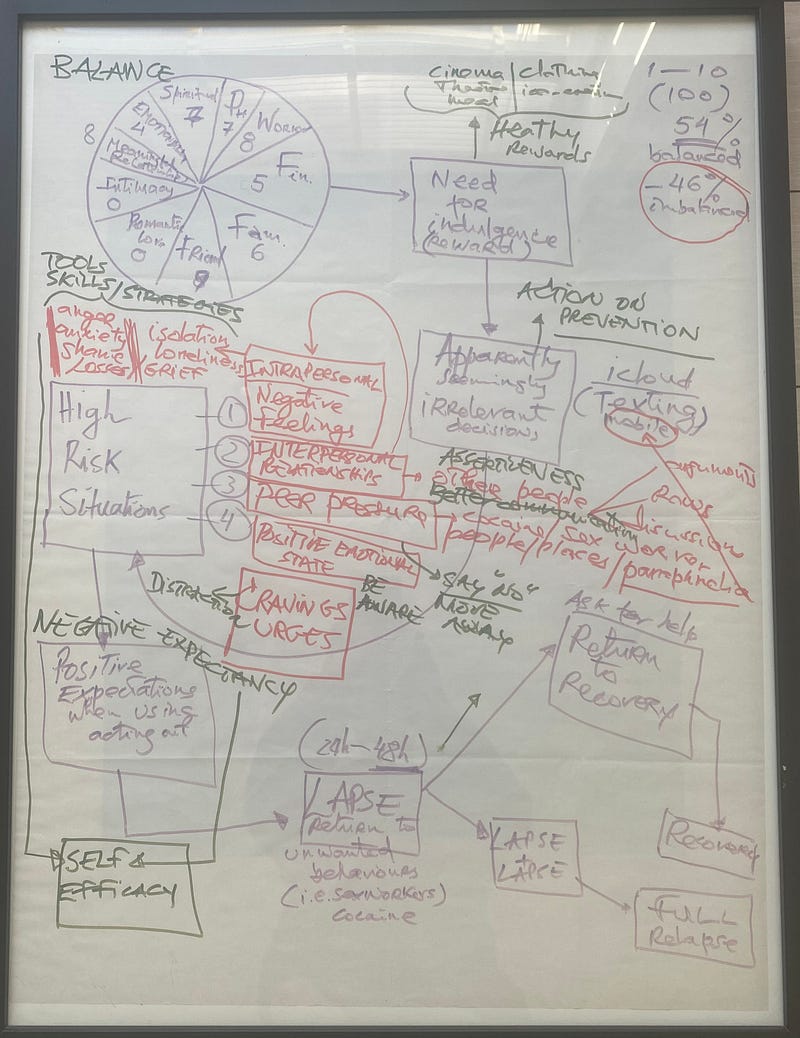
The colossal delusion of relapse prevention techniques.

‘Call a friend!’
‘Play the tape forward.’
‘Take a deep breath.’
‘Write a list of what you’ll lose if you relapse and what you’ll gain by staying clean.’
‘And if all else fails, just don’t pick up!’
I’m sure you’ve heard one of these, if not all, regarding relapse prevention strategies.
Sometimes, they worked, and many times, they didn’t, but for the chronic relapser, these strategies can have deadly consequences and are, in fact, part of the problem.
Curious Mental Phenomenon.
But the actual or potential alcoholic, with hardly an exception, will be absolutely unable to stop drinking on the basis of self-knowledge. ~ The Big Book, page 37.
The addict described in the book of Alcoholics Anonymous (Big Book) has a progressive, fatal illness that centers in the mind.
One of the distinct features of this insidious condition is the ‘mental blank spot’.
The Big Book defines this feature as a complete loss or an inability to remember, with sufficient force, the consequences and suffering of the last relapse(s), no matter how recent.
Peculiarly, this blank spot feature only happens at certain times.
At all other times, the addict’s brain functions normally: common sense prevails, and they can recall with ease the reasons not to relapse.
The Big Book defines this type of addict as the real addict — someone who sincerely desires to stop relapsing (many addicts don’t want to stop) but, because of this condition, cannot.
The Big Book warns you don’t have to be a chronic relapser to have this blank spot feature. You can be a potential addict.
However, this blank spot isn’t the only feature of this condition that makes you relapse against your will.
There’s another feature that hijacks your thinking, but the black spot feature alone invalidates all relapse prevention strategies.
If you’re not going to remember why you shouldn’t relapse and are blissfully unaware that your memory and thoughts have been compromised, then how and why would you use a relapse prevention technique when it counts?
The chronic relapser, at certain times, has no choice but to relapse.
It’s Like Walking to Dallas When You Desperately Need a Plane To Moscow
“The attempt to escape from pain, is what creates more pain.” ~ Gabor Maté
If you find yourself in chronic addiction, then whatever you’ve been doing isn’t working. Period. As they say in the fellowship,
Your best thinking led you here.
So, giving a chronic relapser some tools and techniques to deploy in the face of an incurable malady is like taking a cup of water to put out a raging fire.
We need a whole psyche change rather than tips and tools to try and control our relapsing.
Exerting large amounts of willpower on something beyond your mental control is a fool’s errand.
Furthermore, constantly being on guard, looking over your shoulder in case you’re vulnerable or triggered, is not sustainable or enjoyable.
It’s like holding on to a zipline using only your teeth. Eventually, you’re going to fall.
For the chronic relapser, relapse prevention strategies are simply an illusion of power.
Where There’s a Will, There’s Certainly a Ludicris Way
Enlisting a bodyguard or locking up and monitoring a chronic relapser under close supervision 24/7 is probably the only way any relapse prevention strategy will work.
However, due to the delusional fantastical thinking feature, temporary amnesia and absence of common sense, the chronic relapser will be doing everything in their power to escape these protection methods.
That’s why it doesn’t matter how much burning desire, fear, morals or knowledge you have. None of it will matter when this deadly condition kicks in.
Two Types
The situation is hopeless for the chronic relapser.
Their minds are flawed. Compromised. Leaving them truly powerless, and many are driven to insanity, even suicide, not understanding this despite their experience.
But for the addict who hasn’t crossed into the region of chronic relapsing, relapse prevention strategies can be helpful. They can significantly support them in their endeavours towards a new life.
These addicts make up the majority of people in mainstream recovery. Once they fully commit to their recovery, they usually never look back. And good luck to them.
But for that small hopeless minority, despite their best efforts, none of these relapse strategies will have any lasting effect.
We see these helpless, demoralised real addicts stuck on a never-ending merry-go-round of treatment and rehabilitation centres.
But there is an escape from this relapse prison.
The Escape Plan
When the solution is simple, God is answering ~ Albert Einstein
The only thing the chronic relapser can do is stop fighting the tragic situation they find themselves in. That’s where their power lies.
There’s nothing they can do about the relapse condition. By taking all their energy off the problem and redirecting it to a solution, there’s everything they can do about everything else.
If the chronic relapser can let go of trying to control their recovery as well as their old ideas on recovery (that clearly don’t work), then something else can happen.
In fact, it’s so simple it almost feels like doing nothing.
These addicts just need to be honest, willing and have faith.
They need to jump, and the net will be revealed.
They need to trust in something else.
The 12 steps in the Big Book make this possible. It offers a solution that provides a new experience without needing any techniques and strategies.
This isn’t about right or wrong. It’s about real freedom. It’s about honesty on what’s working and not working.
And the facts of your experience will reveal that.
If this article speaks to you, please clap, follow and subscribe to me for more.