

Regulating AI in Entertainment: The Implications of OpenAI Sora and Tyler Perry’s Studio Decision
Tyler Perry’s decision to put his planned $800 million studio expansion on hold after witnessing the capabilities of OpenAI’s Sora has sparked significant attention within the entertainment industry.
Perry, a well-known movie mogul, has described the AI text-to-video generator as “shocking” and a “major game-changer” for TV and film workers, expressing deep concerns about its potential impact, particularly in terms of job loss.
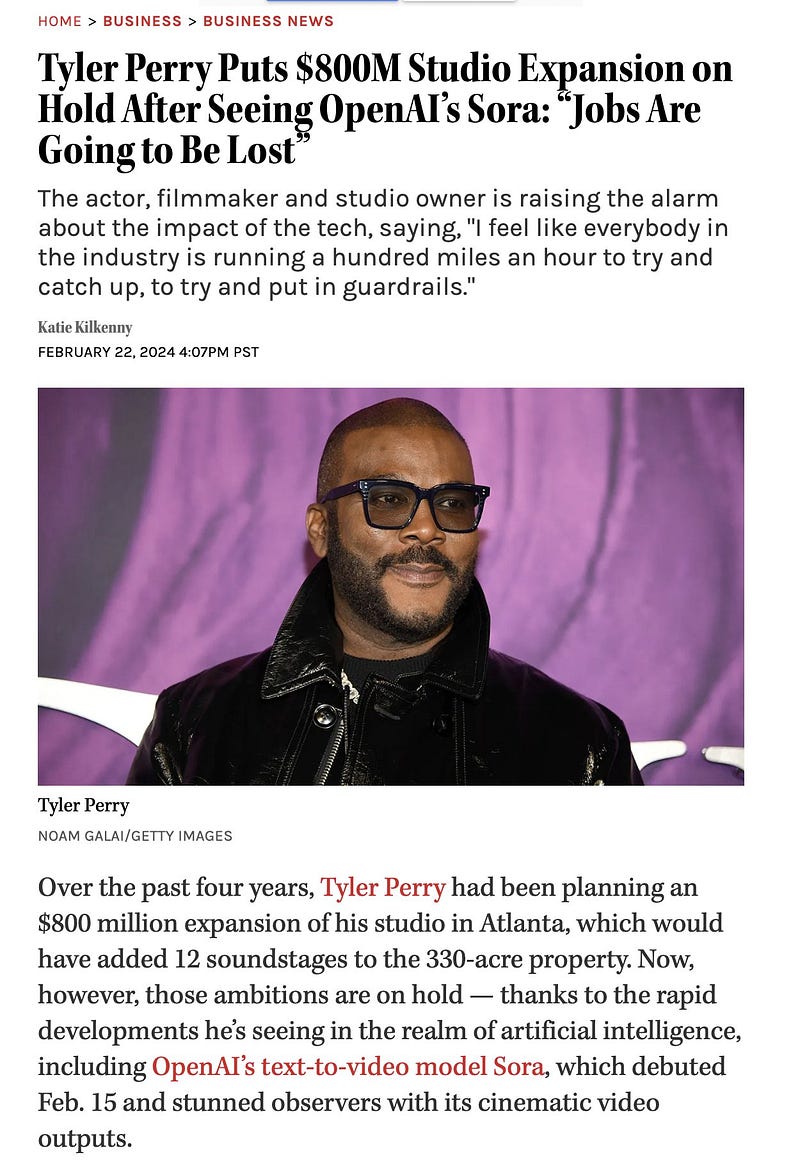
While Perry is sounding the alarm about the potential negative impacts of such AI technology, he is also actively seeking to understand the advantages that AI can bring to the industry, highlighting the complexity and nuances of the current debate.
The decision to halt the studio expansion has not only raised questions about the possible implications of AI in the entertainment sector but has also ignited discussions about the regulations and protections that should be put in place to address these concerns.
Experts have questioned why studios aren’t aligning more with actors and writers against AI companies, underscoring the need for thorough analysis and consideration of the various perspectives involved in this complex issue.
Perry’s move has also drawn attention to the potential impacts on various Hollywood workers, with discussions arising about the need to safeguard the interests of those whose livelihoods may be affected by advancements in AI technology. The issue is multifaceted, involving not only economic considerations but also ethical and regulatory dimensions.
Given Perry’s status within the industry and his significant influence, these developments are expected to trigger broader discourse and actions surrounding the role of AI in film and television production.
The convergence of concerns and opportunities presented by AI in the entertainment industry underscores the need for comprehensive and inclusive discussions involving all stakeholders to ensure a well-informed and balanced approach to managing the impact of technological advancements.
As the industry navigates through this period of uncertainty and transformation, it is crucial to recognize the potential benefits and pitfalls of AI and to engage in constructive dialogue aimed at establishing a regulatory framework that safeguards the interests of all involved parties.
The shifting dynamics in Hollywood and the broader entertainment sector necessitate a judicious and proactive approach to address the challenges and harness the potential advantages brought about by AI technology.