
Gene: The Center of Life
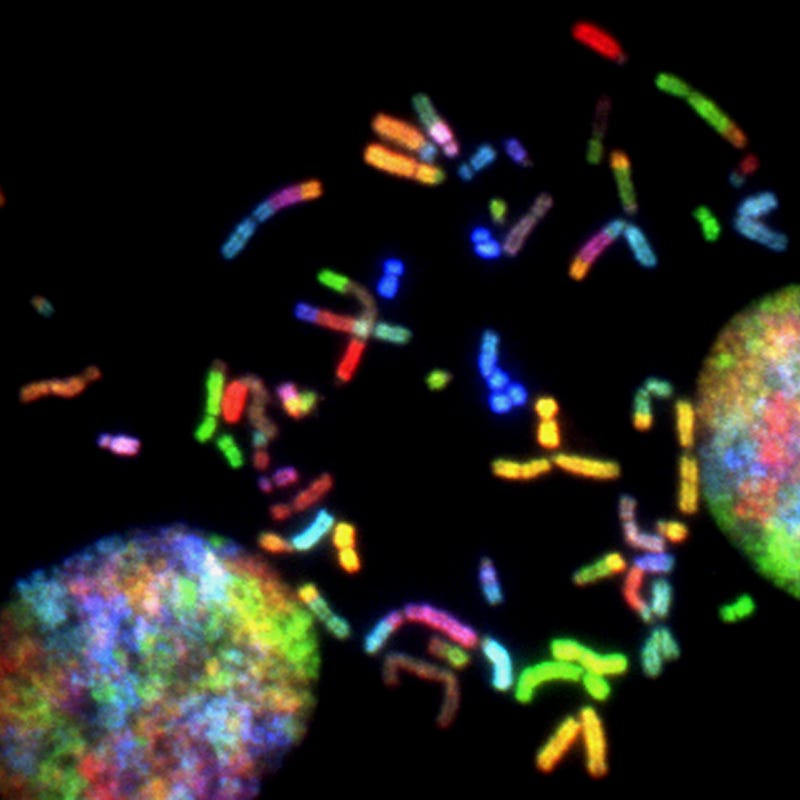
Have you ever thought about how our body works? If we imagine every living creature on earth as if all the organism’s body perform all the living functions automatically. Take humans as an example, as long as we live, our heart never stops beating, our nervous system continues to transmit the impulse, our eyes continue to collect lights, our red blood cells continue to carry oxygen from the lungs to tissues, and all our cells, tissues, organs, and organ systems continue to perform their distinct function. Even in cells, which are referred to as the smallest unit of an organism, there are organelles that have specific functions. If those components, for any reason, do not perform their specific function, the organism will die or at least cannot be functioning properly. How could the body possibly do that? How the cells of an organism’s body do their specific function and consistently work with another type of cells to determine the organism’s life? Is there any specific rule for the cells or the organs to follow? Or is there any specific instruction to do their specific function?
We can answer that question if we look closely at the inside of the cells and focusing on one organelle called nucleus. In that tiny space, the genes do their vital work. Gene is the basic physical and functional unit of heredity. Gene consists of DNA (deoxyribonucleic acid) sequence within the chromosome. Homo sapiens (human) has 23 pairs of chromosomes and more than 30.000 genes inside of them. Gene that has sequences of DNA carry specific codes for amino acids and can be translated to the specific proteins. Those specific proteins will be responsible to carry out all the mechanisms essential to organism’s life. For example, in the production of red blood cells, the gene that carries the code for hemoglobin protein will be translated to hemoglobin that has the ability to bind the oxygen. Thus, the red blood cells can carry the oxygens from the lungs and to the tissues. The specific proteins also regulate the cardiac muscles when contracting. The same mechanism happens throughout all the body cells and at molecular levels, tens of thousands of genes are translated to the proteins to carry their specific function.
It is now known that the gene’s structure is DNA. However, that structure was discovered recently, before the discovery of DNA, the functions of gene have been studied more. The idea of genes started from the reflection of heredity. To understand the history of genes, we must go back to around 530 BC when the Greek philosopher, best known for his triangular theory, Pythagoras of Samos, state his opinion about heredity. He originated the “spermism” theory. In that theory, the male semen flows around the body to collect the “devolution unit” of a mystical entity. The entities are found in every trait of an organism’s body, such as hair color, eye color, height, eyebrow shape, ear shape, nose shape, etc. The semen will be ripened in the womb into a fetus thanks to the nutrition from the mother.
Pythagoras’ theory was refuted by the other Greek philosopher, Aristotle, with a sharp and clear argument. Aristotle stated that spermism couldn’t explain how the sperm or male semen gathered devolution units from the male body produced female genitalia. Aristotle himself put forward his theory, that to form a fetus a joint donation is needed between father and mother. Donations from the father side were referred to by Aristotle as the “principle of movement”, that sperm provided a “code” or “message” or “information” as a design of the fetus, while donations from the mother, at that time, referred to as “female semen”, provided physical raw materials for the fetus. His theory had actually led to the theory of information carried by genes that developed in modern times, even a German biophysicist, Max Delbruck, joked that Aristotle should have been awarded the Nobel Prize for discovering genes. Another theory of inheritance that developed in the past was the theory of “preformation”, namely sperm already containing mini-humans (homunculus) which then become fetus in the uterus.
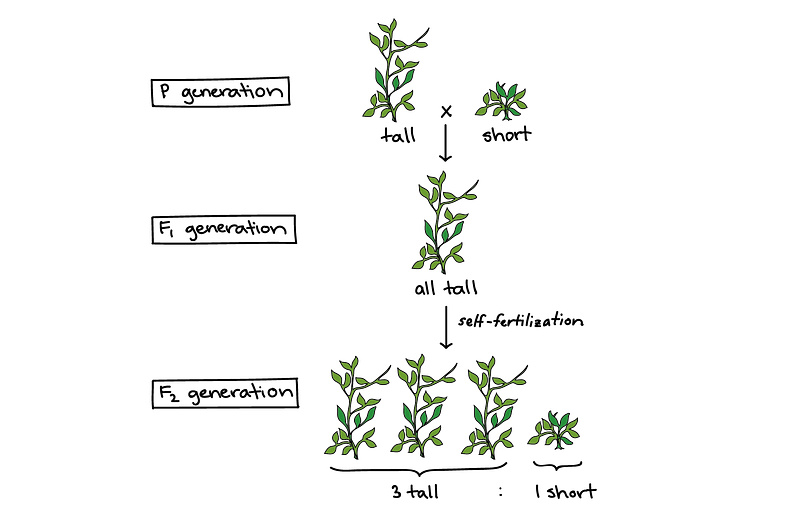
The mystery of heredity remains a mystery for the past scientist. Until February 8th, 1965, an Augustinian friar named Gregor Johann Mendell who had a hobby of gardening presented his paper, “Versuche über Pflanzenhybriden” (Experiments on Plant Hybridization), at the meetings of the Natural History Society of Brno. His paper was based on his years of experiments on pea plants in his monastery’s small garden. With his extraordinary scrupulosity and patience, he cultivated and made thousands of hybrid plants. From the results of the crossbreeding, Mendel found a pattern of inheritance and stated that each trait was carried by an independent “invisible factor” that could not be divided anymore. The invisible factor is found in two alleles and each descendant inherits one allele from each parent. Mendel even managed to analyze the properties of dominant genes that mask other unexpressed (recessive) traits. Those experiments led to two generalizations, the Law of Segregation and the Law of Independent Assortment, which was later known as Mendel’s Laws of Inheritance.
Mendel, now known as The Father of Modern Genetics, found important characteristics of the gene, however, at that time he did not refer to his findings as a gene. In fact, Mendel’s theory could complement Darwin’s evolution theory. Charles Darwin was confused and couldn’t solve some problems in his evolution theory. The problems of how to produce variations and how the organism’s traits can be preserved across generations. Darwin proposed the pangenesis theory but still couldn’t solve the problems. Mendel’s theory can explain it all! However, unfortunately, Charles Darwin never read Mendel’s paper until the end of his life. What’s even more unfortunate, as if buried under the advances of other studies, Mendel’s theory of inheritance was never talked about again for about 40 years, until the rediscovery of his theory in the 1990s. Thanks to William Bateson who passionately republishing Mendel’s work. After re-living of Mendel’s theory, inheritance seemed to be a prima donna in biology and biochemistry, and in 1909, Wilhelm Johannsen pioneered the use of the word “gene” to refer to the unit of inheritance.
After the rediscovery of Mendel’s theory, gene-related research developed rapidly. As stated before, the functions or the characteristics of gene are widely understood first than the physical form of gene. That remained a mystery until April 25th, 1953 when James Watson and Francis Crick publish his discovery about DNA molecule. They successfully constructed double helix model of DNA consisting of two long polynucleotide chains. For their discovery, Watson and Crick along with Maurice Wilkins received the Nobel Prize in 1962. Maurice Wilkins is the pioneer of DNA analysis using crystallography.
The double helix DNA molecule consists of two DNA strands that twist each other to the shape of a rotating ladder with nitrogen bases as the steps supported by phosphate backbone and deoxy-ribose sugar. There are two kinds of nitrogen bases, purine and pyrimidine. Adenine (A) and guanine (G) are members of the purine base, while pyrimidine bases consist of cytosine © and thymine (T). To maintain the stability of DNA molecule, the purine base must be paired with a pyrimidine base, A pairs with T and G paired with C. There are hydrogen bonds between the bases and covalent bonds between the base and deoxy-ribose sugar. Double helical DNA structure completes the turn every 34Å (3.4 nm) with the distance between two strands around 20Å (2 nm). The distance between the base nitrogen steps is 3.4Å, so each turn has 10 base nitrogen steps.
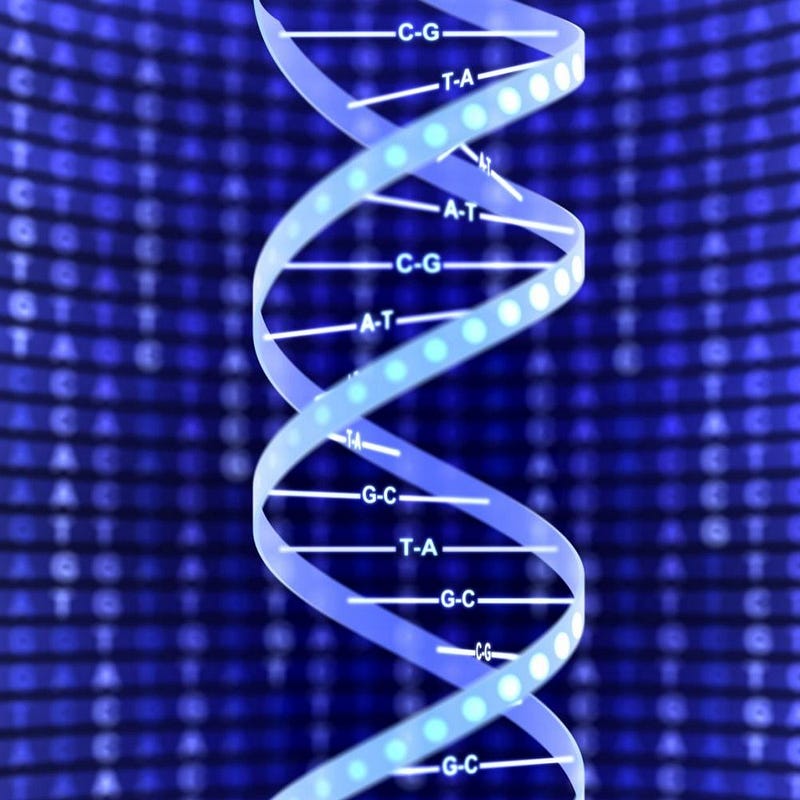
The discovery of DNA structure is crucial to find out how genes “regulate the lives” of the organism. Genes that were initially considered to be physical and functional of heredity, turned out to have characteristics and functions that allowed them to give instructions for the course of life. Gene replication allows the mechanism of inheritance, gene recombination makes organism’s variation possible, and gene regulation allows the translation of proteins both structural protein that makes up the body of the organism and functional protein that perform molecular to physiological functions of organism.
DNA is a passive molecule that requires an intermediary molecule to become protein. As stated in the central dogma of biology that genes containing information carried by DNA will be translated into proteins through an intermediate molecule called RNA (ribonucleic acid). Gene consisting of a series of nucleic acids carry specific information to form polypeptides that will then become specific proteins. In all the functional mechanisms of life, proteins have roles in them. The specificity of protein function is determined by its 3-dimensional chemical structure and the structure is determined by the linear sequence of its constituent amino acids. While the amino acid sequence is determined by the order of nitrogen bases in genes.
Gene is a unique code, four letters (A, T, G, C) digital code. The four letters can make many combinations and the order of the four letters determine their translation into amino acids. If the code carried by the gene is a code with 1 letter combination, then there will only be 4 amino acids. If the combination consists of 2 letters, then there will be 16 amino acids maximum. If the code consists of a combination of 3 letters then there will be a maximum of 64 amino acids, it is more than enough to encode 20 amino acids plus a code to start and stop the translation process. The translation mechanism is a complicated and long process, not enough to explain it in one article. This article has discussed in general the discovery of gene and the important functions of gene. The next article hopefully will discuss in more detail related to the important functions of genes, to answer questions related to genes that may now begin to appear in the minds of readers.