
Reflections of a Former Child Garment Worker — Inside the Sweatshop: Part 1
Working in a sweatshop as a child shaped my view of work and wealth as an American immigrant. I was six years old when I started. Part 1 of 4.
*Updated December 2, 2023, to break up into four smaller parts for easier reading. This was my first Medium article, so I needed to be better versed in organizing posts.
Have you ever thought of clothes differently when they’re produced in America?
I’m here to give you an inside scoop on one of fashion’s darkest corners from my years of experience as a garment worker in the US.
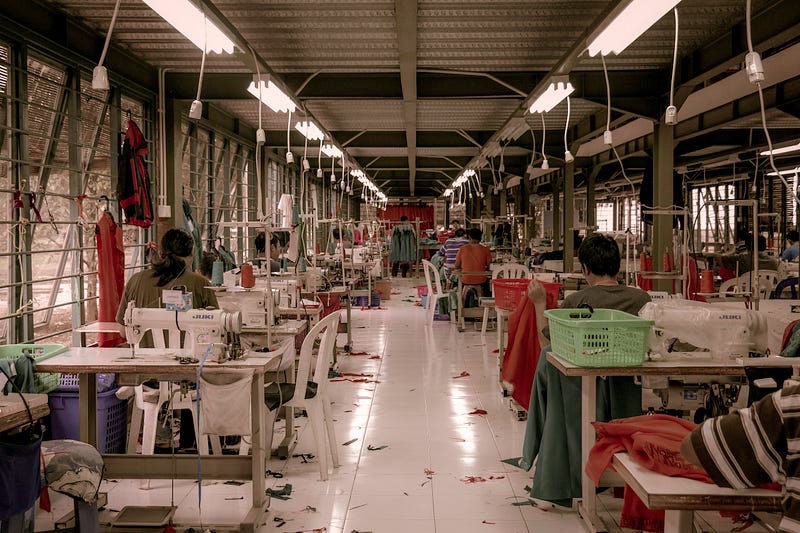
When I was six years old, I noticed my mom hardly ever slept through the night while sewing clothes for work. She could get more done if she had another pair of hands. One evening, I offered my help…
Despite her reluctance, she accepted, and the next day, I began my work. This event kick-started the loss of my childhood years until I was 11. For perspective, by 11 years old , I had already been sewing for almost half my life.
I could work unnoticed since we were not operating in a factory setting. No one was inspecting our makeshift sweatshop or ensuring we followed any regulations.
Before anyone thinks “what a good daughter” I was, I was unhappy to help most days. There are consequences to instilling the value of putting others before yourself in a young child.

Los Angeles Suburbs — Where it All Began
I am the proud offspring of Vietnamese refugees who sought new beginnings in America in 1990. Settling in the greater Los Angeles area when I was just one year old, this experience has deeply influenced my sense of identity and how I view work and money.
Before diving into my experiences as a child garment worker, it’s essential to understand how people enter the garment industry and how it functions and delve into my family’s history.

When my parents arrived in this country in the 90s, they encountered the daunting challenge of providing for our family, which grew to six members with the birth of my two younger sisters a few years later.
Faced with limited education, financial resources, and a basic understanding of the English language, my parents’ journey was full of trials.
Like many others in the Vietnamese community, they turned to the textile industry, becoming garment subcontractors and setting up their sweatshops at home. Sewing, a profession requiring minimal education or reading skills, offered them an opportunity.
The Los Angeles area is a significant hub for the textile industry, with California alone hosting 1,284 textile mills, making it second only to Texas in terms of the largest number of garment businesses by state, according to industry research company IBISWorld.
So, if you own a piece of clothing labeled “Made in America,” it likely originated from Texas or California.
And if you bought American-made clothes in the late mid to late 90s, there’s a chance they were sewn together by me, a child who was less than 10 years old.
Uncertainty Surrounding the Legalities of Sweatshops
As of 2017, The World reported widespread labor and safety violations in the garment industry.

However, it is essential to note this statistic may be more relevant to garment workers based out of actual factories. In contrast, my parents operated their garment business from the comfort of their 600-square-foot apartment home.
You may wonder how they managed to work from home during the 90s. It was akin to the situation depicted in “Pursuit of Happyness.”
In the movie, Will Smith’s character buys medical equipment to sell for profit, seemingly allowing him to work on his own schedule. Yet, he soon realizes the reality is far from simple, as the equipment proves difficult to sell.

Similarly, my parents had to invest in industrial-grade equipment to start earning money since they were subcontractors, not factory employees. They purchased two JUKI industrial sewing machines, which you might have seen before if you have ever visited a tailor.
While it appeared they could work on their schedule and watch over their children simultaneously, they soon found meeting deadlines and maintaining productivity were no easy tasks.
There was basically no “clocking out” when you’re responsible for your own income and deadlines.
The effort required for each completed item far outweighed the pay they received, but my parents had limited employment options, so they stayed in the business for almost ten years.
Working as subcontractors also meant my parents did not have any employee benefits. However, our income was low enough to qualify for Medi-Cal, California’s Medicaid program for low-income individuals with limited resources.
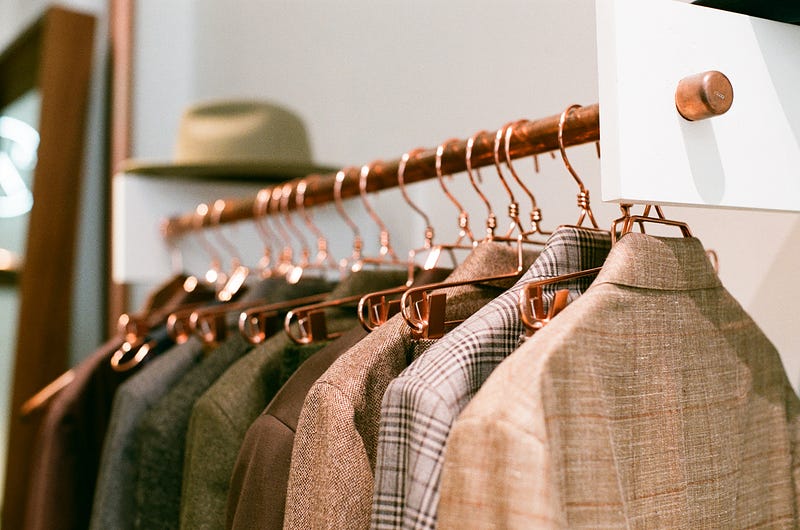
The machinery used for sewing is similar between tailors and garment workers, but it is important to note that tailoring and garment work require almost entirely different skill sets. Specifically:
- A tailor analyzes clothing needing repair or refinement and customizes solutions using various sewing techniques and tools for individual clients.
- On the other hand, a garment worker takes a pre-cut cloth and follows a blueprint to sew the pieces together by a specific deadline for a mass producer.
One can compare a tailor, who resembles a chef at a restaurant, utilizing creativity and skill, and a garment worker, who is more like a worker in a food factory, with a more straightforward, less creative role.
How the Logistics Worked
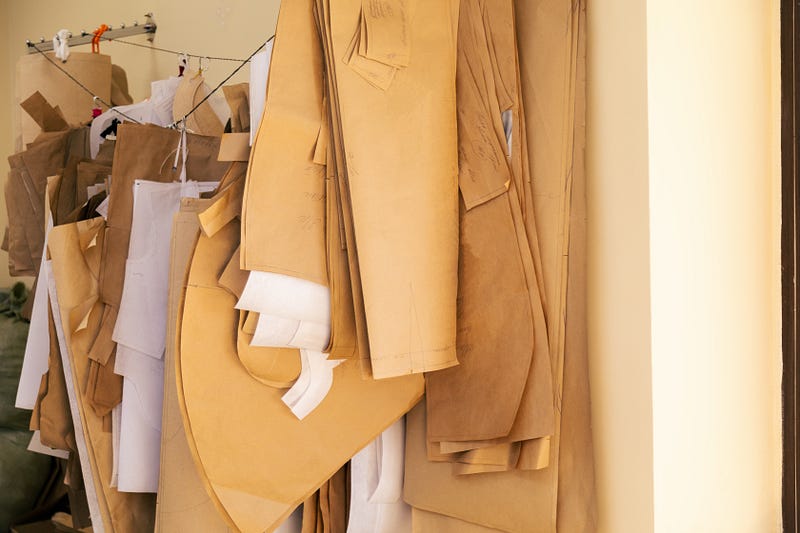
On a monthly basis, textile companies would send deliverymen with palettes of pre-cut cloth, supporting materials (e.g., shoulder pads, zippers, etc.), and rough visual instructions.
These instructions served as blueprints, detailing the order in which the pieces needed to be sewn together, down to the zipper or size tag. Since the instructions were mainly illustrative, knowing English was not a requirement.
The delivery arrangement proved convenient as our old cars often needed repairs, and leaving young children at home with just one parent would have been challenging.
Although I never knew the names of these companies, I was aware most of the ones we worked with operated from El Monte, California.
Additionally, a “madam” would accompany the drivers during each delivery; my name was for her because I could tell she was the boss, as she coordinated the delivery process and made payments to my parents.
Interestingly, deliveries and pick-ups for supplies and finished clothing would occur only after sundown for reasons I never entirely understood. The sweatshop task force possibly influenced this in the 90s, but I delve into this briefly in the next section.
Over time, my parents purchased two more sewing machines, which they placed in the garage of our tiny 600-square-foot apartment home. This expansion allowed them to increase their output, and we continued working in this manner during our 13-year stay in Los Angeles.

Part two is linked below.
Hey everyone, thanks for reading. I’m a former corporate management consultant writing about work, culture, and personal finance. I’m not a financial advisor. I’m just an average person.
This article is for informational purposes only and should not be considered Financial or Legal Advice. Consult a financial professional before making any significant financial decisions.


