
Life is a looking glass
Reflections
Musings on mirrors
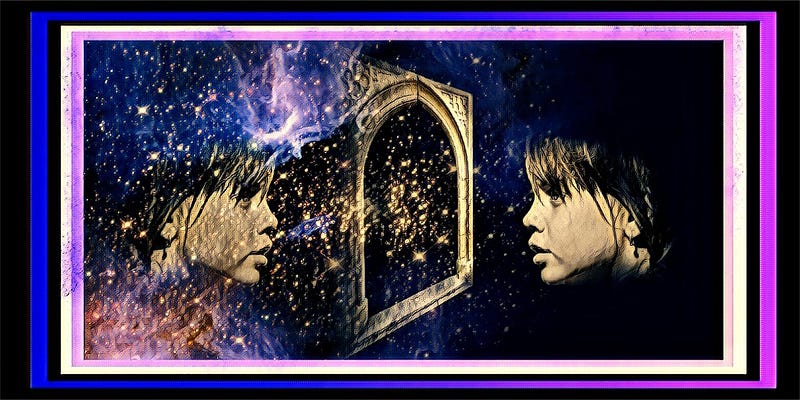
Mirrors should think longer before they reflect. Jean Cocteau
Mirror. Hey you! That’s right, You on the wall.
Mirror, mirror on the wall Who’s the fairest of them all?
No, that is not my question.
I want to know who made you the Boss, The Supreme Decider, The Ultimate Judge?
I don’t like your outlook. I don’t care about your notion of beauty. I don’t accept your judgment.
Everything has beauty, but not everyone sees it.
Confucius
I look in the mirror. Who do I see? I see myself, Looking back at me.
What does she think, That other me? Does she approve As she sees me?
Did you ever wonder if the person in the puddle is real, and you’re just a reflection of him?
Bill Watterson
Magnifying Icarus Reflects Raindrops On Rainbows
‘When I use a word,’ Humpty Dumpty said, in rather a scornful tone, ‘it means just what I choose it to mean — neither more nor less.’
‘The question is,’ said Alice, ‘whether you can make words mean so many different things.‘
Lewis Carroll, Through the Looking Glass
Through the Looking-Glass, and What Alice Found There (also known as Alice Through the Looking-Glass or simply Through the Looking-Glass) is an 1871 novel[1] by Lewis Carroll and the sequel to Alice’s Adventures in Wonderland (1865). Alice again enters a fantastical world, this time by climbing through a mirror into the world that she can see beyond it. There she finds that, just like a reflection, everything is reversed, including logic (e.g. running helps you remain stationary, walking away from something brings you towards it, chessmen are alive, nursery rhyme characters exist, etc.)… Wikikpedia