
Redress For Japanese Americans Took A Lot Of Work
Edison Uno was a hero of Redress
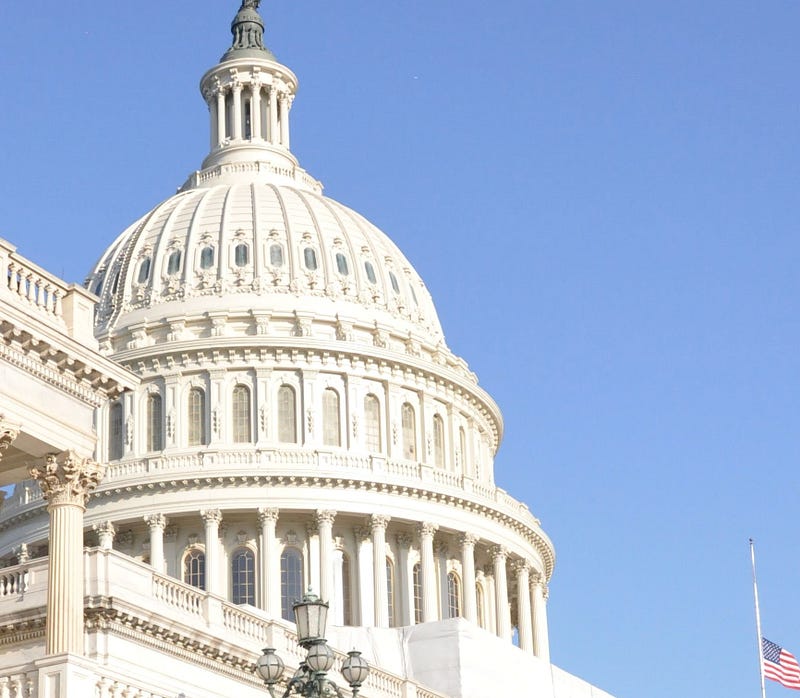
There were many meetings on Redress held at the Capitol
The Redress Movement for Japanese Americans was worked on by the Japanese American Citizens League (JACL) in the 1970s and 1980s. It culminated in 1988 with the passage of the Civil Liberties Act of 1988. Redress was achieved through this bill passed by Congress and signed by President Ronald Reagan. It provided Redress and an apology to Japanese Americans who had been unjustly incarcerated in American concentration camps during World War II.
It took a lot of effort and many meetings with members of Congress in Washington, D.C. Grassroots efforts were going on throughout the country.
Edison Uno was an activist and lecturer at San Francisco State University. Many consider him to be the “Father of Redress.” He worked hard on civil liberties and equal justice. He had tried for many years to get others within the Japanese American community to support the efforts for Redress. He often called himself a “Minority of One” in his quest to seek Redress.
Edison was born in Los Angeles in 1929 to a large family of nine children. He was thirteen years old around the time of the incarceration of Japanese Americans after the start of World War II. His oldest brother had moved to Japan where he worked for the Japanese Army Press Bureau before the war. Edison had other older brothers who had volunteered for and served in the U.S. Army.
When Edison’s father was arrested by the FBI after Pearl Harbor, he was taken to the Crystal City Camp in Texas. The rest of the family including Edison were incarcerated at the Granada Camp in Colorado. Then Edison was able to be transferred to Crystal City to reunite with his father.
The U.S. Government did not release Edison’s father from Crystal City until September 1947. The war had ended, but he was held because of his oldest son’s activities in Japan. Edison did not want to abandon his father so he also remained in Crystal City until his father was released. When he left the Crystal City Camp, the official in charge told Edison that he was the last American citizen to be released. He had been imprisoned for 1,647 days.
Edison returned to Los Angeles where he joined the JACL in 1948. He became a chapter president in 1950 which made him the youngest chapter president in JACL’s history at that time. He later moved to San Francisco and was attending Hastings Law School, but he had to withdraw because of poor health. He had a stroke when he was twenty-eight years old and was told by a doctor that he would not live past the age of forty. He did not allow health problems to limit his work and involvement.
Edison was married to Rosalind Kido, the daughter of the wartime National JACL President, Saburo Kido. They have two daughters. He lived in San Francisco until his death.

Working long and hard to remedy the injustice that Japanese Americans faced when they were forced into the mass incarceration in the American concentration camps, Edison initially wanted the government to pay a per diem amount to all those who had been unjustly imprisoned.
The National JACL passed a resolution in 1970 to seek Redress. It was proposed by Edison. However, there was not a lot of progress for some time although the Executive Order 9066, which allowed for the incarceration, was officially rescinded on February 19, 1976, by President Gerald R. Ford.
Seeking Redress and issues of importance in civil rights and to Edison were not always popular with many Japanese Americans. Some Japanese Americans were happy with the success and acceptance they felt after the end of World War II. They were afraid of bringing up the past and old issues. They did not want to rock the boat and see hatred return to them because of seeking Redress. Edison stated that he often felt alone in the work that he did. He worked tirelessly for civil rights.
Edison suffered a heart attack on Christmas Eve in 1976 and died at the age of forty seven. He was not able to see the fruits of his labor with regard to The Redress Movement. At the 1978 National JACL Convention when it was voted upon to finally seek Redress in earnest and ask for monetary reparations, Edison was acknowledged for his devotion and dedication to The Redress Movement.
Redress and reparations were finally achieved largely because of the dedication of Edison Uno to the cause of justice. He was an American hero.
It was my privilege to know Edison personally and call him a friend. It was an extremely sad day when he passed away at a young age.
[To learn more about the Japanese American experience, visit: www.thejapaneseamericanstory.com. A free ebook is available by reading the “about” section.]